Best options for a low current display for a battery operated node?
-
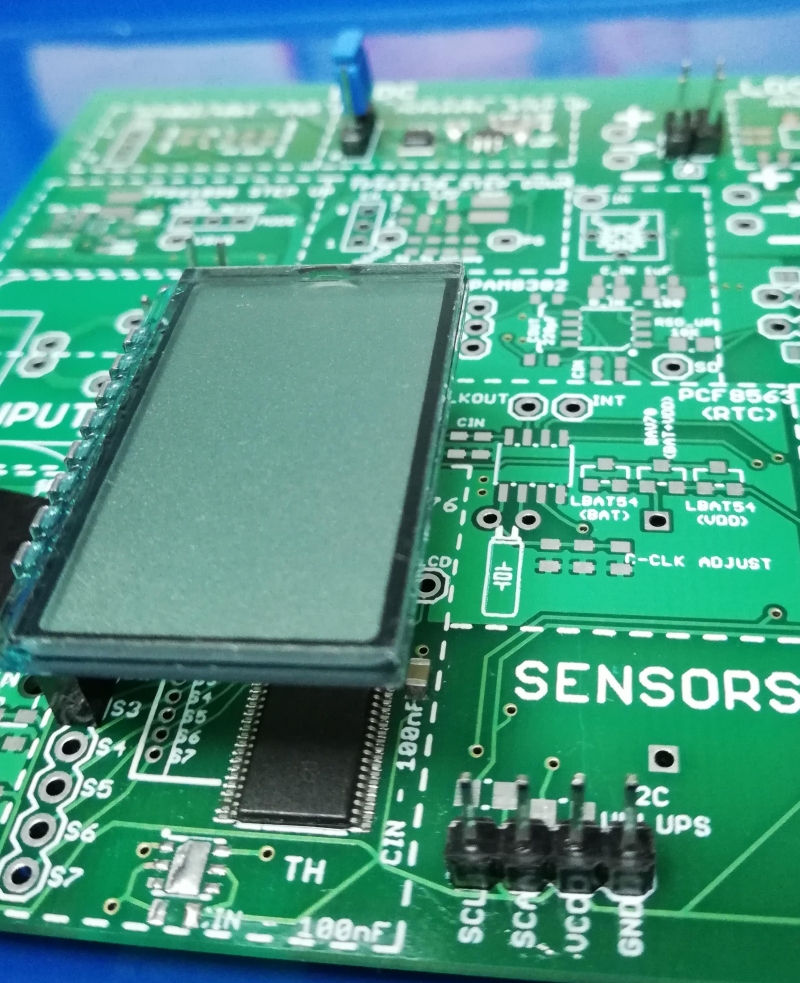
LCD driver is soldered and responding on I2C bus, now I need to make a lib to display something as there's none available, interesting challenge :D
-
By the way I realized there are others drivers from Microchip with even lower power consumption, like PCF8551: at 3.3V <0.6uA supply current for the IC and down to 2.5uA supply for the LCD, it would mean an always on LCD below 5uA. Added to cart but it will take time before I place order and even longer before I have a PCB to test it...
-
By the way I realized there are others drivers from Microchip with even lower power consumption, like PCF8551: at 3.3V <0.6uA supply current for the IC and down to 2.5uA supply for the LCD, it would mean an always on LCD below 5uA. Added to cart but it will take time before I place order and even longer before I have a PCB to test it...
@nca78 said in Best options for a low current display for a battery operated node?:
By the way I realized there are others drivers from Microchip with even lower power consumption, like PCF8551: at 3.3V <0.6uA supply current for the IC and down to 2.5uA supply for the LCD, it would mean an always on LCD below 5uA. Added to cart but it will take time before I place order and even longer before I have a PCB to test it...
Sounds like a winner!
-
So I made a first test with the embryo of my library, and I realize:
- the soldering was not so good in the end, ic is not perfectly aligned and there are 2 segments connected together. And much worse CLK pin was somehow shorted to VDD meaning the clock was "locked" and display not refreshed (it was only varying voltage once when I sent new data, pretty bad...)
- I have to be more careful when applying rules from datasheet, as pullups on the I2C have too high values and it makes the driver use much more current than expected. I made test quickly with a uno so at 5V supply which is obviously not great, with 10K pullups on the board + 50k pullups on the uno power consumption is 120uA. Without the 10K pullups on the board it goes up to 180uA. And if I disconnect the SDA/SCL lines it goes up a bit over 200uA. So it seems driver is wasting energy driving those pins high. I will solder lower values pullups tomorrow (respecting rules from datasheet this time :) ), use a 3.3V arduino and and see if it goes better.
-
So finally I made a new board with my spare PCF85176, still with a 5V uno and it's much better. This is the measurement for the full board: driver, LCD and MCP1703 that generates the 3V VLCD.
I2C lines of the driver are 5V tolerant so I rewired my board to power the driver through the MCP1703. But it seems it's leaching power from the (still at 5V) I2C lines as measurement falls to 1uA :)
Anyway the contrast is very good as you can see on the picture, and I'm also happy with the design of my "sensor test board", not perfect but flexible enough to test different combinations of voltage sources.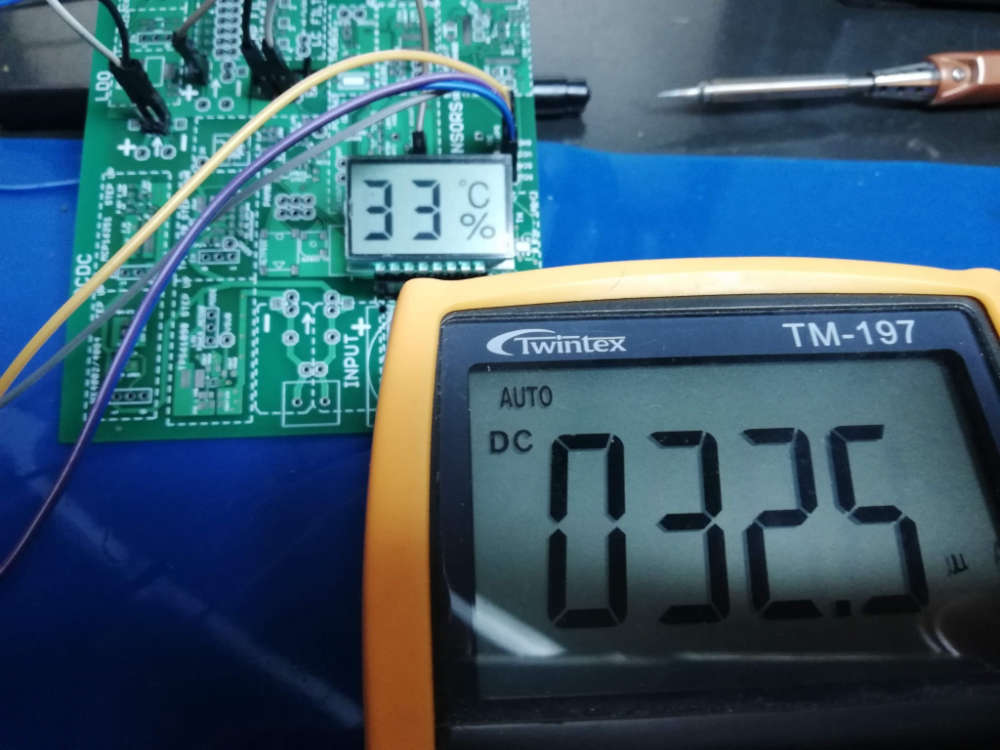
-
This one claims to be 80ua: https://www.buydisplay.com/default/2-2-inch-122x32-lcd-display-module-graphic-sed1520
-
This one claims to be 80ua: https://www.buydisplay.com/default/2-2-inch-122x32-lcd-display-module-graphic-sed1520
@neverdie said in Best options for a low current display for a battery operated node?:
This one claims to be 80ua: https://www.buydisplay.com/default/2-2-inch-122x32-lcd-display-module-graphic-sed1520
Interesting, there are a bunch of sellers when searching for the SED1520 controller. I guess it's a SED1520 clone and not the original, which seems like a very old model if I judge by the retro style of the datasheet :)
https://www.lcd-module.de/eng/pdf/zubehoer/s_1520.pdfThe only problem is it's a parallel interface, so it will need a lot of free pins.
-
Thanks to a computer magazine, which wrote about https://github.com/joeycastillo/The-Open-Book I was made aware of a source for e-ink / e-paper displays:
https://zh-tw.buyepaper.com/c/e-ink-display-0371
Pricing looks ok and that have many different sizes
-
So finally I made a new board with my spare PCF85176, still with a 5V uno and it's much better. This is the measurement for the full board: driver, LCD and MCP1703 that generates the 3V VLCD.
I2C lines of the driver are 5V tolerant so I rewired my board to power the driver through the MCP1703. But it seems it's leaching power from the (still at 5V) I2C lines as measurement falls to 1uA :)
Anyway the contrast is very good as you can see on the picture, and I'm also happy with the design of my "sensor test board", not perfect but flexible enough to test different combinations of voltage sources.@Nca78 I trying to use the GYTN-2490 display the same I intend to use with the PCF855 controller, how did you manage to show the values in the photo? which MCU do you use? I use PIC18f
-
@Nca78 I trying to use the GYTN-2490 display the same I intend to use with the PCF855 controller, how did you manage to show the values in the photo? which MCU do you use? I use PIC18f
@matheus-galvao said in Best options for a low current display for a battery operated node?:
GYTN-2490
Hello, I didn't do much for this one, I just used an existing PCF8576 arduino library. Are you using this exact same LCD driver, or another one ? They are not very difficult to make libraries for, I made a library for PCA9553 (much lower power) and it was easy, the annoying part is sometimes to convert the digits to "raw" data sent to the LCD driver when LCD driver designers and lcd manufacturer didn't have the same idea for segment mapping :)