You have three ways to for the gateway to communicate to Home Assistant (HA), serial, ethernet, and MQTT.
It comes to this: A serial gateway will be in very close proximity to the HA Green. It is very simple to set up. ethernet or MQTT can be anywhere there is ethernet or WiFi, but not so simple to set up.
The latter two require ethernet connectivity hardware added. This makes the configuration much more complicated and, if going this way, I'd recommend the RPi zero 2W with your radio of choice running Raspberry Pi OS as your gateway. The gateway software runs in the OS (I run this set up).
The serial gateway is a wired connection to your HA Green and the HA Green would power it. The location of your HA Green/serial gateway probably take some experimentation.
The downside is the range of your radio. Fortunately, with repeater nodes or nodes that also act as repeaters, too, this isn't too bad. I find the range, line-of-sight, no obstructions about 10m. Or, 3m through 1 wall.
I am unfamiliar with Sensebender. Googling it I find one from Itead one from OpenHardware. I'm not finding much in the way of documentation. :(
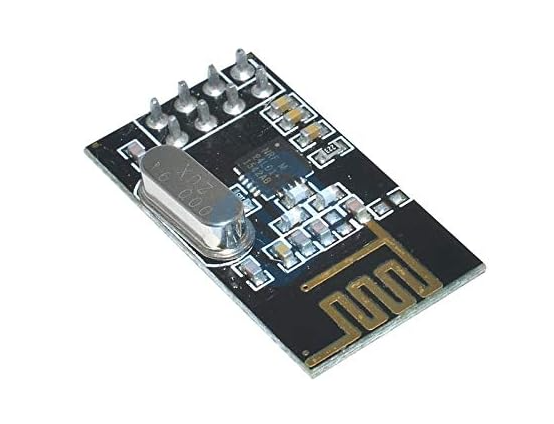
I am familiar with the RF-Nano (Arduino Nano compatible with nRF24 built in) and would offer much the same capabilities as the Sensbender. The range on the RF-Nano is a bit less than that of the stand-alone nRF24.
The Nano is powered from the computer, though from what I can glean from the docs, the Sensebender would also require a serial-to-USB adapter (use 3V3 pin on adapter for power). This is amazingly simple hardware.
The Nano gateway can also have sensors. This is very cool for me because I run HA in a virtual box under Ubuntu on a refurb PC. The serial gateway is a Nano compatible and I use it to "push" buttons on a remote. I'm not using a radio at all. Essentially the Nano and MySensors gateway software gives me I/O ports for my pc.
Let us know how your project goes.