
Which radio / wireless module to choose? Please recommend
-
@zboblamont said in Which radio / wireless module to choose? Please recommend:
All my Nodes have 2xAA and are still going after 2 years..
So you think that something like Arduino Pro Mini 3.3V + DHT22 or BME280 + 433/868 radio module would run on 2x1.5V AA battery ok? No extra components (like step up) or modifications like removing LED or regulator from Arduino?
@tssk A basic pro-mini clone needs modified (VR and LED), but with a few mods can run direct on batteries to fairly low voltages.
I bought these modules in as it would have cost more to make them even I was skilled enough (I still ain't), but they are essentially 3.3v Pro-mini with an onboard booster, regulator, rfm69 and various other refinements which gave it the edge over a Moteino.
Sundberg84's board might be an alternative worth considering, plenty of knowledge on it and help always at hand.As to sensors, have a DHT22 somewhere but never deployed it when I found DS18B20s did all I required on a single run of Cat5e throughout the house and the outside, a second line covers the boiler.
I went for the 433MHz version of the RFM from the start, it easily passes through multiple masonry and concrete with a quarter wave antenna, so your floors may not be the problem you think later. The higher the frequency, the more attenuation effects you encounter, if .433 is permitted in your country I'd recommend it. -
I have tried the nRF24 and sx1278 and have had success with both. I ended up choosing the sx1278 even before exploring the world of mysensors mainly because I really liked the library by Sandeep Mistry. I never had an issue with range. In my old apartment I collected pulses from my electricity meter which was located four concrete stories below without a problem.
Regarding the 9V battery I also did some experimenting with this and the key, if I remember correctly, is to find a VR with very low Iq( quiescent current). In the end I ended up going with dual AA batteries which worked to a surprisingly low voltage. There is a lot written about battery powered electronics if you start to dig a little bit.
-
No matter which one you pick there are tradeoffs. For instance, one of the nice things about the nrf24 is that you can update your mysensors sketch over-the-air. If you have dozens of nodes which need updating, that's a big convenience and time saver.
-
@zboblamont said in Which radio / wireless module to choose? Please recommend:
All my Nodes have 2xAA and are still going after 2 years..
So you think that something like Arduino Pro Mini 3.3V + DHT22 or BME280 + 433/868 radio module would run on 2x1.5V AA battery ok? No extra components (like step up) or modifications like removing LED or regulator from Arduino?
@tssk said in Which radio / wireless module to choose? Please recommend:
Arduino Pro Mini 3.3V + DHT22 or BME280 + 433/868 radio module
Hello, I am going to take my first steps with the MySensors library. I found this Mega328p + RFM69HCW kit:
https://www.aliexpress.com/item/33006101437.html?spm=a2g0s.9042311.0.0.3f774c4dIx4PVw
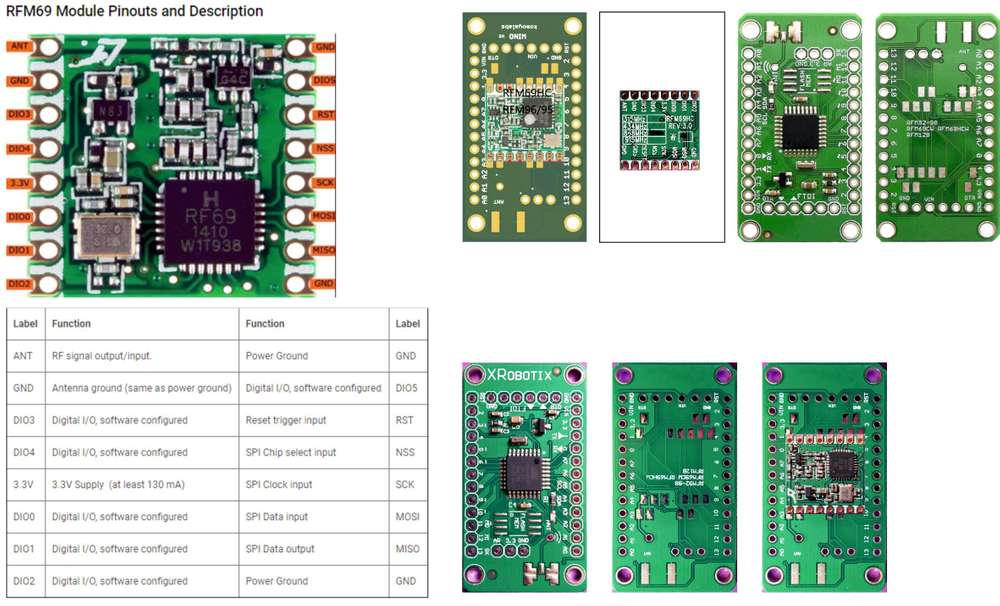
I find this development board interesting:
- accepts many RFMs
- possibility of soldering an antenna wire or SMA or uFL connector.
- No voltage indicator led, but a 3.3v regulator (which can be unsoldered). A blue led connected to a gpio.
- known 328p microcontroller (arduino compatible)
- connector for FTDI
- possibility of soldering an additional FLASH ROM
- many gpio available
I am waiting for the schematics and software included, from the seller to say more. For now, the blue led flashes once powered on, but no return to the serial link ... I will post more news if the topic is requesting ;)
-
@tssk said in Which radio / wireless module to choose? Please recommend:
Arduino Pro Mini 3.3V + DHT22 or BME280 + 433/868 radio module
Hello, I am going to take my first steps with the MySensors library. I found this Mega328p + RFM69HCW kit:
https://www.aliexpress.com/item/33006101437.html?spm=a2g0s.9042311.0.0.3f774c4dIx4PVw
I find this development board interesting:
- accepts many RFMs
- possibility of soldering an antenna wire or SMA or uFL connector.
- No voltage indicator led, but a 3.3v regulator (which can be unsoldered). A blue led connected to a gpio.
- known 328p microcontroller (arduino compatible)
- connector for FTDI
- possibility of soldering an additional FLASH ROM
- many gpio available
I am waiting for the schematics and software included, from the seller to say more. For now, the blue led flashes once powered on, but no return to the serial link ... I will post more news if the topic is requesting ;)
@SuperNinja Looks like a copy/variant of the Low Power Lab's module, which is a good design because it offers the option for extra flash memory (to facilitate OTA programming) using their dual bootloader.
-
Indeed, now that you say it, it looks a lot like Moteino.
Anyway, I can't wait to see my first "hello world" appear on my screens. I will see later for the OTA with double bootloader, that will be the icing on the cake :) -
I would like to thank everyone for suggestions and comments.
I did 3 quick tests with two SX1276 based chips (868MHz LoRa) I already had.
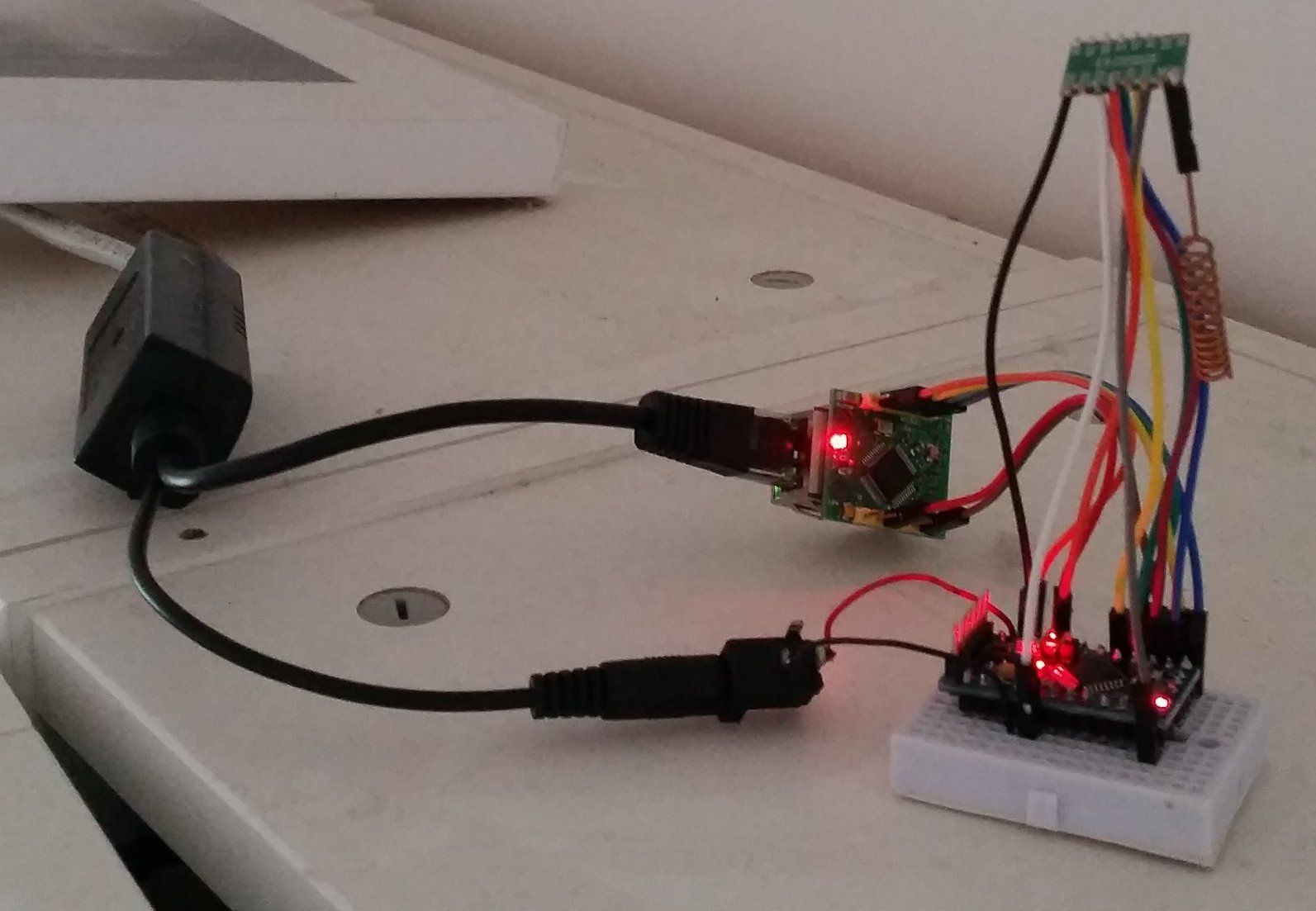
I made simple 5V poe powered mysensors mqtt gateway with arduino pro mini 3.3V, W5500 lite and SX1276 radio
Simple 9V battery powered mysensors passive node with arduino pro mini 3.3V, BME680 (for some reason the sensor does not work when connected over SPI with the radio module at the same time - I have to investigate that ) and SX1276 radio
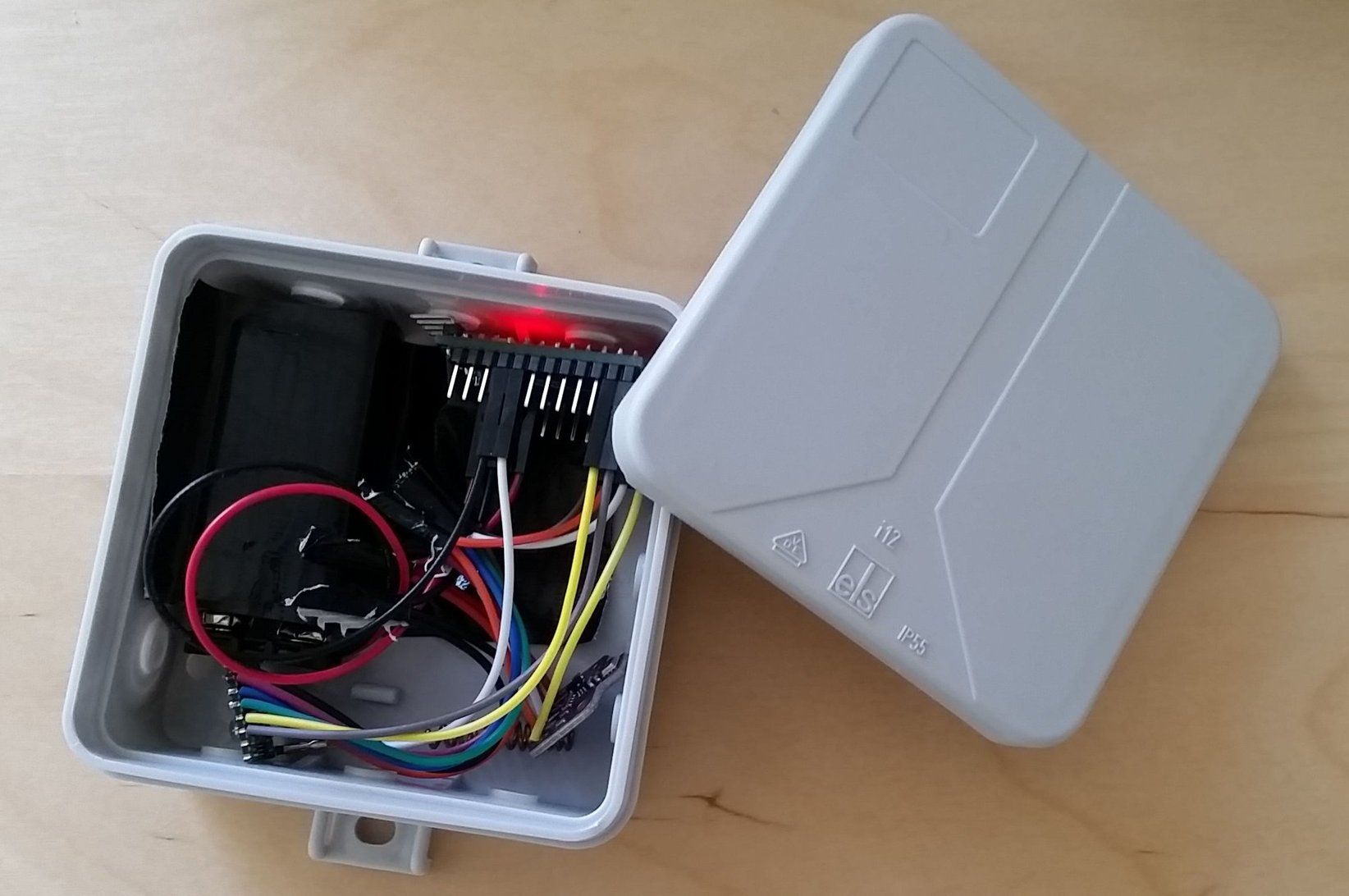
First test was inside house - I placed the node inside the freezer on the opposite side of house (approx 15m from gw) with concrete ceiling between. All messages were delivered.
Second test was outside the house - I placed the node under the beehives (approx 50m from gw). All messages were delivered.
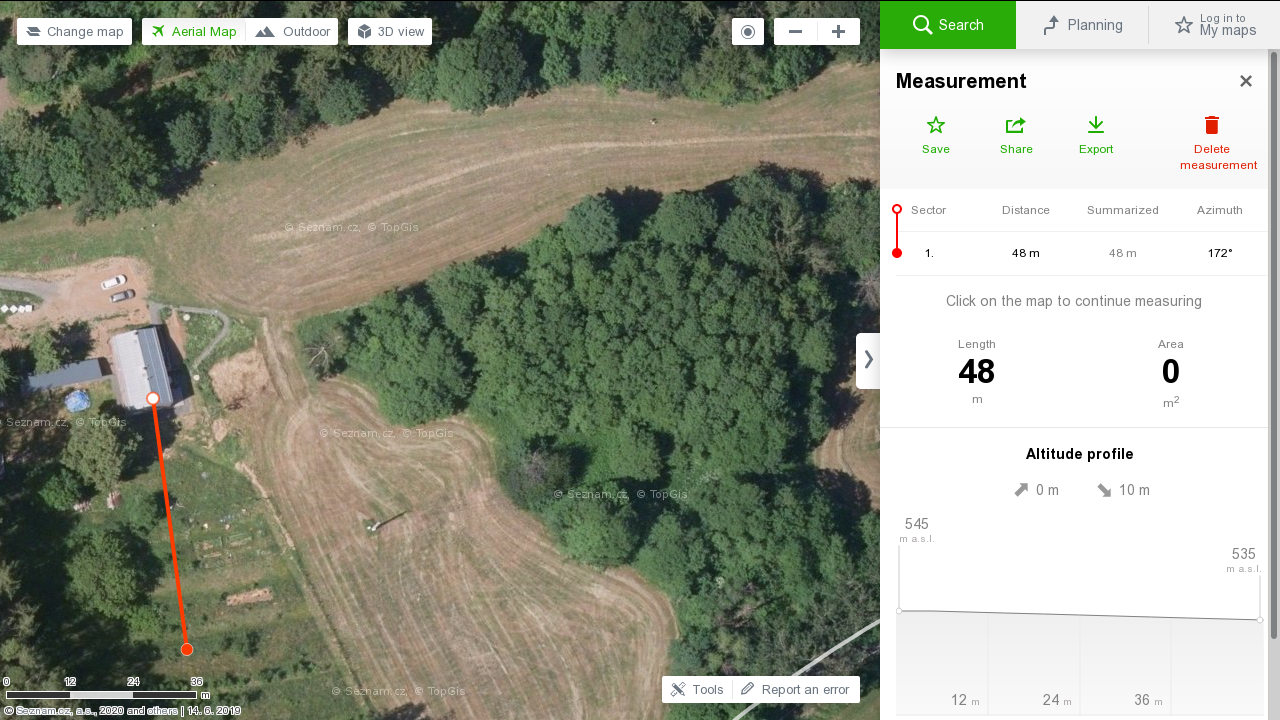
Third test was also outside the house - I placed the node at the end of our property (approx 140m from gw). But no message was delivered.
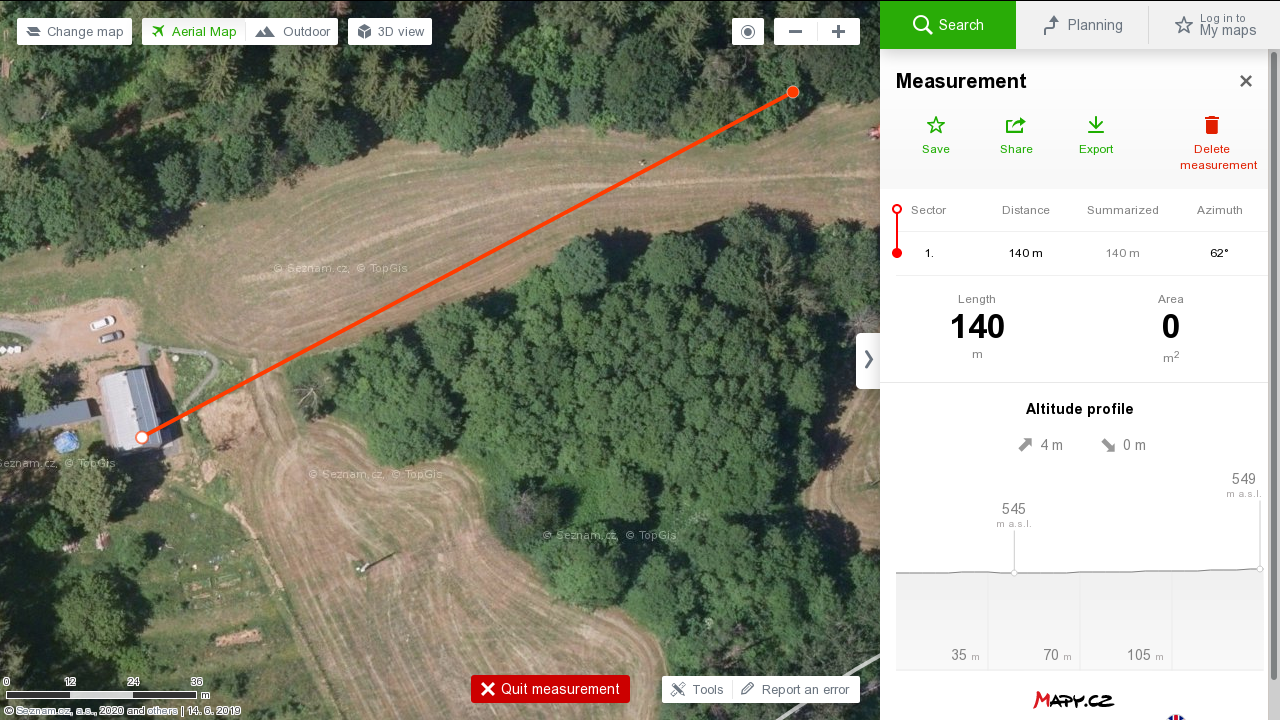
I expected 140m would not be problem for LoRa chip but I think this may be improved with some antenna fiddling. But overall I am very happy with the results. So my current decision is to go with this setup but to use 2 or 3 1.5V AA batteries instead of 9V.
-
@tssk That is promising news and thanks for the update.
For the longer distance try a yagi antenna (bought or homemade) - It should make a fair difference.
As for the batteries, they will suffer a lot in colder weather. Consider rechargeables with solar or wind to charge them up. Alternatively make them easily removable to recharge in the house and reinstall.
Also think about effects of damp or humid weather. Corrosion will happen in these instances so some form of conformal coating or other 'tropicalisation' treatment would be recommended. A fully sealed box with O-rings or silicon gunk might also be an option.
-
@tssk That is promising news and thanks for the update.
For the longer distance try a yagi antenna (bought or homemade) - It should make a fair difference.
As for the batteries, they will suffer a lot in colder weather. Consider rechargeables with solar or wind to charge them up. Alternatively make them easily removable to recharge in the house and reinstall.
Also think about effects of damp or humid weather. Corrosion will happen in these instances so some form of conformal coating or other 'tropicalisation' treatment would be recommended. A fully sealed box with O-rings or silicon gunk might also be an option.
@skywatch Thanks for tips. I do not think there will be any problem with inhouse - nodes. And regarding the nodes in beehives - I expect that bees maintain +10C at least. But that is one of the things I want to find out :)
Any experience with silica gel packages in the box with node?
-
@tssk Not with silica gel no, my only experience was back in 2014 when I used the nrf library (not my sensors) to send data from my greenhouse back to the house to monitor temp and humidity.
The power supply in a sealed box was fine and never overheated (but ofc low power usage). The promini and nrf24 however were not so lucky and were heavily corroded within 4 years.
Since my greenhouse is only 2m x 3m it was not worth the time and expense of doing a full system sealed for the high temps and humidity it gets in the summer months.
I just wanted to save you some trouble down the line (probably in winter when it's snowing). ;)
-
@skywatch Thanks for tips. I do not think there will be any problem with inhouse - nodes. And regarding the nodes in beehives - I expect that bees maintain +10C at least. But that is one of the things I want to find out :)
Any experience with silica gel packages in the box with node?
@tssk So long as your box is near enough sealed, dried gel or clay packs are effective in drying the trapped air even if the box is occasionally opened for say reprogramming.
If the packs are permanently exposed to external air they will quickly saturate and cease to be effective.
I prefer clay packs as they can be quickly regenerated in a microwave if you're very careful. -
@tssk The gold standard is two part electronics waterproof potting epoxy, though for some reason it's rather pricey.
As a much cheaper alternative, I've been running outdoor tests on Corrosion-X HD since the beginning of the year, and so far it has safeguarded the open-to-the-atmosphere internals of Chinesium solar garden lights that, without protection, would ordinarily rust-over and die within a mere month or two. It does have one noteworthy advantage over hard epoxy: you can slot in a new rechargeable battery if/when needed.
@zboblamont said in Which radio / wireless module to choose? Please recommend:
@tssk So long as your box is near enough sealed, dried gel or clay packs are effective in drying the trapped air even if the box is occasionally opened for say reprogramming.
If the packs are permanently exposed to external air they will quickly saturate and cease to be effective.
I prefer clay packs as they can be quickly regenerated in a microwave if you're very careful.How does one do it carefully?
-
@tssk The gold standard is two part electronics waterproof potting epoxy, though for some reason it's rather pricey.
As a much cheaper alternative, I've been running outdoor tests on Corrosion-X HD since the beginning of the year, and so far it has safeguarded the open-to-the-atmosphere internals of Chinesium solar garden lights that, without protection, would ordinarily rust-over and die within a mere month or two. It does have one noteworthy advantage over hard epoxy: you can slot in a new rechargeable battery if/when needed.
@zboblamont said in Which radio / wireless module to choose? Please recommend:
@tssk So long as your box is near enough sealed, dried gel or clay packs are effective in drying the trapped air even if the box is occasionally opened for say reprogramming.
If the packs are permanently exposed to external air they will quickly saturate and cease to be effective.
I prefer clay packs as they can be quickly regenerated in a microwave if you're very careful.How does one do it carefully?
@NeverDie Short blasts while keeping an eye on the bag, the steam vents off quite vigorously stretching the porous bag but having only one perhaps I'm overly cautious with 15 second bursts...
If I ever get spares may test one to 'destruction' in the micro, but it is way faster re-generation than traditional slow oven, 10 mins v 2 hours..
Clay grains survive the nuking intact, silica beads don't :face_with_rolling_eyes: ... -
I finished gateway for my attic - What did you build today (Pictures) ?:
As this will be under roof but without any isolation I try to put small silica gel bag (I collect them from other electronics packaging) inside and will see. I think it should be suitable. I am thinking of adding temperature and humidity sensor... that could also help me show how much humidity is around the year actually.
I might use the resin / epoxy stuff for some watering projects :)




Hello! It looks like you're interested in this conversation, but you don't have an account yet.
Getting fed up of having to scroll through the same posts each visit? When you register for an account, you'll always come back to exactly where you were before, and choose to be notified of new replies (either via email, or push notification). You'll also be able to save bookmarks and upvote posts to show your appreciation to other community members.
With your input, this post could be even better 💗
Register Login