Skip to content
  • MySensors
  • OpenHardware.io
  • Categories
  • Recent
  • Tags
  • Popular
Skins
  • Light
  • Brite
  • Cerulean
  • Cosmo
  • Flatly
  • Journal
  • Litera
  • Lumen
  • Lux
  • Materia
  • Minty
  • Morph
  • Pulse
  • Sandstone
  • Simplex
  • Sketchy
  • Spacelab
  • United
  • Yeti
  • Zephyr
  • Dark
  • Cyborg
  • Darkly
  • Quartz
  • Slate
  • Solar
  • Superhero
  • Vapor

  • Default (No Skin)
  • No Skin
Collapse
Brand Logo
  1. Home
  2. Hardware
  3. Help converting 24VAC to 5VDC

Help converting 24VAC to 5VDC

Scheduled Pinned Locked Moved Hardware
15 Posts 8 Posters 11.1k Views 5 Watching
  • Oldest to Newest
  • Newest to Oldest
  • Most Votes
Reply
  • Reply as topic
Log in to reply
This topic has been deleted. Only users with topic management privileges can see it.
  • petewillP Offline
    petewillP Offline
    petewill
    Admin
    wrote on last edited by
    #1

    Hi Everyone,

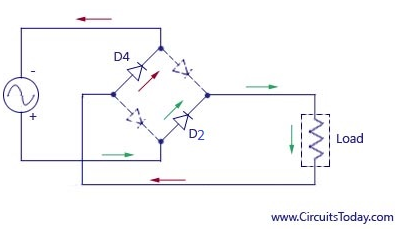
    I have had a few projects now where I would like to get power from an existing 24VAC source. So far I have taken the lazy way out and just ran an additional 5VDC source to power my projects. Well, I'd like to change that this time. I have been doing some research and testing and I have successfully converted the AC to DC using a Full Wave Diode Bridge Rectifier. Like this (although I will need some additional capacitors etc after the conversion to DC):
    0_1465862593074_upload-a0a68090-0521-4719-a24b-3fe261354861

    I'd like to know the most efficient way to reduce the rectified to 34 VDC down to 5V. The DC is going to be pretty high and I'm not sure a low dropout regulator is the best choice for this.

    Does anyone have any advice on what I should do? Am I close or am I going about this all wrong?

    Thanks!

    Pete

    My "How To" home automation video channel: https://www.youtube.com/channel/UCq_Evyh5PQALx4m4CQuxqkA

    1 Reply Last reply
    0
    • dbemowskD Offline
      dbemowskD Offline
      dbemowsk
      wrote on last edited by
      #2

      Your best bet here is to probably use what is called a buck converter. Here is an adjustable one from ebay that will accept an input voltage anywhere from 5V to 36V and step it down to anything from 0.8V to 30 V.
      http://www.ebay.com/itm/5W-DC-DC-Buck-Converter-Step-down-5V-36V-to-5-12V-Power-Module-Replace-7805-7812-/281716353294
      Simply connect your input voltage and put a volt meter on the output side and adjust the small variable resistor to get your desired output voltage. This one says that it ships already set to 5V. You will still want to use your bridge rectifier circuit that you have outlined with a few capacitors on it to smooth out the output voltage going into the buck converter

      Vera Plus running UI7 with MySensors, Sonoffs and 1-Wire devices
      Visit my website for more Bits, Bytes and Ramblings from me: http://dan.bemowski.info/

      D 1 Reply Last reply
      0
      • dbemowskD dbemowsk

        Your best bet here is to probably use what is called a buck converter. Here is an adjustable one from ebay that will accept an input voltage anywhere from 5V to 36V and step it down to anything from 0.8V to 30 V.
        http://www.ebay.com/itm/5W-DC-DC-Buck-Converter-Step-down-5V-36V-to-5-12V-Power-Module-Replace-7805-7812-/281716353294
        Simply connect your input voltage and put a volt meter on the output side and adjust the small variable resistor to get your desired output voltage. This one says that it ships already set to 5V. You will still want to use your bridge rectifier circuit that you have outlined with a few capacitors on it to smooth out the output voltage going into the buck converter

        D Offline
        D Offline
        drock1985
        wrote on last edited by
        #3

        @dbemowsk

        Buck Converter is definitely the easiest way to down-step your voltage. Just make sure you put a cap or two before and after the regulator to help with the power cycles on your bridge when converting the AC to DC current.

        I have a rectifier bridge working to convert 16VAC to 5VDC using an LM7805 regulator. It has been working steadily non-stop since October of last year. Would have been much easier just to go with the buck converter but whatever method you use should work fine.

        My Projects
        2 Door Chime Sensor
        Washing Machine Monitor

        1 Reply Last reply
        0
        • dbemowskD Offline
          dbemowskD Offline
          dbemowsk
          wrote on last edited by
          #4

          @drock1985 I don't think that an LM7805 regulator will work for him. He mentions that he is getting 34 volts DC out of his bridge rectifier, and the max input voltage for the 7805 is I believe 24 volts. Besides, for those regulators to convert from the max 24v down to 5v, they will dissipate a lot of heat requiring a fair heat sink. IMHO, I think the buck converter is his only choice in this situation.

          Vera Plus running UI7 with MySensors, Sonoffs and 1-Wire devices
          Visit my website for more Bits, Bytes and Ramblings from me: http://dan.bemowski.info/

          D 1 Reply Last reply
          0
          • dbemowskD dbemowsk

            @drock1985 I don't think that an LM7805 regulator will work for him. He mentions that he is getting 34 volts DC out of his bridge rectifier, and the max input voltage for the 7805 is I believe 24 volts. Besides, for those regulators to convert from the max 24v down to 5v, they will dissipate a lot of heat requiring a fair heat sink. IMHO, I think the buck converter is his only choice in this situation.

            D Offline
            D Offline
            drock1985
            wrote on last edited by
            #5

            @dbemowsk

            True. Could also down step the voltage twice. LM7812 to LM7805 for example.

            My Projects
            2 Door Chime Sensor
            Washing Machine Monitor

            1 Reply Last reply
            0
            • J Offline
              J Offline
              Jackpot
              wrote on last edited by
              #6

              You might try a 5 volt wall wart. I've found that some of them will actually run off of 24 vac as long as you don't need a lot of load. I've done it and it worked for me.

              1 Reply Last reply
              0
              • dbemowskD Offline
                dbemowskD Offline
                dbemowsk
                wrote on last edited by
                #7

                Stepping down the voltage twice I think would be an insane waste of energy. Not that it wouldn't work, but you then have 2 regulators dumping a lot of heat. If you were going to go that route, I would step to 18 volts first with a 7818. I still don't think the 7812 can handle a 34 volt input where the 7818 can.

                As for the wall wart, never tried that, but even if he went with that, the size might be a factor. Besides, I am not sure of the stability. That may also depend on what type of wall wart he used and how low of an input voltage the switching supply will take and still be effective.

                At under $3.00 US, the buck converter is cheap, small, and overall the best solution, IMHO.

                Vera Plus running UI7 with MySensors, Sonoffs and 1-Wire devices
                Visit my website for more Bits, Bytes and Ramblings from me: http://dan.bemowski.info/

                1 Reply Last reply
                0
                • E Offline
                  E Offline
                  emc2
                  Hardware Contributor
                  wrote on last edited by
                  #8

                  @petewill If you don't need more than 0.5A you may want to give a try to Murata 7805SR-C switching regulator http://www.mouser.com/ProductDetail/Murata-Power-Solutions/7805SR-C/
                  http://www.mouser.com/ds/2/281/dms-78xxsr-47233.pdf

                  No heat, very stable, high quality. I use these guys in their 12V version from 34V to power CPU fan and arduino/radio/sensors (with an additional 3.3V linear regulator from the 12V) in a LED control board https://forum.mysensors.org/topic/3843/mysgrowled and so far so good.

                  1 Reply Last reply
                  0
                  • petewillP Offline
                    petewillP Offline
                    petewill
                    Admin
                    wrote on last edited by
                    #9

                    Thanks all for the responses! I do have a few buck converters lying around. They look like this:
                    http://www.ebay.com/itm/LM2596S-power-DC-DC-Buck-Converter-Step-Down-Module-5V-3A-LM2596-/182167996468?hash=item2a6a0f0834:g:VxMAAOSw3v5XIvxk

                    The LM2596 looks like it's rated to 45V (although the capacitors say 36V). Maybe I'll give that a shot and see if any smoke comes out. :)

                    Has anyone played with a LM2596 and a couple of capacitors instead of the module like I posted above? Maybe that would be a good option as it seems to have a 5V output?

                    @emc2 That part looks cool although it's a little pricey.

                    My "How To" home automation video channel: https://www.youtube.com/channel/UCq_Evyh5PQALx4m4CQuxqkA

                    1 Reply Last reply
                    0
                    • dbemowskD Offline
                      dbemowskD Offline
                      dbemowsk
                      wrote on last edited by
                      #10

                      @petewill, It seems like it would be easier to just use the module. The LM2596 probably needs that choke that is there. Also, it may be a bit of calculation to figure out the voltage divider to drop you to the 5v, With the module, you at least have some control so if you wanted to bump it up to say 6v-7v to go to the Raw input on the arduino, you would have that flexibility.

                      Vera Plus running UI7 with MySensors, Sonoffs and 1-Wire devices
                      Visit my website for more Bits, Bytes and Ramblings from me: http://dan.bemowski.info/

                      petewillP 1 Reply Last reply
                      0
                      • dbemowskD dbemowsk

                        @petewill, It seems like it would be easier to just use the module. The LM2596 probably needs that choke that is there. Also, it may be a bit of calculation to figure out the voltage divider to drop you to the 5v, With the module, you at least have some control so if you wanted to bump it up to say 6v-7v to go to the Raw input on the arduino, you would have that flexibility.

                        petewillP Offline
                        petewillP Offline
                        petewill
                        Admin
                        wrote on last edited by
                        #11

                        @dbemowsk Thanks. I'll give it a shot.

                        If anyone has any other ideas I'd love to hear them. I'm sure I'll have more projects like this in the future where space is more of an issue.

                        My "How To" home automation video channel: https://www.youtube.com/channel/UCq_Evyh5PQALx4m4CQuxqkA

                        SparkmanS 1 Reply Last reply
                        0
                        • petewillP petewill

                          @dbemowsk Thanks. I'll give it a shot.

                          If anyone has any other ideas I'd love to hear them. I'm sure I'll have more projects like this in the future where space is more of an issue.

                          SparkmanS Offline
                          SparkmanS Offline
                          Sparkman
                          Hero Member
                          wrote on last edited by
                          #12

                          @petewill I've used these to convert from 24VAC to 5VDC: http://www.ebay.com/itm/321472165477. They are a bit more expensive, but allow for a large range of AC/DC input to 5VDC. There's also a similar one for 12VDC.

                          Cheers
                          Al

                          BulldogLowellB sundberg84S 2 Replies Last reply
                          0
                          • SparkmanS Sparkman

                            @petewill I've used these to convert from 24VAC to 5VDC: http://www.ebay.com/itm/321472165477. They are a bit more expensive, but allow for a large range of AC/DC input to 5VDC. There's also a similar one for 12VDC.

                            Cheers
                            Al

                            BulldogLowellB Offline
                            BulldogLowellB Offline
                            BulldogLowell
                            Contest Winner
                            wrote on last edited by
                            #13

                            @Sparkman said:

                            @petewill I've used these to convert from 24VAC to 5VDC: http://www.ebay.com/itm/321472165477. They are a bit more expensive, but allow for a large range of AC/DC input to 5VDC. There's also a similar one for 12VDC.

                            Cheers
                            Al

                            :+1:

                            1 Reply Last reply
                            0
                            • SparkmanS Sparkman

                              @petewill I've used these to convert from 24VAC to 5VDC: http://www.ebay.com/itm/321472165477. They are a bit more expensive, but allow for a large range of AC/DC input to 5VDC. There's also a similar one for 12VDC.

                              Cheers
                              Al

                              sundberg84S Offline
                              sundberg84S Offline
                              sundberg84
                              Hardware Contributor
                              wrote on last edited by
                              #14

                              @Sparkman said:

                              @petewill I've used these to convert from 24VAC to 5VDC: http://www.ebay.com/itm/321472165477. They are a bit more expensive, but allow for a large range of AC/DC input to 5VDC. There's also a similar one for 12VDC.

                              Cheers
                              Al

                              Im using those as well for my Ip cameras, works great!
                              Controller: Proxmox VM - Home Assistant
                              MySensors GW: Arduino Uno - W5100 Ethernet, Gw Shield Nrf24l01+ 2,4Ghz
                              MySensors GW: Arduino Uno - Gw Shield RFM69, 433mhz
                              RFLink GW - Arduino Mega + RFLink Shield, 433mhz

                              1 Reply Last reply
                              0
                              • petewillP Offline
                                petewillP Offline
                                petewill
                                Admin
                                wrote on last edited by
                                #15

                                @Sparkman Cool, thanks for sharing! It's always nice to have options.

                                My "How To" home automation video channel: https://www.youtube.com/channel/UCq_Evyh5PQALx4m4CQuxqkA

                                1 Reply Last reply
                                0
                                Reply
                                • Reply as topic
                                Log in to reply
                                • Oldest to Newest
                                • Newest to Oldest
                                • Most Votes


                                15

                                Online

                                11.7k

                                Users

                                11.2k

                                Topics

                                113.1k

                                Posts


                                Copyright 2025 TBD   |   Forum Guidelines   |   Privacy Policy   |   Terms of Service
                                • Login

                                • Don't have an account? Register

                                • Login or register to search.
                                • First post
                                  Last post
                                0
                                • MySensors
                                • OpenHardware.io
                                • Categories
                                • Recent
                                • Tags
                                • Popular