Skip to content
  • MySensors
  • OpenHardware.io
  • Categories
  • Recent
  • Tags
  • Popular
Skins
  • Light
  • Brite
  • Cerulean
  • Cosmo
  • Flatly
  • Journal
  • Litera
  • Lumen
  • Lux
  • Materia
  • Minty
  • Morph
  • Pulse
  • Sandstone
  • Simplex
  • Sketchy
  • Spacelab
  • United
  • Yeti
  • Zephyr
  • Dark
  • Cyborg
  • Darkly
  • Quartz
  • Slate
  • Solar
  • Superhero
  • Vapor

  • Default (No Skin)
  • No Skin
Collapse
Brand Logo
  1. Home
  2. Troubleshooting
  3. EasyPCB and RFM69 Issues

EasyPCB and RFM69 Issues

Scheduled Pinned Locked Moved Troubleshooting
15 Posts 3 Posters 2.5k Views 2 Watching
  • Oldest to Newest
  • Newest to Oldest
  • Most Votes
Reply
  • Reply as topic
Log in to reply
This topic has been deleted. Only users with topic management privileges can see it.
  • gohanG Offline
    gohanG Offline
    gohan
    Mod
    wrote on last edited by
    #2

    Try to use latest mysensors from development branch and enable new driver. If it still doesn't work try to compile it as normal rfm69w, I had similar problem because they sent me rfm69w instead of rfm69hw

    1 Reply Last reply
    0
    • R Ryanmt

      I am having some issues getting my sensors up and running and am looking for some advice.

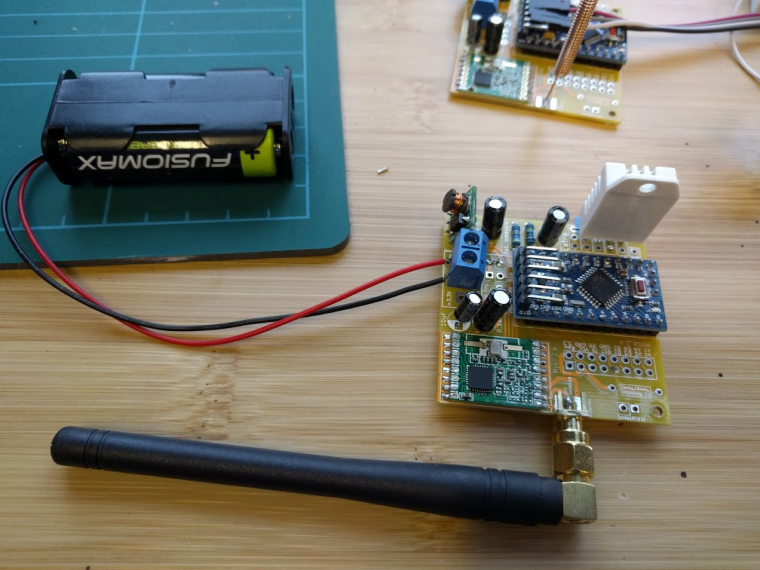
      My setup is using RFM69 hardware @ 433mhz. The sensors are are using the EasyPCB circuit boards and the gateway is an D1 Wemos and a RFM69HW.

      I know the gateway is functioning OK - I have tested communication between that and a sensor on a breadboard and they communicate fine. I did ponder if the frequencies could have been mismatched but the numbers on the chip for breadboard sensor and the 2 easypcb sensors I have made are identical so I would hope the same frequency.

      I have built 2 easyPCB sensors, Ive tried powering one from battery and one directly from the USB when debugging. The RFM69 has a strong 3.3v that doesnt seem to fluctuate or drop off atall.

      Gateway Logs (Wemos Mini D1 - RFM69HW)

      0;255;3;0;9;TSF:LRT:OK
      0;255;3;0;9;TSM:INIT
      0;255;3;0;9;TSF:WUR:MS=0
      scandone
      state: 0 -> 2 (b0)
      state: 2 -> 3 (0)
      state: 3 -> 5 (10)
      add 0
      aid 4
      cnt 
      
      connected with Ryanmt, channel 10
      dhcp client start...
      0;255;3;0;9;TSM:INIT:TSP OK
      0;255;3;0;9;TSM:INIT:GW MODE
      0;255;3;0;9;TSM:READY:ID=0,PAR=0,DIS=0
      0;255;3;0;9;MCO:REG:NOT NEEDED
      f r0, scandone
      .ip:192.168.5.17,mask:255.255.255.0,gw:192.168.5.1
      .IP: 192.168.5.17
      0;255;3;0;9;MCO:BGN:STP
      0;255;3;0;9;MCO:BGN:INIT OK,TSP=1
      pm open,type:2 0
      

      Sensor Logs (EasyPCB - RFM69H - 3.3V Arduino Pro Mini)

      0 MCO:BGN:INIT NODE,CP=RRNNA--,VER=2.1.1
      4 TSM:INIT
      4 TSF:WUR:MS=0
      8 TSM:INIT:TSP OK
      10 TSM:INIT:STATID=2
      12 TSF:SID:OK,ID=2
      14 TSM:FPAR
      145 TSF:MSG:SEND,2-2-255-255,s=255,c=3,t=7,pt=0,l=0,sg=0,ft=0,st=OK:
      2152 !TSM:FPAR:NO REPLY
      2154 TSM:FPAR
      2285 TSF:MSG:SEND,2-2-255-255,s=255,c=3,t=7,pt=0,l=0,sg=0,ft=0,st=OK:
      4292 !TSM:FPAR:NO REPLY
      4294 TSM:FPAR
      4425 TSF:MSG:SEND,2-2-255-255,s=255,c=3,t=7,pt=0,l=0,sg=0,ft=0,st=OK:
      6432 !TSM:FPAR:NO REPLY
      6434 TSM:FPAR
      6565 TSF:MSG:SEND,2-2-255-255,s=255,c=3,t=7,pt=0,l=0,sg=0,ft=0,st=OK:
      8574 !TSM:FPAR:FAIL
      8577 TSM:FAIL:CNT=1
      8579 TSM:FAIL:PDT
      

      The sketch is just the example battery sketch with the RFM69 module enabled and the node set to 2. I have built 2 identical nodes but both have this same issue of communicating to the gateway.

      R Offline
      R Offline
      Ryanmt
      wrote on last edited by Ryanmt
      #3

      Will give that a go. im 99% sure these are just RF69H though, they are easy to tell apart as the RF69HW has additional components onboard

      0_1508688851367_IMG_20171022_160915.jpg
      0_1508688869472_IMG_20171022_160923.jpg

      1 Reply Last reply
      0
      • gohanG Offline
        gohanG Offline
        gohan
        Mod
        wrote on last edited by
        #4

        The 10uF left most cap is not necessary.
        Could you please share a link to the sma antenna you have?

        1 Reply Last reply
        0
        • R Offline
          R Offline
          Ryanmt
          wrote on last edited by Ryanmt
          #5

          I'll try removing that then, they are especially cheap capacitor's..

          The sma antenna is https://rover.ebay.com/rover/0/0/0?mpre=https%3A%2F%2Fwww.ebay.co.uk%2Fulk%2Fitm%2F171802359586

          sundberg84S gohanG 3 Replies Last reply
          0
          • R Ryanmt

            I'll try removing that then, they are especially cheap capacitor's..

            The sma antenna is https://rover.ebay.com/rover/0/0/0?mpre=https%3A%2F%2Fwww.ebay.co.uk%2Fulk%2Fitm%2F171802359586

            sundberg84S Offline
            sundberg84S Offline
            sundberg84
            Hardware Contributor
            wrote on last edited by
            #6

            @Ryanmt hard to say exactly. Can you see any try/log in the gw when you get no reply in the node log?

            As seen in the Nrf version that radio is very sensitive to noice and those boosters can be really crappy some times. I have working nodes with boosters but it's somewhat untested for me how sensitive rfm radios are. You could desolder the booster and wire Vin and Vout to rule the booster out.

            1 Reply Last reply
            0
            • R Ryanmt

              I'll try removing that then, they are especially cheap capacitor's..

              The sma antenna is https://rover.ebay.com/rover/0/0/0?mpre=https%3A%2F%2Fwww.ebay.co.uk%2Fulk%2Fitm%2F171802359586

              sundberg84S Offline
              sundberg84S Offline
              sundberg84
              Hardware Contributor
              wrote on last edited by
              #7

              @Ryanmt also in the first picture you power everything from the ftdi. I'm not sure that works so well. The pcb is designed to be powered from the power input.

              R gohanG 2 Replies Last reply
              0
              • sundberg84S sundberg84

                @Ryanmt also in the first picture you power everything from the ftdi. I'm not sure that works so well. The pcb is designed to be powered from the power input.

                R Offline
                R Offline
                Ryanmt
                wrote on last edited by
                #8

                @sundberg84 I did think that so have tried it both ways and neither work. Both get a steady 3.3v at transceiver

                1 Reply Last reply
                0
                • sundberg84S Offline
                  sundberg84S Offline
                  sundberg84
                  Hardware Contributor
                  wrote on last edited by
                  #9
                  This post is deleted!
                  1 Reply Last reply
                  0
                  • sundberg84S sundberg84

                    @Ryanmt also in the first picture you power everything from the ftdi. I'm not sure that works so well. The pcb is designed to be powered from the power input.

                    gohanG Offline
                    gohanG Offline
                    gohan
                    Mod
                    wrote on last edited by
                    #10

                    @sundberg84 I've been powering my node for the antenna tests via ftdi and it was working fine, but it was actually using 10% of the TX power.

                    1 Reply Last reply
                    0
                    • sundberg84S Offline
                      sundberg84S Offline
                      sundberg84
                      Hardware Contributor
                      wrote on last edited by
                      #11

                      Ok then... good to know.
                      Let's continue... How about my questions above ?

                      1 Reply Last reply
                      0
                      • R Ryanmt

                        I'll try removing that then, they are especially cheap capacitor's..

                        The sma antenna is https://rover.ebay.com/rover/0/0/0?mpre=https%3A%2F%2Fwww.ebay.co.uk%2Fulk%2Fitm%2F171802359586

                        gohanG Offline
                        gohanG Offline
                        gohan
                        Mod
                        wrote on last edited by
                        #12

                        @Ryanmt did you test if those sma antennas perform better than wire antenna?

                        1 Reply Last reply
                        0
                        • R Offline
                          R Offline
                          Ryanmt
                          wrote on last edited by
                          #13

                          Thanks for the replies guys.

                          • The GW says nothing which to me indicates no TX from the sensors are reaching the gateway.
                          • I have powered from both FTDI and battery, my breadboard sensor works when powered from either FTDI or the battery + booster (same model)

                          Currently I can say the range for both SMA and the wound antenna is poor since neither work :-P My intention is for these to be long range as they will be at the bottom of the garden... when I get them up and running Ill try do some proper range tests and provide feedback if you are interested.

                          I sadly don’t own an oscilloscope, I would love to verify if the sensors are actually attempting to broadcast in anyway but I’m not sure I can do that with just a meter?

                          sundberg84S 1 Reply Last reply
                          0
                          • gohanG Offline
                            gohanG Offline
                            gohan
                            Mod
                            wrote on last edited by
                            #14

                            Try what I wrote in my first post and get back with the results.

                            1 Reply Last reply
                            0
                            • R Ryanmt

                              Thanks for the replies guys.

                              • The GW says nothing which to me indicates no TX from the sensors are reaching the gateway.
                              • I have powered from both FTDI and battery, my breadboard sensor works when powered from either FTDI or the battery + booster (same model)

                              Currently I can say the range for both SMA and the wound antenna is poor since neither work :-P My intention is for these to be long range as they will be at the bottom of the garden... when I get them up and running Ill try do some proper range tests and provide feedback if you are interested.

                              I sadly don’t own an oscilloscope, I would love to verify if the sensors are actually attempting to broadcast in anyway but I’m not sure I can do that with just a meter?

                              sundberg84S Offline
                              sundberg84S Offline
                              sundberg84
                              Hardware Contributor
                              wrote on last edited by sundberg84
                              #15

                              @Ryanmt - so, do I understand you correctly?
                              Exactly the same hardware/hardware-setup (incl antenna) & software works on the breadboard with that gateway - but when you solder them to the PCB it stops working?

                              If so there are these options:

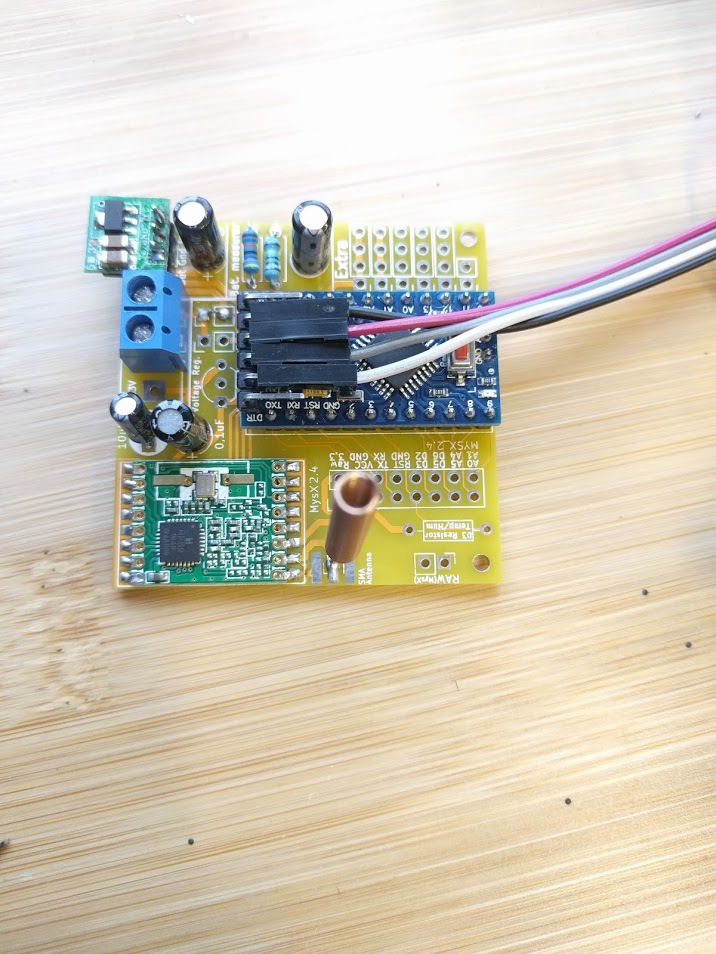
                              • You have made some soldering mistake (created a short.) (The solder-job looks really good on the images though...)
                              • The PCB you are using has some sort of manufacturing error.
                              • The antenna (length) needs to be changed on the PCB vs the breadboard setup.

                              I would set my multimeter into continuity and measure all lines, ie from radio -> mcu. Also measure continuity between all solder points next to each other on the radio(to make sure you dont have any shorts). Next thing would be to test different length on the antenna. You can also compare the PCB traces to the images on openhardware.io

                              The sketch is just the example battery sketch with the RFM69 module enabled

                              Could you also post the sketch you are using? (The standard sketch does not include the H def but i guess you added that)

                              1 Reply Last reply
                              0
                              Reply
                              • Reply as topic
                              Log in to reply
                              • Oldest to Newest
                              • Newest to Oldest
                              • Most Votes


                              25

                              Online

                              11.7k

                              Users

                              11.2k

                              Topics

                              113.1k

                              Posts


                              Copyright 2025 TBD   |   Forum Guidelines   |   Privacy Policy   |   Terms of Service
                              • Login

                              • Don't have an account? Register

                              • Login or register to search.
                              • First post
                                Last post
                              0
                              • MySensors
                              • OpenHardware.io
                              • Categories
                              • Recent
                              • Tags
                              • Popular