
Is it a good idea to use a Pi 3 as Gateway and Pi zero W as nodes ?
-
Ok that makes sense there is a communication type between the gateway and controller, and another one between the gateway and the nodes if I understand correctly.
I guess my Pi 3 would be the Gateway, but also run the Controller (Domoticz) and it could communicate with the controller and the nodes using WiFi !
Thanks for the help :)
-
That is the setup most people have. If you want to use esp8266 nodes, you need to use the esp8266 ethernet/mqtt gateway sketch, comment out the define for the nrf24 or rfm69 radio and add the code as it was a normal mysensors node. In domoticz you will need to add each esp8266 as mysensors gateway with its ip address or mqtt topic
-
I agree with @gohan if you go for wifi, use esp8266.
You can also save yourself a lot of trouble by going for Sonoff devices including the ESP8266, they are extremely cheap (starting at around 5$ for the basic version with 1 relay) and include everything: esp8266, power supply, relay, ...
They can also be reprogrammed easily, you can just solder some headers for the first programming, then use OTA. -
-
So If all my nodes use esp8266 and are declared as gateway, I don't have to make my raspberry work as a gateway right ? So I only need to install MySensors lib for my Arduinos sketchs.
@Nca78 I didn't know about Sonoff, it could replace my whole relay installation of arduinos :)
I'll look into it!I'm gonna do some research about MQTT aswell, because it means nothing to me :p
-
-
Some remarks:
If you plan to go only the esp8266 way, you may have a look at the espeasy project (also for the esp-based sonoff-devices).BUT: The big advantage of MySensors - especially when using serial gateways - is: You don't have the need for additional infrastructure as LAN or regular WiFi-Network. Additionally, the wifi data is stored on the ESP-chips, so in case you change your WiFi password, you will also have to reflash all ESPs (at least to my understanding).
Then: Using only "real" linux machines as you originally intended by using the zero Ws means also, you will have to take care about regular updates on all these devices to keep them secure. Using arduino devices is different: once the firmware is working, you will only have to make updates when there are significant changes in transmission protocols. At least until now, you can use "old" nRF-nodes programmed with mysensors Version 1.5.4 (or even older) alongside with GW's using the most recent code version.
So also these "old-fashioned" Arduinos have their (big) advantages. Imo changing from Arduino to "modern" devices is not the best idea. My personal preference would be to include old Arduino-based hardware using RS485 (2 wires) over rfm69 (@868MHz) to nrf24. The RS485 and nRF24 modules are pretty cheap, I bought my last ones at around 3.50 to 5 Euro per 10 pieces... (OK, nRF are often fakes, this is why rfm69 might be the better choice, but once the nRF-nodes work, you also don't have to worry about them any more).
Jm2ct.
-
@rejoe2 I've read many discussions about choosing between nRF24 and RFM69, and all the people agreed that the range of nRF24 was really bad.
I haven't tested it myself, but I'm using that kind of things :
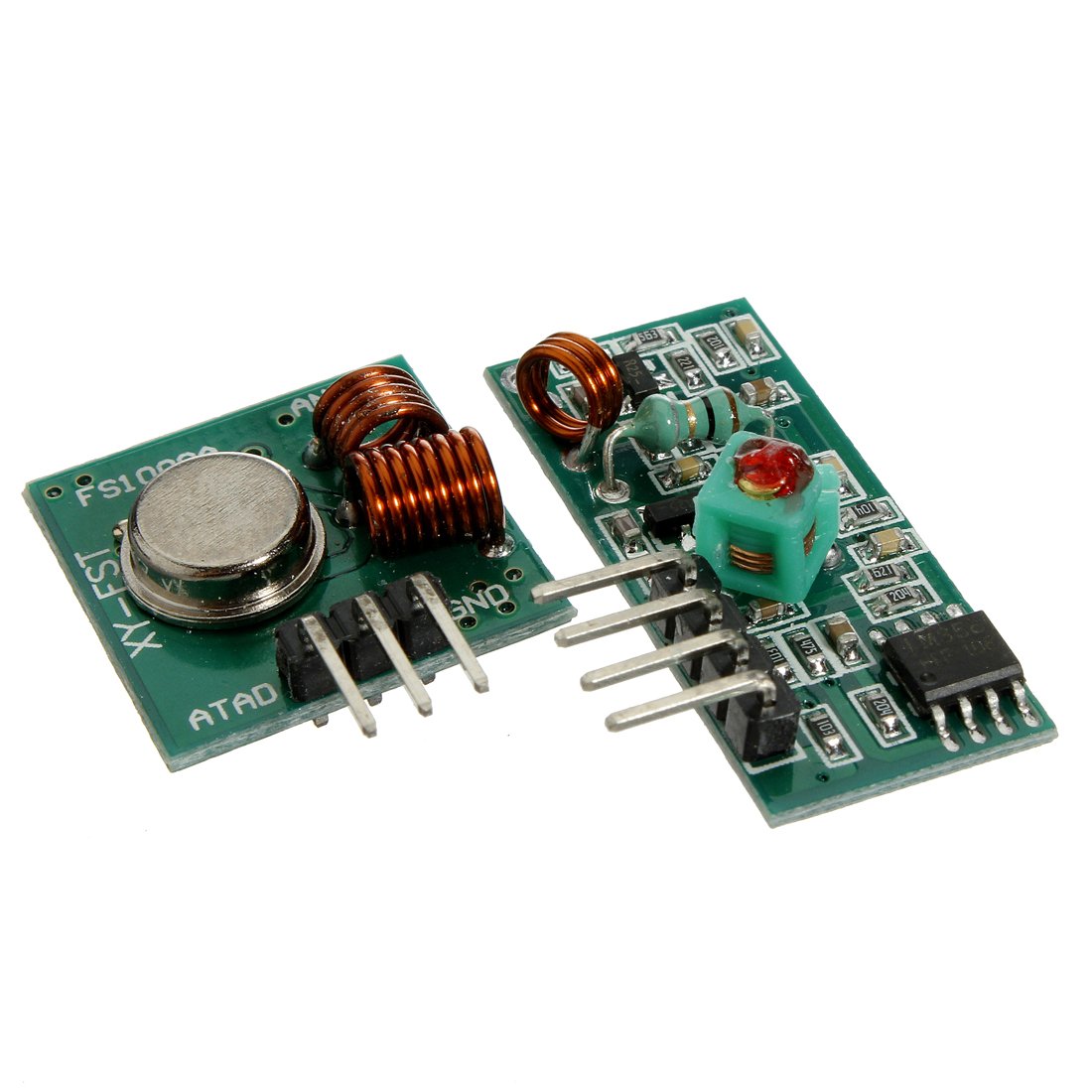
And the range is really bad, I can't communicate from one side of my apartment to the other (even with self made antennas! - 2 walls to pass and about 12m).
I'm buying a house, the place will be bigger and there will be a second floor, so I want to invest in something working at longer range :)
For what I've read, I like the idea of MQTT Broker and the use of Node Red with Domiticz to handle the sensors. But I'm still open the the RF way for small cost sensors... Since my Wifi sensors won't need a gateway, I can still use my Pi as a RF gateway and use both networks if I need !
Someone should create a Doc page with the pro and cons of each communication method, like in this topic, it could help people like me trying to choose the right things :)
Thanks guys!
-
@rejoe2 I've read many discussions about choosing between nRF24 and RFM69, and all the people agreed that the range of nRF24 was really bad.
I haven't tested it myself, but I'm using that kind of things :
And the range is really bad, I can't communicate from one side of my apartment to the other (even with self made antennas! - 2 walls to pass and about 12m).
I'm buying a house, the place will be bigger and there will be a second floor, so I want to invest in something working at longer range :)
For what I've read, I like the idea of MQTT Broker and the use of Node Red with Domiticz to handle the sensors. But I'm still open the the RF way for small cost sensors... Since my Wifi sensors won't need a gateway, I can still use my Pi as a RF gateway and use both networks if I need !
Someone should create a Doc page with the pro and cons of each communication method, like in this topic, it could help people like me trying to choose the right things :)
Thanks guys!
@pouniok My personal experience with nRF24 isn't bad. I used a pa+na-Version for the GW and a Repeater Node 2 floors downstairs to cover my hole house, both together with an adopter plate @70ct.
The receiver in your picture is known to be some of the worst rf-hw ever sold, so no wonder, this doesn't really work (sender is ok). Better use RXB12 (or similar), they are really good receivers and available on ebay for 4 Euro/5 pieces, if you like to stay at 433 (which imo is a bad rf-band to use, it's too noisy).
With MQTT, I have no experience, but imo, this only is usefull, if you have also to integrate other HW that natively "speaks" MQTT or want to make some parts available over internet. Otherwise, it just doubles data handling to controller (this is at least the case when using FHEM as controller) and may cause some delay (and a lot more possible points of failure). For me, this is more or less a no-go, I like to keep things as simple as can...
-
@pouniok My personal experience with nRF24 isn't bad. I used a pa+na-Version for the GW and a Repeater Node 2 floors downstairs to cover my hole house, both together with an adopter plate @70ct.
The receiver in your picture is known to be some of the worst rf-hw ever sold, so no wonder, this doesn't really work (sender is ok). Better use RXB12 (or similar), they are really good receivers and available on ebay for 4 Euro/5 pieces, if you like to stay at 433 (which imo is a bad rf-band to use, it's too noisy).
With MQTT, I have no experience, but imo, this only is usefull, if you have also to integrate other HW that natively "speaks" MQTT or want to make some parts available over internet. Otherwise, it just doubles data handling to controller (this is at least the case when using FHEM as controller) and may cause some delay (and a lot more possible points of failure). For me, this is more or less a no-go, I like to keep things as simple as can...
-
-
@rejoe2 I ordered better receivers and it's night and day. Now I can control things between walls without problem, so I'll stick with the RF network and gateway :)
-
@pouniok Thx for updating on this.
But nevertheless, I also would recommend to use a different Type of RF (ob even better: RS485, if you have at least 2 wires of any type where you want to place your nodes :grinning: ).I'm using RF 433 Mhz because most of the commercial RF power outlet are at this frequency. It allows me to control my lights without creating relays.
But I'm planning to use 868 Mhz for the roller shutter, but still hasn't found a suitable library to handle it with the Pi and Domoticz :)
-
I'm using RF 433 Mhz because most of the commercial RF power outlet are at this frequency. It allows me to control my lights without creating relays.
But I'm planning to use 868 Mhz for the roller shutter, but still hasn't found a suitable library to handle it with the Pi and Domoticz :)
@pouniok Controlling commercial Outlets is just one possible application within MySensors. @gohan and me are more talking about the communication between a MySensors-GW and MySensors-Nodes.
To use RF@868 you needn't much more than RFM69-Modules and the MySensors lib. For controlling Roller-Shutters there exists a working example at openhardware.io from @scalz . (Also with hw-design). -
I'm using RF 433 Mhz because most of the commercial RF power outlet are at this frequency. It allows me to control my lights without creating relays.
But I'm planning to use 868 Mhz for the roller shutter, but still hasn't found a suitable library to handle it with the Pi and Domoticz :)



Hello! It looks like you're interested in this conversation, but you don't have an account yet.
Getting fed up of having to scroll through the same posts each visit? When you register for an account, you'll always come back to exactly where you were before, and choose to be notified of new replies (either via email, or push notification). You'll also be able to save bookmarks and upvote posts to show your appreciation to other community members.
With your input, this post could be even better 💗
Register Login