
HLK-PMxx protection: choosing the right MOV / fuse value
-
Since one of my power supplies (the kind of black brick, like the ones that come with laptops) failed short because the varistor inside died, I no longer feel confident adding varistors to my designs.
-
@mfalkvidd it should, but in my case fuse somehow stayed intact, but UPS it was plugged into went into protection mode.
Now I am using Mean Well IRM-03 modules in my designs. They are only slightly more expensive than HLK, but have built-in fuse and overvoltage protection: https://www.meanwell.com/Upload/PDF/IRM-03/IRM-03-SPEC.PDF -
Hello @monte!
Which kind of varistor did you use? What was its rated voltage?
As @skywatch mentioned, if you chose a varistor which value was "too close" to your mains line, it probably got triggered too much...
Also, if your fuse was "too big" (500mA or more), it's probably the reason why it didn't blow.
Come have fun with me on IRC: #mysensors on Libera.chat :)
-
Hello @monte!
Which kind of varistor did you use? What was its rated voltage?
As @skywatch mentioned, if you chose a varistor which value was "too close" to your mains line, it probably got triggered too much...
Also, if your fuse was "too big" (500mA or more), it's probably the reason why it didn't blow.
@Encrypt I didn't choose anything, as I said it was a fuse and varistor in an enclosed PSU which came with some laptop. When I've opened it I've found blown MOV, after changing it and old main cap power supply became functional once again.
The thing I am saying is just tha MOV is a device conneted in short between live and neutral and with ability to fail short and not open it poses potential risks. -
@Encrypt I didn't choose anything, as I said it was a fuse and varistor in an enclosed PSU which came with some laptop. When I've opened it I've found blown MOV, after changing it and old main cap power supply became functional once again.
The thing I am saying is just tha MOV is a device conneted in short between live and neutral and with ability to fail short and not open it poses potential risks.The thing I am saying is just tha MOV is a device conneted in short between live >and neutral and with ability to fail short and not open it poses potential risks.
No it does not pose 'potential risks' - it removes a very real danger to the equipment and persons using that equipment.
A MOV is OPEN circuit when new. It only goes into conduction when a voltage greater than the value on the package is reached. When this happens it shorts live to neutral blowing the fuse and protecting the rest of the circuit and the person(s) using the device. This way it shorts the voltage surge to neutral (often ground) and in blowing the fuse it disconnects the power from the device.
Without a fuse in place it would be an issue, but that is why you ALWAYS use a fuse with a mov.
-
The thing I am saying is just tha MOV is a device conneted in short between live >and neutral and with ability to fail short and not open it poses potential risks.
No it does not pose 'potential risks' - it removes a very real danger to the equipment and persons using that equipment.
A MOV is OPEN circuit when new. It only goes into conduction when a voltage greater than the value on the package is reached. When this happens it shorts live to neutral blowing the fuse and protecting the rest of the circuit and the person(s) using the device. This way it shorts the voltage surge to neutral (often ground) and in blowing the fuse it disconnects the power from the device.
Without a fuse in place it would be an issue, but that is why you ALWAYS use a fuse with a mov.
@skywatch yes it does. The fact that you make effort to mitigate those risks, doesn't guarantee you've got rid of them completely. What if fuse blows second after your MOV caught on fire?
https://en.wikipedia.org/wiki/Varistor#Hazards
https://www.insulators.info/pictures/?id=268793122 -
@skywatch yes it does. The fact that you make effort to mitigate those risks, doesn't guarantee you've got rid of them completely. What if fuse blows second after your MOV caught on fire?
https://en.wikipedia.org/wiki/Varistor#Hazards
https://www.insulators.info/pictures/?id=268793122@monte You will never get rid of all risk, it is a fact of life.
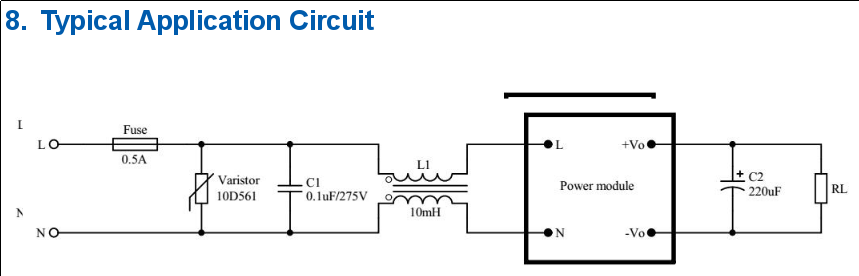
Considering that the diagram above shows a 500mA fast blow fuse, I doubt it will last a whole second with full mains across it. If worried about the fuse then use 2 or 3 in series.
As for the fire risk even the first link says "Under normal utility voltage conditions, this is not a problem."
The fact is that this is the best solution that gobal engineers have used for decades. It is an industry standard for protection. It is even used in Fluke multimeters to protect their input electronics from over voltage.
If you feel that there is a better solution with the same or better protection and lower risk, then please share it.
-
@monte You will never get rid of all risk, it is a fact of life.
Considering that the diagram above shows a 500mA fast blow fuse, I doubt it will last a whole second with full mains across it. If worried about the fuse then use 2 or 3 in series.
As for the fire risk even the first link says "Under normal utility voltage conditions, this is not a problem."
The fact is that this is the best solution that gobal engineers have used for decades. It is an industry standard for protection. It is even used in Fluke multimeters to protect their input electronics from over voltage.
If you feel that there is a better solution with the same or better protection and lower risk, then please share it.
@skywatch do Fluke meters work unattended in enclosed cabinets or walls, using varistors for power supply 24/7?
As I've said I prefer using a better power supplies with built-in over-voltage protection. As for how it is achieved without a varistor you can find plenty information by yourself using google.




Hello! It looks like you're interested in this conversation, but you don't have an account yet.
Getting fed up of having to scroll through the same posts each visit? When you register for an account, you'll always come back to exactly where you were before, and choose to be notified of new replies (either via email, or push notification). You'll also be able to save bookmarks and upvote posts to show your appreciation to other community members.
With your input, this post could be even better 💗
Register Login