Skip to content
  • MySensors
  • OpenHardware.io
  • Categories
  • Recent
  • Tags
  • Popular
Skins
  • Light
  • Brite
  • Cerulean
  • Cosmo
  • Flatly
  • Journal
  • Litera
  • Lumen
  • Lux
  • Materia
  • Minty
  • Morph
  • Pulse
  • Sandstone
  • Simplex
  • Sketchy
  • Spacelab
  • United
  • Yeti
  • Zephyr
  • Dark
  • Cyborg
  • Darkly
  • Quartz
  • Slate
  • Solar
  • Superhero
  • Vapor

  • Default (No Skin)
  • No Skin
Collapse
Brand Logo
  1. Home
  2. Hardware
  3. Sensor to measure amount of dripping water?

Sensor to measure amount of dripping water?

Scheduled Pinned Locked Moved Hardware
10 Posts 7 Posters 98 Views 6 Watching
  • Oldest to Newest
  • Newest to Oldest
  • Most Votes
Reply
  • Reply as topic
Log in to reply
This topic has been deleted. Only users with topic management privileges can see it.
  • 3 Offline
    3 Offline
    3nibble
    wrote on last edited by
    #1

    My gas heater produces condensate. The ratio condensate per gas shows the efficiency of the combustion which is what I want to track.
    Condensate drips from the heater, i. e. no pressure, just dripping water. Volume might range from zero to maybe 10 or 15 litres a day.

    I am looking for a sensor I can hook onto an Arduino or even better a sensor which I can connect to my existing 1-wire network.

    Thanks for hints.

    3nibble

    1 Reply Last reply
    0
    • electrikE Offline
      electrikE Offline
      electrik
      wrote on last edited by electrik
      #2

      A simple solution would be to weigh the condensate, but I'm not sure whether this is possible (from a mechanical point of view)

      1 Reply Last reply
      1
      • mfalkviddM Offline
        mfalkviddM Offline
        mfalkvidd
        Mod
        wrote on last edited by
        #3

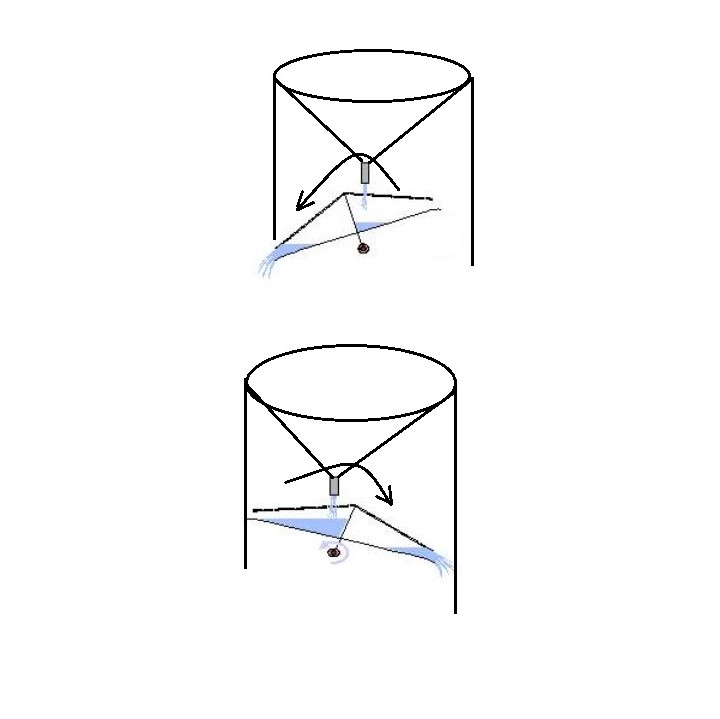
        Maybe a tipping bucket would work?

        1 Reply Last reply
        1
        • 3 Offline
          3 Offline
          3nibble
          wrote on last edited by 3nibble
          #4

          Thanks,
          A 3D-printed tipping bucket would certainly be an easy solution. I wonder whether there is a sensor, which is able to somehow directly "read" the volume. I understand, there is the difficulty of heavy fluctuations in volume, which the bucket avoids. But I could imagine there are for example medical applications which have to deal with similar requirements/difficulties.

          1 Reply Last reply
          0
          • JodailleJ Offline
            JodailleJ Offline
            Jodaille
            wrote on last edited by
            #5

            Hello,

            few years ago I was searching a technic to measure water level in a small tank.

            I have read somewhere that some motorbike have a gaz tank that use a "capacitance level meter".

            I have never succeeded but you may have a try.

            I have just found an example to illustrate:

            https://www.hackster.io/team-protocentral/non-contact-capacitive-liquid-level-sensing-using-fdc1004-9333c7

            1 Reply Last reply
            0
            • OldSurferDudeO Offline
              OldSurferDudeO Offline
              OldSurferDude
              wrote on last edited by OldSurferDude
              #6

              A small flow meter with a solenoid valve. Daily, open the valve and count the counts coming from the flow meter (400 counts/L).

              A series of level sensors (~$2 ea) might work, too. Again, a solenoid valve.

              I have to admit, a tipping bucket would be cost effective because it doesn't require a solenoid valve. but it wouldn't have the accuracy of the flow meter. The level sensors is kind of kludgy.

              OSD

              1 Reply Last reply
              0
              • NeverDieN Offline
                NeverDieN Offline
                NeverDie
                Hero Member
                wrote on last edited by NeverDie
                #7

                If it drips slow enough, maybe a simple photocell and led could be used to count each drip as it drops in-between. Use arduino analog input to look for a drop in the light intensity. i.e. a simple electric eye.

                1 Reply Last reply
                1
                • NeverDieN Offline
                  NeverDieN Offline
                  NeverDie
                  Hero Member
                  wrote on last edited by
                  #8

                  Some kind of through-beam sensor might work: https://www.amazon.com/Optical-Endstop-Photoelectric-Control-Printer/dp/B07MFT8NWJ/ref=asc_df_B07MFT8NWJ/?tag=hyprod-20&linkCode=df0&hvadid=241938907421&hvpos=&hvnetw=g&hvrand=9189408107204898573&hvpone=&hvptwo=&hvqmt=&hvdev=c&hvdvcmdl=&hvlocint=&hvlocphy=9028292&hvtargid=pla-664653941028&th=1

                  I once was interested in the same sort of thing for monitoring the effluent from a reverse osmosis filter at the air-gap to confirm that it wasn't wasting a lot of water. In my case there turned out to be an easier way.

                  1 Reply Last reply
                  0
                  • J Offline
                    J Offline
                    JeeLet
                    wrote on last edited by
                    #9

                    Yes, the toggle system is the best.
                    Tilt
                    but be careful, the condensate is very aggressive, their pH, an acidic liquid.
                    so no metal.
                    Ph

                    Here's an info: Why condensing boilers do not guarantee an efficient operation. : a link

                    the best of all worlds : a link link

                    1 Reply Last reply
                    0
                    • NeverDieN Offline
                      NeverDieN Offline
                      NeverDie
                      Hero Member
                      wrote on last edited by NeverDie
                      #10

                      I would think that it's the ambient air temperature that affects how much condensate you collect, together with how much fuel was burned. After the initial warm-up that gets you to steady state, wouldn't the efficiency be constant?

                      If the acidity is a problem, you can run the condensate over a bed of acid neutralizing rocks before it goes down your main drain. It's a thing.

                      1 Reply Last reply
                      0
                      Reply
                      • Reply as topic
                      Log in to reply
                      • Oldest to Newest
                      • Newest to Oldest
                      • Most Votes


                      21

                      Online

                      11.7k

                      Users

                      11.2k

                      Topics

                      113.1k

                      Posts


                      Copyright 2025 TBD   |   Forum Guidelines   |   Privacy Policy   |   Terms of Service
                      • Login

                      • Don't have an account? Register

                      • Login or register to search.
                      • First post
                        Last post
                      0
                      • MySensors
                      • OpenHardware.io
                      • Categories
                      • Recent
                      • Tags
                      • Popular