Skip to content
  • MySensors
  • OpenHardware.io
  • Categories
  • Recent
  • Tags
  • Popular
Skins
  • Light
  • Brite
  • Cerulean
  • Cosmo
  • Flatly
  • Journal
  • Litera
  • Lumen
  • Lux
  • Materia
  • Minty
  • Morph
  • Pulse
  • Sandstone
  • Simplex
  • Sketchy
  • Spacelab
  • United
  • Yeti
  • Zephyr
  • Dark
  • Cyborg
  • Darkly
  • Quartz
  • Slate
  • Solar
  • Superhero
  • Vapor

  • Default (No Skin)
  • No Skin
Collapse
Brand Logo
  1. Home
  2. Hardware
  3. Sensor to measure amount of dripping water?

Sensor to measure amount of dripping water?

Scheduled Pinned Locked Moved Hardware
10 Posts 7 Posters 1.5k Views 6 Watching
  • Oldest to Newest
  • Newest to Oldest
  • Most Votes
Reply
  • Reply as topic
Log in to reply
This topic has been deleted. Only users with topic management privileges can see it.
  • 3 Offline
    3 Offline
    3nibble
    wrote on last edited by
    #1

    My gas heater produces condensate. The ratio condensate per gas shows the efficiency of the combustion which is what I want to track.
    Condensate drips from the heater, i. e. no pressure, just dripping water. Volume might range from zero to maybe 10 or 15 litres a day.

    I am looking for a sensor I can hook onto an Arduino or even better a sensor which I can connect to my existing 1-wire network.

    Thanks for hints.

    3nibble

    1 Reply Last reply
    0
    • electrikE Offline
      electrikE Offline
      electrik
      wrote on last edited by electrik
      #2

      A simple solution would be to weigh the condensate, but I'm not sure whether this is possible (from a mechanical point of view)

      1 Reply Last reply
      1
      • mfalkviddM Online
        mfalkviddM Online
        mfalkvidd
        Mod
        wrote on last edited by
        #3

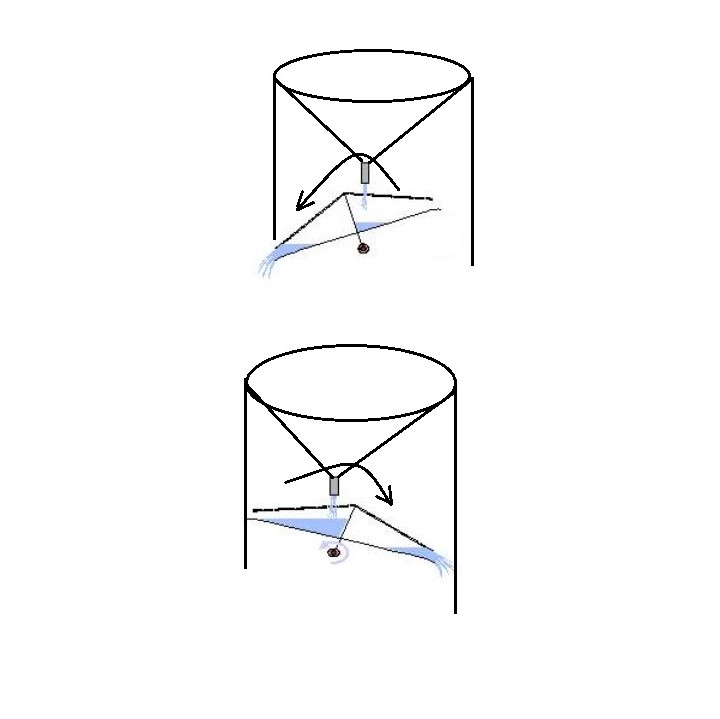
        Maybe a tipping bucket would work?

        1 Reply Last reply
        1
        • 3 Offline
          3 Offline
          3nibble
          wrote on last edited by 3nibble
          #4

          Thanks,
          A 3D-printed tipping bucket would certainly be an easy solution. I wonder whether there is a sensor, which is able to somehow directly "read" the volume. I understand, there is the difficulty of heavy fluctuations in volume, which the bucket avoids. But I could imagine there are for example medical applications which have to deal with similar requirements/difficulties.

          1 Reply Last reply
          0
          • JodailleJ Offline
            JodailleJ Offline
            Jodaille
            wrote on last edited by
            #5

            Hello,

            few years ago I was searching a technic to measure water level in a small tank.

            I have read somewhere that some motorbike have a gaz tank that use a "capacitance level meter".

            I have never succeeded but you may have a try.

            I have just found an example to illustrate:

            https://www.hackster.io/team-protocentral/non-contact-capacitive-liquid-level-sensing-using-fdc1004-9333c7

            1 Reply Last reply
            0
            • OldSurferDudeO Offline
              OldSurferDudeO Offline
              OldSurferDude
              wrote on last edited by OldSurferDude
              #6

              A small flow meter with a solenoid valve. Daily, open the valve and count the counts coming from the flow meter (400 counts/L).

              A series of level sensors (~$2 ea) might work, too. Again, a solenoid valve.

              I have to admit, a tipping bucket would be cost effective because it doesn't require a solenoid valve. but it wouldn't have the accuracy of the flow meter. The level sensors is kind of kludgy.

              OSD

              1 Reply Last reply
              0
              • N Offline
                N Offline
                NeverDie
                Hero Member
                wrote on last edited by NeverDie
                #7

                If it drips slow enough, maybe a simple photocell and led could be used to count each drip as it drops in-between. Use arduino analog input to look for a drop in the light intensity. i.e. a simple electric eye.

                1 Reply Last reply
                1
                • N Offline
                  N Offline
                  NeverDie
                  Hero Member
                  wrote on last edited by
                  #8

                  Some kind of through-beam sensor might work: https://www.amazon.com/Optical-Endstop-Photoelectric-Control-Printer/dp/B07MFT8NWJ/ref=asc_df_B07MFT8NWJ/?tag=hyprod-20&linkCode=df0&hvadid=241938907421&hvpos=&hvnetw=g&hvrand=9189408107204898573&hvpone=&hvptwo=&hvqmt=&hvdev=c&hvdvcmdl=&hvlocint=&hvlocphy=9028292&hvtargid=pla-664653941028&th=1

                  I once was interested in the same sort of thing for monitoring the effluent from a reverse osmosis filter at the air-gap to confirm that it wasn't wasting a lot of water. In my case there turned out to be an easier way.

                  1 Reply Last reply
                  0
                  • J Offline
                    J Offline
                    JeeLet
                    wrote on last edited by
                    #9

                    Yes, the toggle system is the best.
                    Tilt
                    but be careful, the condensate is very aggressive, their pH, an acidic liquid.
                    so no metal.
                    Ph

                    Here's an info: Why condensing boilers do not guarantee an efficient operation. : a link

                    the best of all worlds : a link link

                    1 Reply Last reply
                    0
                    • N Offline
                      N Offline
                      NeverDie
                      Hero Member
                      wrote on last edited by NeverDie
                      #10

                      I would think that it's the ambient air temperature that affects how much condensate you collect, together with how much fuel was burned. After the initial warm-up that gets you to steady state, wouldn't the efficiency be constant?

                      If the acidity is a problem, you can run the condensate over a bed of acid neutralizing rocks before it goes down your main drain. It's a thing.

                      1 Reply Last reply
                      0

                      Hello! It looks like you're interested in this conversation, but you don't have an account yet.

                      Getting fed up of having to scroll through the same posts each visit? When you register for an account, you'll always come back to exactly where you were before, and choose to be notified of new replies (either via email, or push notification). You'll also be able to save bookmarks and upvote posts to show your appreciation to other community members.

                      With your input, this post could be even better 💗

                      Register Login
                      Reply
                      • Reply as topic
                      Log in to reply
                      • Oldest to Newest
                      • Newest to Oldest
                      • Most Votes


                      14

                      Online

                      12.1k

                      Users

                      11.2k

                      Topics

                      113.4k

                      Posts


                      Copyright 2025 TBD   |   Forum Guidelines   |   Privacy Policy   |   Terms of Service
                      • Login

                      • Don't have an account? Register

                      • Login or register to search.
                      • First post
                        Last post
                      0
                      • MySensors
                      • OpenHardware.io
                      • Categories
                      • Recent
                      • Tags
                      • Popular