Skip to content
  • MySensors
  • OpenHardware.io
  • Categories
  • Recent
  • Tags
  • Popular
Skins
  • Light
  • Brite
  • Cerulean
  • Cosmo
  • Flatly
  • Journal
  • Litera
  • Lumen
  • Lux
  • Materia
  • Minty
  • Morph
  • Pulse
  • Sandstone
  • Simplex
  • Sketchy
  • Spacelab
  • United
  • Yeti
  • Zephyr
  • Dark
  • Cyborg
  • Darkly
  • Quartz
  • Slate
  • Solar
  • Superhero
  • Vapor

  • Default (No Skin)
  • No Skin
Collapse
Brand Logo
  1. Home
  2. Hardware
  3. Efficiency of Voltage Boosters

Efficiency of Voltage Boosters

Scheduled Pinned Locked Moved Hardware
47 Posts 14 Posters 34.4k Views 7 Watching
  • Oldest to Newest
  • Newest to Oldest
  • Most Votes
Reply
  • Reply as topic
Log in to reply
This topic has been deleted. Only users with topic management privileges can see it.
  • A Offline
    A Offline
    a-lurker
    wrote on last edited by
    #22

    Just adding to the above. It does make sense to run the radio directly off the battery (1V9 to 3V6) but two problems remain: the CPU brownout detector and the minimum Voltage required to run the CPU, which is 2V4 at 8 MHz.. See also:

    http://forum.micasaverde.com/index.php/topic,20078.msg164716.html#msg164716

    The radio must have a supply Voltage of 2V7 to 3V3 if the input signals are greater than 3V6. you would encounter this when running a CPU at 5V, which hopefully you wouldn't be doing on a battery powered set up.

    BSoftB 1 Reply Last reply
    0
    • A a-lurker

      Just adding to the above. It does make sense to run the radio directly off the battery (1V9 to 3V6) but two problems remain: the CPU brownout detector and the minimum Voltage required to run the CPU, which is 2V4 at 8 MHz.. See also:

      http://forum.micasaverde.com/index.php/topic,20078.msg164716.html#msg164716

      The radio must have a supply Voltage of 2V7 to 3V3 if the input signals are greater than 3V6. you would encounter this when running a CPU at 5V, which hopefully you wouldn't be doing on a battery powered set up.

      BSoftB Offline
      BSoftB Offline
      BSoft
      wrote on last edited by BSoft
      #23

      @a-lurker If brownout detection is disabled we could power atmega328p with 1.9V minimum, but frequency of operation will decrease.
      I know you get it right, i just want to standout that there is no problem of operation at low voltage if we know 2 thinks:

      • disable BOD (no soft)
      • we get lower frequency
      1 Reply Last reply
      0
      • Z Offline
        Z Offline
        Zeph
        Hero Member
        wrote on last edited by Zeph
        #24

        There are a few subjects in this valuable thread.

        One is the best type of capacitor to use across the power and ground of the nRF24L01+ module. I'm very interested in that. My earliest tests were frustrating, I was busy trying to figure out what was wrong with the software (before I came here by the way), but it turned out to be power and/or too long SPI wires. A cap across the power at the module made a great difference. So I'm tending towards always doing that in the future, and I'd like to know what kind to stock up on.

        I'm seeing some opinion that tantalum would be better, some that it has too high ESR. So a low ESR electrolytic (probable aluminum polymer) would be better. Or maybe a ceramic is better still, and cheap.

        Are there any recommended caps below 50 cents in small quantities? Is there anything from eBay or Tayda or are those all junk for our purposes? If not, Digikey or Mouser is OK, tho the minimum shipping raises the effective cost per unit substantially for small quantities (and I may not have a large order to combine it with for months).

        There is a variation of this question which is about caps for use with noisy boost converters. I am thinking that a good cap for that purpose would also be a good cap for use with the tranceiver in general - low ESR and with an appropriate value, with low leakage. (In another case the noise of a sensor or actuator might be what needs to be filtered out rather than a boost voltage converter).

        1 Reply Last reply
        0
        • marceltrapmanM Offline
          marceltrapmanM Offline
          marceltrapman
          Mod
          wrote on last edited by marceltrapman
          #25

          I changed the capacitor that I used for my radios from 4.7 mF into 220 mF and I can only say thank you for this discussion, it is really immediately much better :)

          Fulltime Servoy Developer
          Parttime Moderator MySensors board

          I use Domoticz as controller for Z-Wave and MySensors (previously Indigo and OpenHAB).
          I have a FABtotum to print cases.

          DammeD axillentA 2 Replies Last reply
          0
          • marceltrapmanM marceltrapman

            I changed the capacitor that I used for my radios from 4.7 mF into 220 mF and I can only say thank you for this discussion, it is really immediately much better :)

            DammeD Offline
            DammeD Offline
            Damme
            Code Contributor
            wrote on last edited by
            #26

            @marceltrapman mF as in milli or micro? :) µF I suppose..

            1 Reply Last reply
            0
            • marceltrapmanM marceltrapman

              I changed the capacitor that I used for my radios from 4.7 mF into 220 mF and I can only say thank you for this discussion, it is really immediately much better :)

              axillentA Offline
              axillentA Offline
              axillent
              Mod
              wrote on last edited by axillent
              #27

              @marceltrapman there is a convention to mark micro by µ if you have a special symbol or by u if you don't
              this way 220 micro Farad should be market as 220 µF or 220 uF

              @Damme it is a good point)

              sense and drive

              1 Reply Last reply
              0
              • marceltrapmanM Offline
                marceltrapmanM Offline
                marceltrapman
                Mod
                wrote on last edited by
                #28

                @Damme @axillent Oh my, so much to learn :)
                Thank you guys, I mean 220 uF...

                Fulltime Servoy Developer
                Parttime Moderator MySensors board

                I use Domoticz as controller for Z-Wave and MySensors (previously Indigo and OpenHAB).
                I have a FABtotum to print cases.

                DammeD 1 Reply Last reply
                0
                • marceltrapmanM marceltrapman

                  @Damme @axillent Oh my, so much to learn :)
                  Thank you guys, I mean 220 uF...

                  DammeD Offline
                  DammeD Offline
                  Damme
                  Code Contributor
                  wrote on last edited by
                  #29

                  @marceltrapman You're welcome :)

                  I tried 220µF myself now (EU keyoard can write µ with alt-gr+m or (ctrl+alt m if alt+gr is missing))

                  much better, I first used 33µF and then 100µF but 220µF is a winner.
                  The wierd thing is that I cant measure any difference with 33µF or 220µF with my oscilloscope. but with no cap at all my arduino nano 3.3v looks like this: (AC coupled)
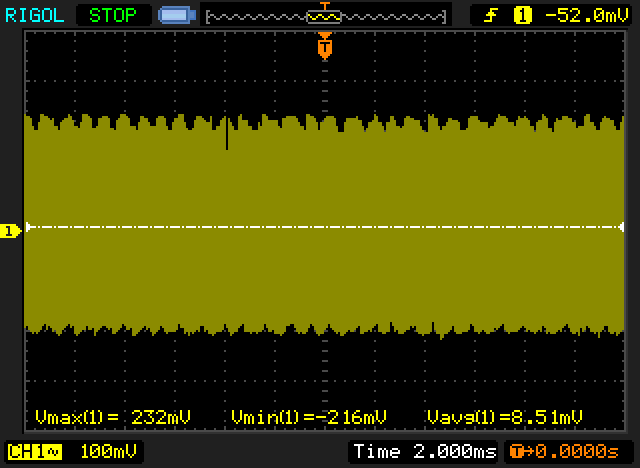
                  NewFile0.png
                  And wit cap (33µF or 220µF makes no difference at all..) But it works much better..
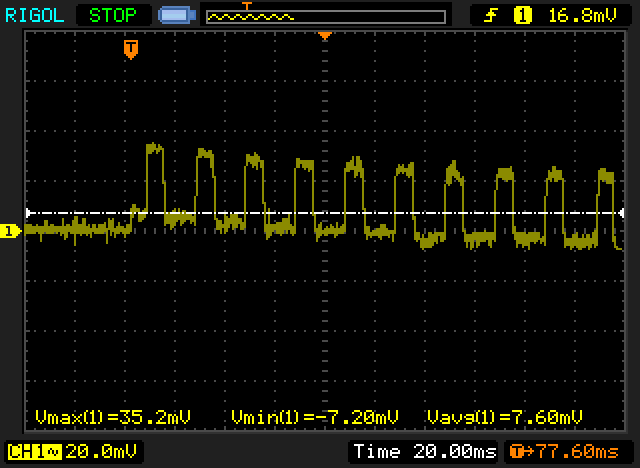
                  NewFile4.png

                  YveauxY Z 2 Replies Last reply
                  0
                  • DammeD Damme

                    @marceltrapman You're welcome :)

                    I tried 220µF myself now (EU keyoard can write µ with alt-gr+m or (ctrl+alt m if alt+gr is missing))

                    much better, I first used 33µF and then 100µF but 220µF is a winner.
                    The wierd thing is that I cant measure any difference with 33µF or 220µF with my oscilloscope. but with no cap at all my arduino nano 3.3v looks like this: (AC coupled)

                    NewFile0.png
                    And wit cap (33µF or 220µF makes no difference at all..) But it works much better..
                    NewFile4.png

                    YveauxY Offline
                    YveauxY Offline
                    Yveaux
                    Mod
                    wrote on last edited by
                    #30

                    @Damme strange, disturbance is around 50hz... Could it be caused by mains supply?

                    http://yveaux.blogspot.nl

                    DammeD 1 Reply Last reply
                    0
                    • YveauxY Yveaux

                      @Damme strange, disturbance is around 50hz... Could it be caused by mains supply?

                      DammeD Offline
                      DammeD Offline
                      Damme
                      Code Contributor
                      wrote on last edited by
                      #31

                      @Yveaux I triggerd on transmission.

                      1 Reply Last reply
                      0
                      • marceltrapmanM Offline
                        marceltrapmanM Offline
                        marceltrapman
                        Mod
                        wrote on last edited by
                        #32

                        @Yveaux As mentioned I am still learning about this stuff.
                        The question I have right now is, a bit off topic, at which pin do you measure this?
                        Is that simply vcc on the radio?

                        Fulltime Servoy Developer
                        Parttime Moderator MySensors board

                        I use Domoticz as controller for Z-Wave and MySensors (previously Indigo and OpenHAB).
                        I have a FABtotum to print cases.

                        YveauxY 1 Reply Last reply
                        0
                        • marceltrapmanM marceltrapman

                          @Yveaux As mentioned I am still learning about this stuff.
                          The question I have right now is, a bit off topic, at which pin do you measure this?
                          Is that simply vcc on the radio?

                          YveauxY Offline
                          YveauxY Offline
                          Yveaux
                          Mod
                          wrote on last edited by Yveaux
                          #33

                          @marceltrapman I guess. If you want to measure stability of supply of the nrf then you measure on vcc & gnd of the nrf.

                          http://yveaux.blogspot.nl

                          1 Reply Last reply
                          0
                          • marceltrapmanM Offline
                            marceltrapmanM Offline
                            marceltrapman
                            Mod
                            wrote on last edited by
                            #34

                            @Yveaux :)

                            Fulltime Servoy Developer
                            Parttime Moderator MySensors board

                            I use Domoticz as controller for Z-Wave and MySensors (previously Indigo and OpenHAB).
                            I have a FABtotum to print cases.

                            1 Reply Last reply
                            0
                            • DammeD Damme

                              @marceltrapman You're welcome :)

                              I tried 220µF myself now (EU keyoard can write µ with alt-gr+m or (ctrl+alt m if alt+gr is missing))

                              much better, I first used 33µF and then 100µF but 220µF is a winner.
                              The wierd thing is that I cant measure any difference with 33µF or 220µF with my oscilloscope. but with no cap at all my arduino nano 3.3v looks like this: (AC coupled)

                              NewFile0.png
                              And wit cap (33µF or 220µF makes no difference at all..) But it works much better..
                              NewFile4.png

                              Z Offline
                              Z Offline
                              Zeph
                              Hero Member
                              wrote on last edited by
                              #35

                              @Damme said:

                              much better, I first used 33µF and then 100µF but 220µF is a winner.
                              The wierd thing is that I cant measure any difference with 33µF or 220µF with my oscilloscope.

                              So I think you are saying that you are not seeing a visual difference (on the o'scope) between 33uF and 220uF, but you are seeing better real world performance with the latter?

                              Do the different capacitors have the same spec's? I'm wondering if the capacity is the only significant change, or if the different values of cap you tested have different specs (eg: ESR) or even diff technology.

                              DammeD 1 Reply Last reply
                              0
                              • Z Zeph

                                @Damme said:

                                much better, I first used 33µF and then 100µF but 220µF is a winner.
                                The wierd thing is that I cant measure any difference with 33µF or 220µF with my oscilloscope.

                                So I think you are saying that you are not seeing a visual difference (on the o'scope) between 33uF and 220uF, but you are seeing better real world performance with the latter?

                                Do the different capacitors have the same spec's? I'm wondering if the capacity is the only significant change, or if the different values of cap you tested have different specs (eg: ESR) or even diff technology.

                                DammeD Offline
                                DammeD Offline
                                Damme
                                Code Contributor
                                wrote on last edited by Damme
                                #36

                                @Zeph Exacly, I first used 3.3µf and there I see voltage drop. But almost no measurable difference with 33µF or 220µF. But I get less failed transmission with the larger cap.
                                They are all the same brand (some cheap Chinese unknown (to me) brand, "Chong" (yay!))
                                All 16v, and all electrolytic. I don't have any ESR meter, thinking of trying to measure it with oscilloscope and function generator.. (Or I'll just bu one :))

                                I bought them from ebay in a large 1800pcs asorted pack.

                                1 Reply Last reply
                                0
                                • T Offline
                                  T Offline
                                  therik
                                  wrote on last edited by
                                  #37

                                  New data on the XC9140A331 3.3 V voltage booster. This looks like a nice IC with low quiescent current and an improvement over the stock "china" 3.3 V booster.
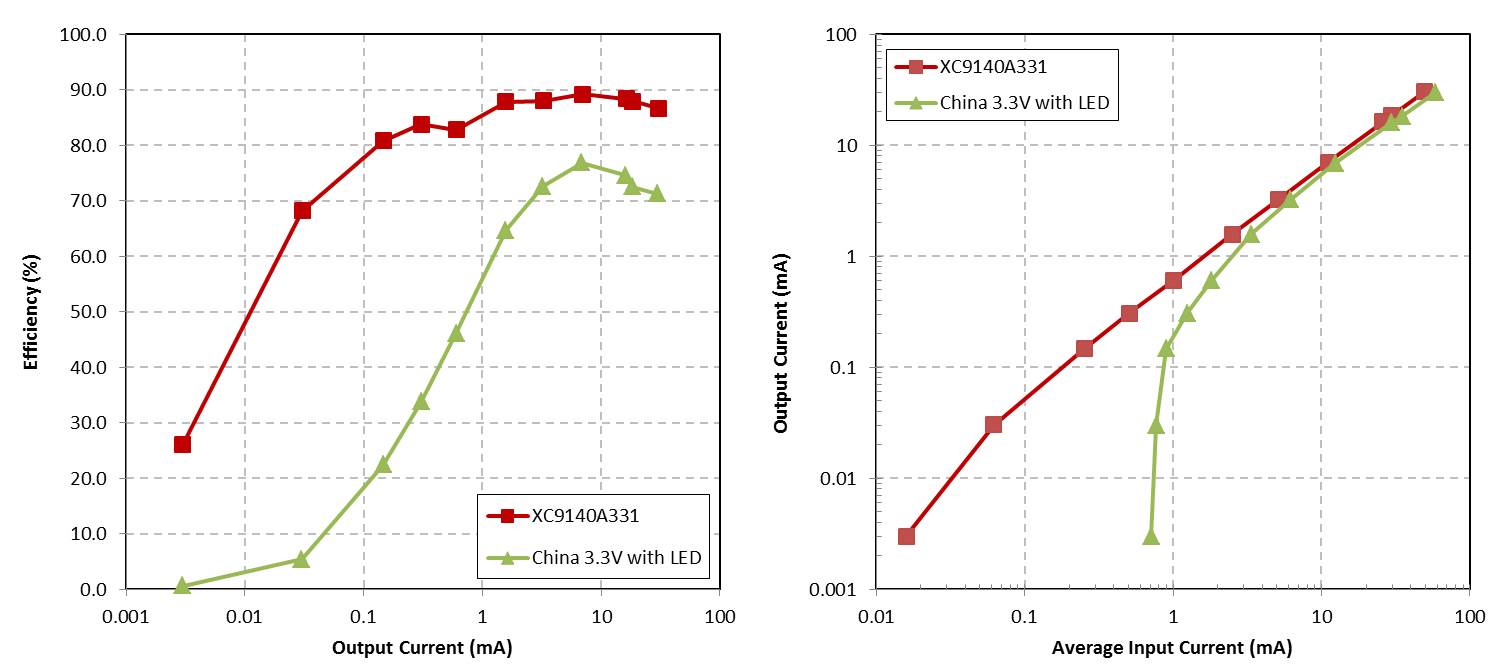
                                  XC9140.jpg

                                  This option can be purchased from Digikey for $0.90, with a total bill of materials of $1.34 (in quantity, minus a PCB). It is also a nice size SOT23-5, not too small to hand solder.

                                  Thoughts?

                                  axillentA 1 Reply Last reply
                                  0
                                  • T therik

                                    New data on the XC9140A331 3.3 V voltage booster. This looks like a nice IC with low quiescent current and an improvement over the stock "china" 3.3 V booster.

                                    XC9140.jpg

                                    This option can be purchased from Digikey for $0.90, with a total bill of materials of $1.34 (in quantity, minus a PCB). It is also a nice size SOT23-5, not too small to hand solder.

                                    Thoughts?

                                    axillentA Offline
                                    axillentA Offline
                                    axillent
                                    Mod
                                    wrote on last edited by
                                    #38

                                    @therik thanks, it is an interesting chip

                                    sense and drive

                                    1 Reply Last reply
                                    0
                                    • Z Offline
                                      Z Offline
                                      Zeph
                                      Hero Member
                                      wrote on last edited by Zeph
                                      #39

                                      @therik

                                      I look forward to a test of the TPS61222 used in the MySensors Battery board - I see the chip on your list and hope you will be checking it.

                                      Felix at lowpowerlab (http://lowpowerlab.com/blog/2014/06/08/powershield-r2-released/) has switched from the TPS61220 to the LTC3525 for stability reasons. That's a 5v chip, tho but maybe there's a related one as a contender.

                                      1 Reply Last reply
                                      0
                                      • DammeD Offline
                                        DammeD Offline
                                        Damme
                                        Code Contributor
                                        wrote on last edited by
                                        #40

                                        How do you guys measure <mA accuratly? Using mr Jones's µCurrent?

                                        YveauxY 1 Reply Last reply
                                        0
                                        • DammeD Damme

                                          How do you guys measure <mA accuratly? Using mr Jones's µCurrent?

                                          YveauxY Offline
                                          YveauxY Offline
                                          Yveaux
                                          Mod
                                          wrote on last edited by
                                          #41

                                          @Damme Yup. Build some myself (and have a few spares, for who'se interested)

                                          http://yveaux.blogspot.nl

                                          1 Reply Last reply
                                          0
                                          Reply
                                          • Reply as topic
                                          Log in to reply
                                          • Oldest to Newest
                                          • Newest to Oldest
                                          • Most Votes


                                          29

                                          Online

                                          11.7k

                                          Users

                                          11.2k

                                          Topics

                                          113.1k

                                          Posts


                                          Copyright 2025 TBD   |   Forum Guidelines   |   Privacy Policy   |   Terms of Service
                                          • Login

                                          • Don't have an account? Register

                                          • Login or register to search.
                                          • First post
                                            Last post
                                          0
                                          • MySensors
                                          • OpenHardware.io
                                          • Categories
                                          • Recent
                                          • Tags
                                          • Popular