Skip to content
  • MySensors
  • OpenHardware.io
  • Categories
  • Recent
  • Tags
  • Popular
Skins
  • Light
  • Brite
  • Cerulean
  • Cosmo
  • Flatly
  • Journal
  • Litera
  • Lumen
  • Lux
  • Materia
  • Minty
  • Morph
  • Pulse
  • Sandstone
  • Simplex
  • Sketchy
  • Spacelab
  • United
  • Yeti
  • Zephyr
  • Dark
  • Cyborg
  • Darkly
  • Quartz
  • Slate
  • Solar
  • Superhero
  • Vapor

  • Default (No Skin)
  • No Skin
Collapse
Brand Logo
  1. Home
  2. Hardware
  3. Soldering tips for atmega328p-au?

Soldering tips for atmega328p-au?

Scheduled Pinned Locked Moved Hardware
17 Posts 5 Posters 5.3k Views 6 Watching
  • Oldest to Newest
  • Newest to Oldest
  • Most Votes
Reply
  • Reply as topic
Log in to reply
This topic has been deleted. Only users with topic management privileges can see it.
  • NeverDieN NeverDie

    I'm wondering if anyone has found a truly easy way to solder the surface mount atmega328p-au to a pcb?

    Things I've tried in the past that seemed to help:

    1. tack a corner pad using solder paste, or
    2. position the chip using super glue, then solder afterward

    I'm aware some people use a reflow oven. I haven't tried that yet.

    Anything else?

    YveauxY Offline
    YveauxY Offline
    Yveaux
    Mod
    wrote on last edited by
    #2

    @NeverDie use drag soldering. Remove excess solder using wick.

    http://yveaux.blogspot.nl

    NeverDieN 1 Reply Last reply
    0
    • carlekiC Offline
      carlekiC Offline
      carleki
      wrote on last edited by carleki
      #3

      With a USB microscope and tiny solder iron, it's ok to solder atmega328p-au !

      Is it possible to do DIY PCB for SMD atmega ?
      I'm doing my PCBs with toner transfer + acetone at the moment. It works great for DIP atmega, but I can't do SMD version because the ways are to tiny ...

      Any idea ?

      YveauxY 1 Reply Last reply
      0
      • carlekiC carleki

        With a USB microscope and tiny solder iron, it's ok to solder atmega328p-au !

        Is it possible to do DIY PCB for SMD atmega ?
        I'm doing my PCBs with toner transfer + acetone at the moment. It works great for DIP atmega, but I can't do SMD version because the ways are to tiny ...

        Any idea ?

        YveauxY Offline
        YveauxY Offline
        Yveaux
        Mod
        wrote on last edited by Yveaux
        #4

        @carmelo42 Using foto-sensitive pcb material, UV light and printing your design on transparent slides it should also be possible.
        I no longer bother creating PCB's myself, as I can order them very cheap from China, with silkscreen, solder mask and far better quality...

        http://yveaux.blogspot.nl

        carlekiC 1 Reply Last reply
        0
        • YveauxY Yveaux

          @carmelo42 Using foto-sensitive pcb material, UV light and printing your design on transparent slides it should also be possible.
          I no longer bother creating PCB's myself, as I can order them very cheap from China, with silkscreen, solder mask and far better quality...

          carlekiC Offline
          carlekiC Offline
          carleki
          wrote on last edited by
          #5

          @Yveaux said:

          @carmelo42 Using foto-sensitive pcb material, UV light and printing your design on transparent slides it should also be possible.
          I no longer bother creating PCB's myself, as I can order them very cheap from China, with silkscreen, solder mask and far better quality...

          ok ! I have ordered PCBs from dirtypcb.com (the files for "my-slim-2aa-battery-node"), but I'm not advanced enough to design PCBs with siklscreen and solder mask (yet ^^)

          1 Reply Last reply
          0
          • YveauxY Yveaux

            @NeverDie use drag soldering. Remove excess solder using wick.

            NeverDieN Offline
            NeverDieN Offline
            NeverDie
            Hero Member
            wrote on last edited by NeverDie
            #6

            @Yveaux said:

            @NeverDie use drag soldering. Remove excess solder using wick.

            Thanks. I just now tried the Dave Jones method of tack and reflow, and had success with that. I found the most essential thing is to verify that the chip is perfectly aligned before proceeding after the solder tack. If it's not, I found I absolutely MUST re-position it until it is before proceeding. That's probably the hardest part of the entire operation. I didn't need to use a microscope or other magnification during the soldering process itself.

            I didn't have any solder wick on hand, but I was able to wick off the excess solder using the soldering tip, and then cleaning the tip between "wicks".

            https://www.youtube.com/watch?v=b9FC9fAlfQE

            1 Reply Last reply
            1
            • NeverDieN NeverDie

              I'm wondering if anyone has found a truly easy way to solder the surface mount atmega328p-au to a pcb?

              Things I've tried in the past that seemed to help:

              1. tack a corner pad using solder paste, or
              2. position the chip using super glue, then solder afterward

              I'm aware some people use a reflow oven. I haven't tried that yet.

              Anything else?

              chrilleC Offline
              chrilleC Offline
              chrille
              wrote on last edited by
              #7

              @NeverDie said:

              Things I've tried in the past that seemed to help:

              1. tack a corner pad using solder paste, or
              2. position the chip using super glue, then solder afterward

              I'm aware some people use a reflow oven. I haven't tried that yet.

              Anything else?

              Use flux. If you have a "real" PCB (with soldermask etc) it's surprisingly easy to solder a 328P-AU. I tack down two opposite corners and then apply flux. After that I solder the remaining connections. Both a normal soldering iron with a very small tip and drag soldering withs fine. For the fine tip I recommend using thin solder - I have a roll of 0.38 mm that works fine. Also, use leaded solder instead of leadfree.

              If you feel you need to practice more you can buy cheap kits from China where you can practice - like this https://www.aliexpress.com/item/IC-patch-welding-practice-board-Advanced-full-patch-welding-plate-to-practice-Enhanced-SMT-skills-training/32661881281.html?spm=2114.13010608.0.0.mfafIB

              1 Reply Last reply
              0
              • NeverDieN Offline
                NeverDieN Offline
                NeverDie
                Hero Member
                wrote on last edited by NeverDie
                #8

                Yeah, I forgot to mention the flux, but I totally agree. Dave Jones says "you can never have too much flux" in his video, and I agree with that too (except it does mean more work cleaning off the excess with IPA). It's getting the initial orientation right that's the tricky part. Once that's fixed in place by the tacking, it seems to go relatively easy.

                Seems like a reflow oven might have a different set of issues to contend with. Would a reflow oven be any easier or faster?

                chrilleC 1 Reply Last reply
                0
                • NeverDieN NeverDie

                  Yeah, I forgot to mention the flux, but I totally agree. Dave Jones says "you can never have too much flux" in his video, and I agree with that too (except it does mean more work cleaning off the excess with IPA). It's getting the initial orientation right that's the tricky part. Once that's fixed in place by the tacking, it seems to go relatively easy.

                  Seems like a reflow oven might have a different set of issues to contend with. Would a reflow oven be any easier or faster?

                  chrilleC Offline
                  chrilleC Offline
                  chrille
                  wrote on last edited by
                  #9

                  @NeverDie I have no experience with reflow ovens but to me it seems that it's mostly useful for batches of boards, since you need to create a stencil for the solderpaste. For a couple of boards handsoldering still seems like the best solution to be. I've been surprised what can be handsoldered - even small DFN packages (like the Si7021) is pretty easy to handsolder

                  NeverDieN 1 Reply Last reply
                  0
                  • chrilleC chrille

                    @NeverDie I have no experience with reflow ovens but to me it seems that it's mostly useful for batches of boards, since you need to create a stencil for the solderpaste. For a couple of boards handsoldering still seems like the best solution to be. I've been surprised what can be handsoldered - even small DFN packages (like the Si7021) is pretty easy to handsolder

                    NeverDieN Offline
                    NeverDieN Offline
                    NeverDie
                    Hero Member
                    wrote on last edited by
                    #10

                    @chrille
                    Have you tried hand soldering a BME280? It looks a bit more challenging to me than the si7021, but perhaps it's still do-able.

                    chrilleC 1 Reply Last reply
                    0
                    • NeverDieN NeverDie

                      @chrille
                      Have you tried hand soldering a BME280? It looks a bit more challenging to me than the si7021, but perhaps it's still do-able.

                      chrilleC Offline
                      chrilleC Offline
                      chrille
                      wrote on last edited by
                      #11

                      @NeverDie said:

                      Have you tried hand soldering a BME280? It looks a bit more challenging to me than the si7021, but perhaps it's still do-able.

                      I only tried the Si7021, where the pads is both on the bottom and a bit on the side. For DFN/QFN's where the pads is only on the bottom I agree it's harder. I saw a interesting concept where the layout had a lot of vias directly under the DFN/QFN and you could heat the PCB from the opposite site using a traditional soldering iron. Of course you would still need solder paste for this

                      1 Reply Last reply
                      0
                      • T Offline
                        T Offline
                        Toyman
                        wrote on last edited by
                        #12

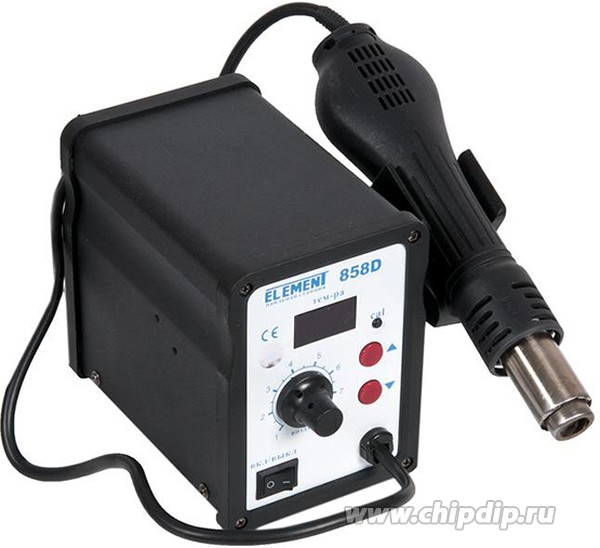
                        Given a decent hot air station costs ca. $35 these days, it's definitely worth considering.

                        NeverDieN 1 Reply Last reply
                        0
                        • T Toyman

                          Given a decent hot air station costs ca. $35 these days, it's definitely worth considering.

                          NeverDieN Offline
                          NeverDieN Offline
                          NeverDie
                          Hero Member
                          wrote on last edited by
                          #13

                          @Toyman
                          Are you referring to a hot air pencil, or the underneath air heater that pre-heats the whole board?

                          T 1 Reply Last reply
                          0
                          • NeverDieN NeverDie

                            @Toyman
                            Are you referring to a hot air pencil, or the underneath air heater that pre-heats the whole board?

                            T Offline
                            T Offline
                            Toyman
                            wrote on last edited by Toyman
                            #14

                            @NeverDie said:

                            @Toyman
                            Are you referring to a hot air pencil, or the underneath air heater that pre-heats the whole board?

                            Something like this:0_1476123210763_image.jpeg

                            NeverDieN 1 Reply Last reply
                            0
                            • T Toyman

                              @NeverDie said:

                              @Toyman
                              Are you referring to a hot air pencil, or the underneath air heater that pre-heats the whole board?

                              Something like this:0_1476123210763_image.jpeg

                              NeverDieN Offline
                              NeverDieN Offline
                              NeverDie
                              Hero Member
                              wrote on last edited by
                              #15

                              @Toyman said:

                              @NeverDie said:

                              @Toyman
                              Are you referring to a hot air pencil, or the underneath air heater that pre-heats the whole board?

                              Something like this:0_1476123210763_image.jpeg

                              Yup, I have one of those, mostly because Dave Jones gave that model his thumbs up.
                              Not quite the same as a reflow oven though because it can blow parts around (though maybe that's just me being a noob).

                              T 1 Reply Last reply
                              0
                              • NeverDieN NeverDie

                                @Toyman said:

                                @NeverDie said:

                                @Toyman
                                Are you referring to a hot air pencil, or the underneath air heater that pre-heats the whole board?

                                Something like this:0_1476123210763_image.jpeg

                                Yup, I have one of those, mostly because Dave Jones gave that model his thumbs up.
                                Not quite the same as a reflow oven though because it can blow parts around (though maybe that's just me being a noob).

                                T Offline
                                T Offline
                                Toyman
                                wrote on last edited by
                                #16

                                @NeverDie

                                Have you tried? At 3-4 fan level, it's virtually impossible to blow the parts (especially Atmega!) as the soldering paste is quite sticky. I use Mechanic.

                                1 Reply Last reply
                                0
                                • NeverDieN Offline
                                  NeverDieN Offline
                                  NeverDie
                                  Hero Member
                                  wrote on last edited by NeverDie
                                  #17

                                  I haven't tried it on an atmega328p-au. Have you? Are you able to get all the solder paste molten at once so that the chip does auto-alignment with the pads like it would in a reflow oven?


                                  1 Reply Last reply
                                  0
                                  Reply
                                  • Reply as topic
                                  Log in to reply
                                  • Oldest to Newest
                                  • Newest to Oldest
                                  • Most Votes


                                  22

                                  Online

                                  11.7k

                                  Users

                                  11.2k

                                  Topics

                                  113.1k

                                  Posts


                                  Copyright 2025 TBD   |   Forum Guidelines   |   Privacy Policy   |   Terms of Service
                                  • Login

                                  • Don't have an account? Register

                                  • Login or register to search.
                                  • First post
                                    Last post
                                  0
                                  • MySensors
                                  • OpenHardware.io
                                  • Categories
                                  • Recent
                                  • Tags
                                  • Popular