
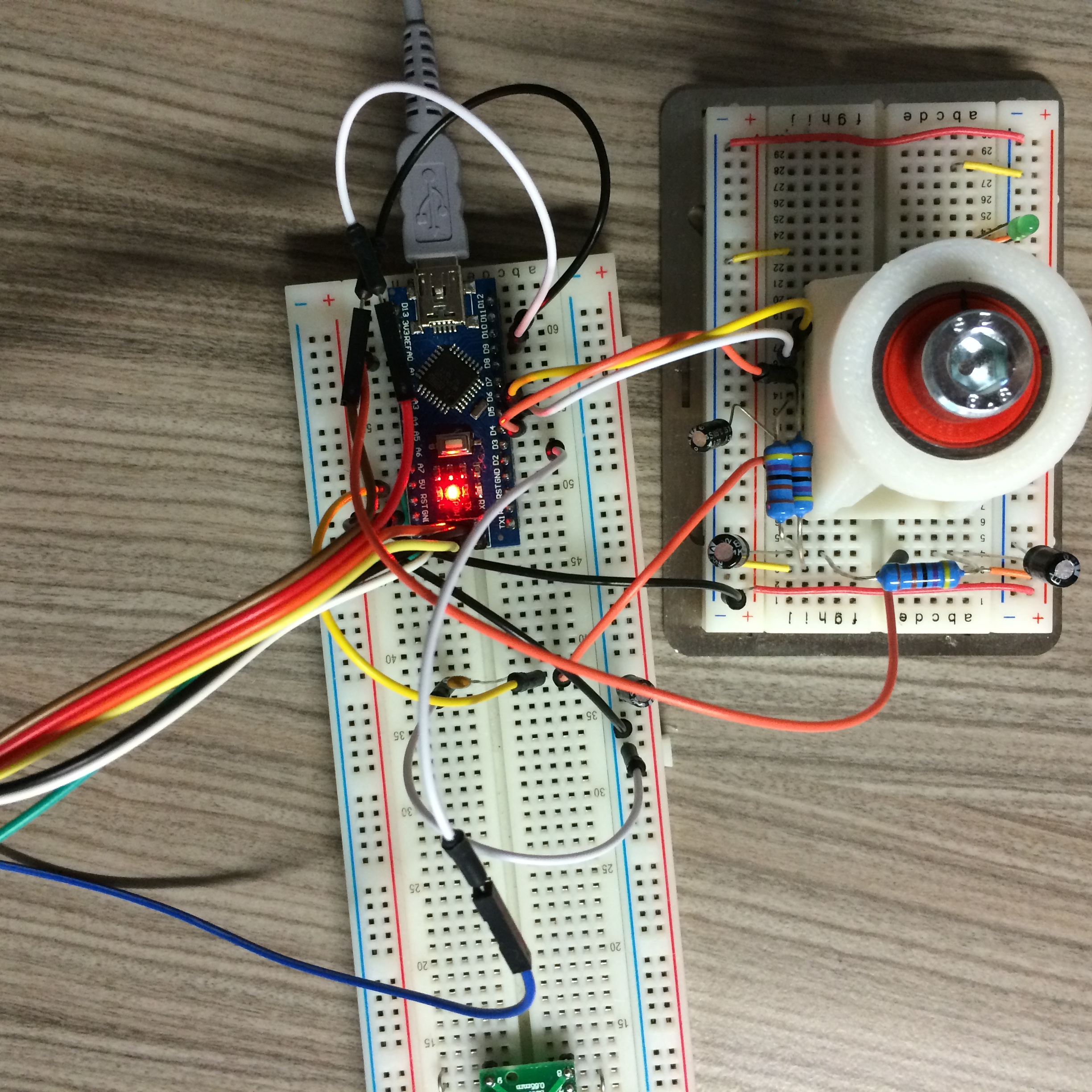
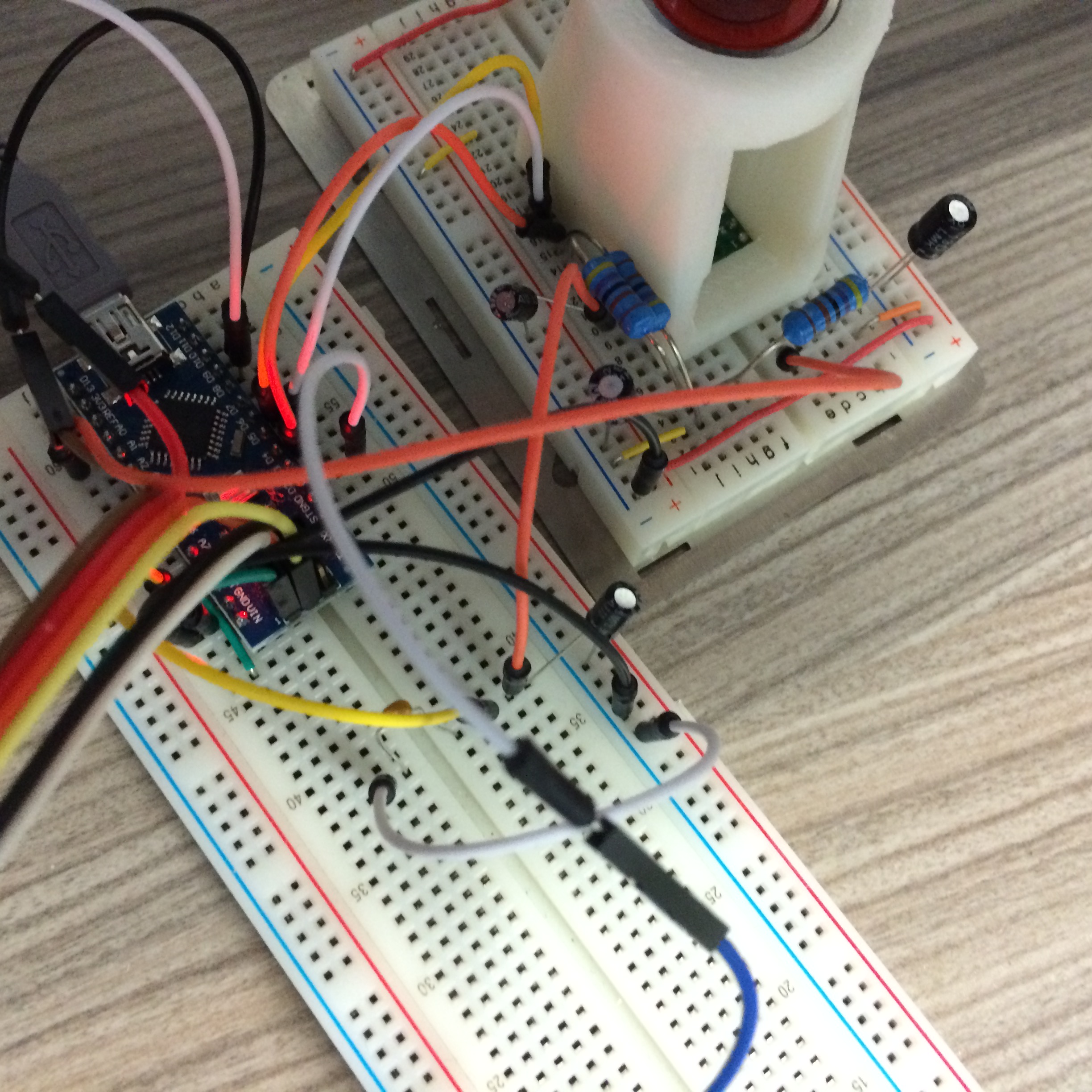
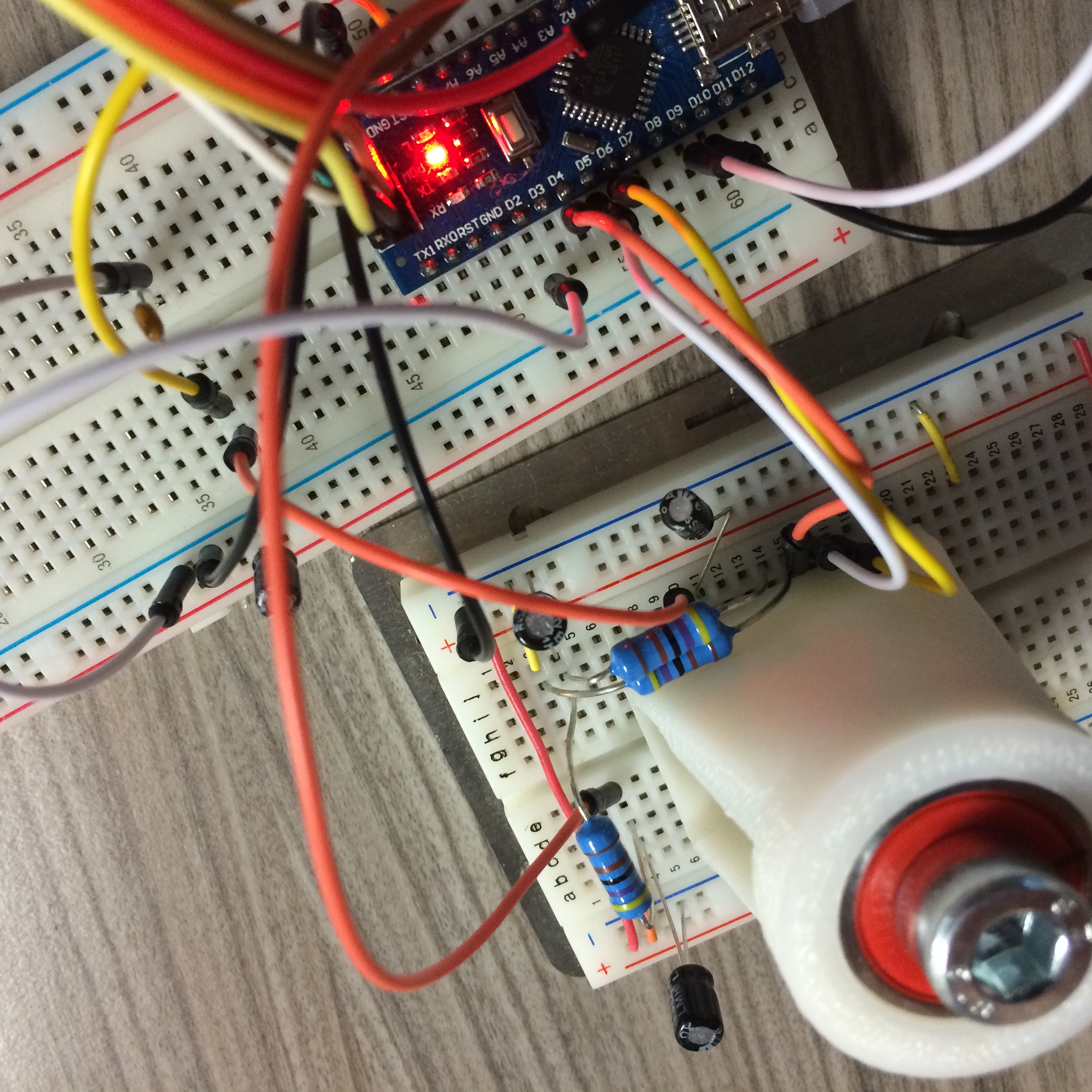
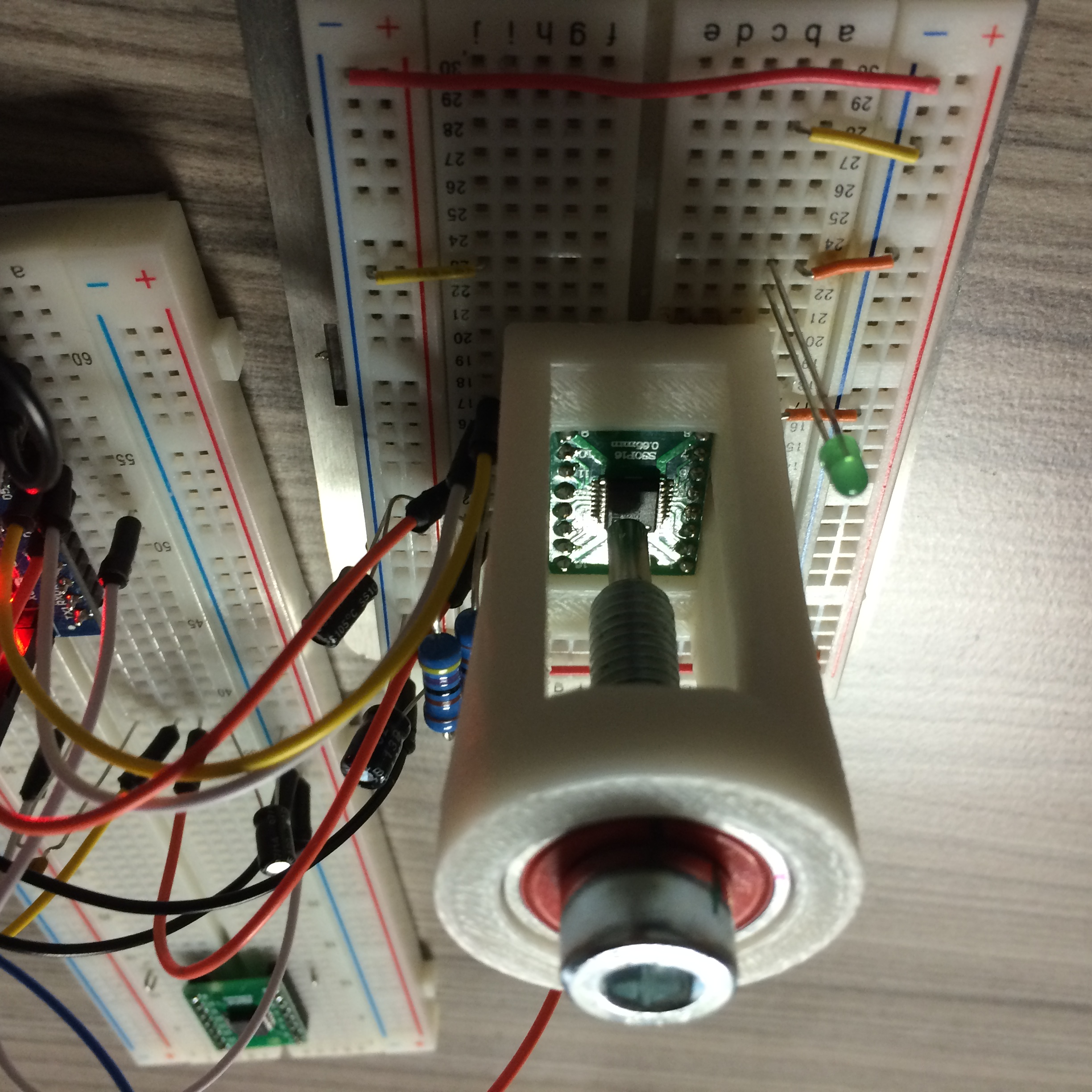
here some pics
 M
M
michlb1982
@michlb1982
Posts
-
Magnetic field detection -
Magnetic field detectionHello
thanks for the input...
well i did it...
i was able to build an Wind-direction-MYSENSOR... well i'm sure, its a little bit
awkward and much to complicated but it works quite OK...
the next step is to build a windspeed - sensor.. with the AS5040..here the Arduino nano Code...:
#include <SPI.h>
#include <MySensor.h>

const int ledPin = 13; //LED connected to digital pin 13
const int clockPin = 5; //output to clock
const int CSnPin = 4; //output to chip select
const int inputPin = 6; //read AS5040

int inputstream = 0; //one bit read from pin
long packeddata = 0; //two bytes concatenated from inputstream
long angle = 0; //holds processed angle value
long anglemask = 65472; //0x1111111111000000: mask to obtain first 10 digits with position info
long statusmask = 63; //0x000000000111111; mask to obtain last 6 digits containing status info
long statusbits; //holds status/error information
int DECn; //bit holding decreasing magnet field error data
int INCn; //bit holding increasing magnet field error data
int OCF; //bit holding startup-valid bit
int COF; //bit holding cordic DSP processing error data
int LIN; //bit holding magnet field displacement error data
int debug = 0; //SET THIS TO 0 TO DISABLE PRINTING OF ERROR CODES
int shortdelay = 1000; // this is the microseconds of delay in the data clock
int longdelay =1000; // this is the milliseconds between readings
#define CHILD_ID_DIR 0
//#define INTERRUPT inputPin
MySensor gw;
MyMessage msgDIR(CHILD_ID_DIR, V_DIRECTION);

void setup()
{
  gw.begin(NULL, AUTO, true, AUTO);
  Serial.begin(250000);
  pinMode(ledPin, OUTPUT); // visual signal of I/O to chip
  pinMode(clockPin, OUTPUT); // SCK
  pinMode(CSnPin, OUTPUT); // CSn -- has to toggle high and low to signal chip to start data transfer
  pinMode(inputPin, INPUT); // SDA

  // Send the Sketch Version Information to the Gateway
  gw.sendSketchInfo("Winddirection", "1.0");
  // Register all sensors to gw (they will be created as child devices)
  gw.present(CHILD_ID_DIR, S_WIND);
}

void loop()
{
// CSn needs to cycle from high to low to initiate transfer. Then clock cycles. As it goes high
// again, data will appear on sda
  digitalWrite(CSnPin, HIGH); // CSn high
  digitalWrite(clockPin, HIGH); // CLK high
  delay(longdelay);// time between readings
  digitalWrite(ledPin, HIGH); // signal start of transfer with LED
  digitalWrite(CSnPin, LOW); // CSn low: start of transfer
  delayMicroseconds(shortdelay); // delay for chip initialization
  digitalWrite(clockPin, LOW); // CLK goes low: start clocking
  delayMicroseconds(shortdelay); // hold low
  for (int x=0; x <16; x++) // clock signal, 16 transitions, output to clock pin
  {
    digitalWrite(clockPin, HIGH); //clock goes high
    delayMicroseconds(shortdelay); //
    inputstream =digitalRead(inputPin); // read one bit of data from pin
//Serial.print(inputstream, DEC);
    packeddata = ((packeddata << 1) + inputstream);// left-shift summing variable, add pin value
    digitalWrite(clockPin, LOW);
    delayMicroseconds(shortdelay); // end of one clock cycle
  }
// end of entire clock cycle
//Serial.println(" ");
  digitalWrite(ledPin, LOW); // signal end of transmission
// lots of diagnostics for verifying bitwise operations
//Serial.print("packed:");
//Serial.println(packeddata,DEC);
//Serial.print("pack bin: ");
//Serial.println(packeddata,BIN);
  angle = packeddata & anglemask; // mask rightmost 6 digits of packeddata to zero, into angle.
//Serial.print("mask: ");
//Serial.println(anglemask, BIN);
//Serial.print("bin angle:");
//Serial.println(angle, BIN);
//Serial.print("angle: ");
//Serial.println(angle, DEC);
  angle = (angle >> 6); // shift 16-digit angle right 6 digits to form 10-digit value
//Serial.print("angleshft:");
//Serial.println(angle, BIN);
//Serial.print("angledec: ");
//Serial.println(angle, DEC);
  angle = angle * 0.3515; // angle * (360/1024) == actual degrees
  Serial.print("angle: "); // and, finally, print it.
  Serial.println(angle, DEC);
//Serial.println("--------------------");
//Serial.print("raw: "); // this was the prefix for the bit-by-bit diag output inside the loop.
  if (debug)
  {
    statusbits = packeddata & statusmask;
    DECn = statusbits & 2; // goes high if magnet moved away from IC
    INCn = statusbits & 4; // goes high if magnet moved towards IC
    LIN = statusbits & 8; // goes high for linearity alarm
    COF = statusbits & 16; // goes high for cordic overflow: data invalid
    OCF = statusbits & 32; // this is 1 when the chip startup is finished.
    if (DECn && INCn) { Serial.println("magnet moved out of range"); }
    else
    {
      if (DECn) { Serial.println("magnet moved away from chip"); }
      if (INCn) { Serial.println("magnet moved towards chip"); }
    }
    if (LIN) { Serial.println("linearity alarm: magnet misaligned? Data questionable."); }
    if (COF) { Serial.println("cordic overflow: magnet misaligned? Data invalid."); }
  }
  float V_DIRECTION = angle;
  gw.send(msgDIR.set(V_DIRECTION, DEC));
  packeddata = 0; // reset both variables to zero so they don't just accumulate
  angle = 0;
  gw.process();
  //gw.sleep(INTERRUPT,CHANGE);
  gw.sleep(longdelay);
}
the code for FHEM:
define MYSENSOR_111 MYSENSORS_DEVICE 111
attr MYSENSOR_111 IODev SerialGate
attr MYSENSOR_111 alias Windrichtung
attr MYSENSOR_111 group Sensoren
attr MYSENSOR_111 mapReading_direction 0 direction
attr MYSENSOR_111 mapReading_gust 0 gust
attr MYSENSOR_111 mapReading_wind 0 wind
attr MYSENSOR_111 mode repeater
attr MYSENSOR_111 room 03_Umwelt
attr MYSENSOR_111 stateFormat {sprintf("%.0f",ReadingsVal("MYSENSOR_111","direction",0))."°"}
a curcuit will follow in the next days...
greets..
Mike -
DHT12 + 2Relay + 2Button - Combining Problem@rejoe2
thanks for the link.. i will try... and report if it worked.. -
Mysensort mit DHT12 (i2C)Well i did it... i've got a working MYSENSOR with DHT12...
here the Code ... its not nice but it works...// Enable debug prints #define MY_DEBUG // Define Node ID #define MY_NODE_ID 128 //#define MY_REPEATER_FEATURE // Enable and select radio type attached #define MY_RADIO_NRF24 #include <SPI.h> #include <MySensors.h> #include <DHT12.h> #include <Wire.h> DHT12 dht12; #define SENSOR_TEMP_OFFSET 0 // Sleep time between sensor updates (in milliseconds) // Must be >1000ms for DHT22 and >2000ms for DHT11 static const uint64_t UPDATE_INTERVAL = 30000; static const uint8_t FORCE_UPDATE_N_READS = 10; #define CHILD_ID_HUM 0 #define CHILD_ID_TEMP 1 float lastTemp; float lastHum; uint8_t nNoUpdatesTemp; uint8_t nNoUpdatesHum; bool metric = true; MyMessage msgHum(CHILD_ID_HUM, V_HUM); MyMessage msgTemp(CHILD_ID_TEMP, V_TEMP); void presentation() { // Send the sketch version information to the gateway sendSketchInfo("DHT12", "1.1"); // Register all sensors to gw (they will be created as child devices) present(CHILD_ID_HUM, S_HUM); present(CHILD_ID_TEMP, S_TEMP); //metric = getControllerConfig().isMetric; } void setup() { Wire.begin(); } void loop() { // Force reading sensor, so it works also after sleep() //dht12.readSensor(true); // Get temperature from DHT library float temperature = dht12.readTemperature(); if (isnan(temperature)) { Serial.println("Failed reading temperature from DHT!"); } else if (temperature != lastTemp || nNoUpdatesTemp == FORCE_UPDATE_N_READS) { // Only send temperature if it changed since the last measurement or if we didn't send an update for n times lastTemp = temperature; // apply the offset before converting to something different than Celsius degrees temperature += SENSOR_TEMP_OFFSET; if (!metric) { temperature = dht12.readTemperature(); } // Reset no updates counter nNoUpdatesTemp = 0; send(msgTemp.set(temperature, 1)); #ifdef MY_DEBUG Serial.print("T: "); Serial.println(temperature); #endif } else { // Increase no update counter if the temperature stayed the same nNoUpdatesTemp++; } // Get humidity from DHT library float humidity = dht12.readHumidity(); if (isnan(humidity)) { Serial.println("Failed reading humidity from DHT"); } else if (humidity != lastHum || nNoUpdatesHum == FORCE_UPDATE_N_READS) { // Only send humidity if it changed since the last measurement or if we didn't send an update for n times lastHum = humidity; // Reset no updates counter nNoUpdatesHum = 0; send(msgHum.set(humidity, 1)); #ifdef MY_DEBUG Serial.print("H: "); Serial.println(humidity); #endif } else { // Increase no update counter if the humidity stayed the same nNoUpdatesHum++; } // Sleep for a while to save energy sleep(UPDATE_INTERVAL); //wait(UPDATE_INTERVAL); //for repeaters }i Used this library: https://github.com/Bobadas/DHT12_library_Arduino/blob/master/README.md
here the datasheet of the dht12: http://www.robototehnika.ru/file/DHT12.pdf
-
Magnetic field detectionwell, the promised curcuit...Windrichtung-AS5040-Mysensor.pdf
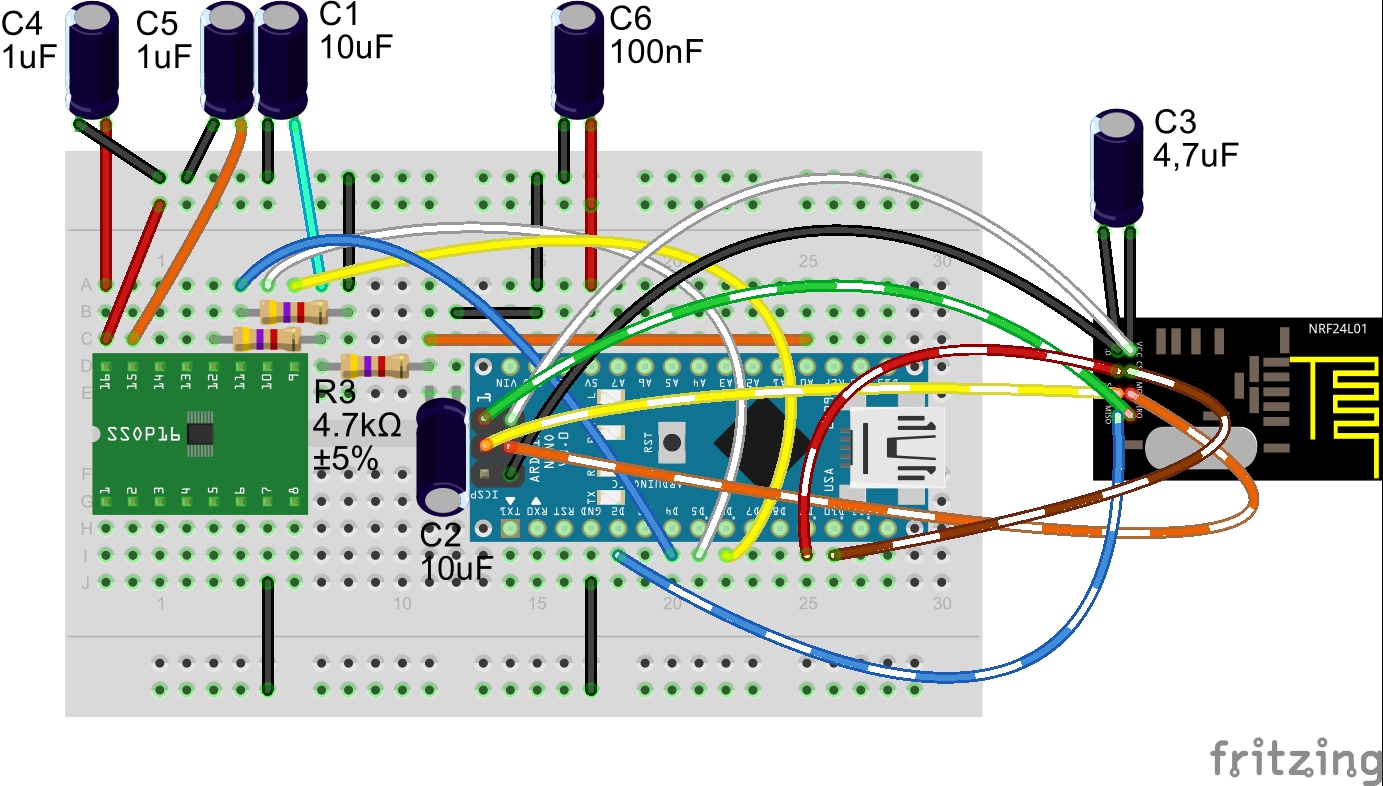 Windrichtung.fzz
 -
DHT12 + 2Relay + 2Button - Combining Problem@mfalkvidd you are so right!!! the "wait" is the problem... i changed the script.. i use a if to check if the update-interval is over and then i go through the dht loop....
now the bounce are also working..!here my code...
#define MY_DEBUG
#define MY_RADIO_NRF24
//#define MY_REPEATER_FEATURE

// Define Node ID
#define MY_NODE_ID 101

#define RELAY_ON 1
#define RELAY_OFF 0

#define SSR_A_ID 1   // Id of the sensor child
#define SSR_B_ID 2   // Id of the sensor child

#define CHILD_ID_HUM 0
#define CHILD_ID_TEMP 0//1
#define SENSOR_TEMP_OFFSET 0

#include <SPI.h>
#include <MySensors.h>
#include <Bounce2.h>
#include <DHT12.h>
#include <Wire.h>

const int buttonPinA = 7;
const int buttonPinB = 8;
const int relayPinA = 6;
const int relayPinB = 5;
int oldValueA = 0;
int oldValueB = 0;
unsigned long startMillis;
unsigned long currentMillis;

bool stateA = false;
bool stateB = false;

float lastTemp;
float lastHum;
uint8_t nNoUpdatesTemp;
uint8_t nNoUpdatesHum;
bool metric = true;
static const uint8_t FORCE_UPDATE_N_READS = 10;//10
static const uint64_t UPDATE_INTERVAL = 30000;//30000


Bounce debouncerA = Bounce();
Bounce debouncerB = Bounce();

MyMessage msgA(SSR_A_ID, V_STATUS);
MyMessage msgB(SSR_B_ID, V_STATUS);
MyMessage msgHum(CHILD_ID_HUM, V_HUM);
MyMessage msgTemp(CHILD_ID_TEMP, V_TEMP);

DHT12 dht12;

void setup()
{
  //Serial.begin(115200);
  Wire.begin();
  pinMode(buttonPinA, INPUT_PULLUP); // Setup the button Activate internal pull-up
  pinMode(buttonPinB, INPUT_PULLUP); // Setup the button Activate internal pull-up


  // After setting up the buttons, setup debouncer
  debouncerA.attach(buttonPinA);
  debouncerA.interval(5); //5
  debouncerB.attach(buttonPinB);
  debouncerB.interval(5);//5

  // Make sure relays are off when starting up
  digitalWrite(relayPinA, RELAY_ON);
  digitalWrite(relayPinB, RELAY_ON);
  // Then set relay pins in output mode
  pinMode(relayPinA, OUTPUT);
  pinMode(relayPinB, OUTPUT);
}

void presentation()  {
  // Send the sketch version information to the gateway and Controller
  sendSketchInfo("2xRelais,2xButton,DHT12", "1.2a");

  // Register all sensors to gw (they will be created as child devices)
  present(SSR_A_ID, S_LIGHT);
  present(SSR_B_ID, S_LIGHT);

  present(CHILD_ID_HUM, S_HUM);
  present(CHILD_ID_TEMP, S_TEMP);

  metric = getControllerConfig().isMetric;

}

/*
   Example on how to asynchronously check for new messages from gw
*/
void loop()
{
  currentMillis = millis();
  debouncerA.update();
  // Get the update value
  int valueA = debouncerA.read();
  if (valueA != oldValueA) {
    send(msgA.set(stateA ? false : true), true); // Send new state and request ack back
  oldValueA = valueA;
  }


  debouncerB.update();
  // Get the update value
  int valueB = debouncerB.read();
  if (valueB != oldValueB) {
    send(msgB.set(stateB ? false : true), true); // Send new state and request ack back
  oldValueB = valueB;
  }


  // Force reading sensor, so it works also after sleep()
//  dht12.readSensor(true);
  if (currentMillis - startMillis >= UPDATE_INTERVAL)
  {
  // Get temperature from DHT library
  float temperature = dht12.readTemperature();
  if (isnan(temperature)) {
    Serial.println("Failed reading temperature from DHT!");
  } else if (temperature != lastTemp || nNoUpdatesTemp == FORCE_UPDATE_N_READS) {
    // Only send temperature if it changed since the last measurement or if we didn't send an update for n times
    lastTemp = temperature;

    // apply the offset before converting to something different than Celsius degrees
    temperature += SENSOR_TEMP_OFFSET;

    if (!metric) {
      temperature = dht12.readTemperature();
    }
    // Reset no updates counter
    nNoUpdatesTemp = 0;
    send(msgTemp.set(temperature, 1));

    #ifdef MY_DEBUG
    Serial.print("T: ");
    Serial.println(temperature);
    #endif
  } else {
    // Increase no update counter if the temperature stayed the same
    nNoUpdatesTemp++;
  }

  // Get humidity from DHT library
  float humidity = dht12.readHumidity();
  if (isnan(humidity)) {
    Serial.println("Failed reading humidity from DHT");
  } else if (humidity != lastHum || nNoUpdatesHum == FORCE_UPDATE_N_READS) {
    // Only send humidity if it changed since the last measurement or if we didn't send an update for n times
    lastHum = humidity;
    // Reset no updates counter
    nNoUpdatesHum = 0;
    send(msgHum.set(humidity, 1));

    #ifdef MY_DEBUG
    Serial.print("H: ");
    Serial.println(humidity);
    #endif
  } else {
    // Increase no update counter if the humidity stayed the same
    nNoUpdatesHum++;
  }
  startMillis = currentMillis;
  Serial.print("Startzeit: ");
  Serial.println(startMillis);
  }
  // Sleep for a while to save energy
  //wait(UPDATE_INTERVAL);
}

void receive(const MyMessage &message) {
  // We only expect one type of message from controller. But we better check anyway.
  if (message.type == V_STATUS) {

    switch (message.sensor) {
      case 1:
        stateA = message.getBool();
        digitalWrite(message.sensor + 4, stateA ? RELAY_ON : RELAY_OFF);
        break;
      case 2:
        stateB = message.getBool();
        digitalWrite(message.sensor + 4, stateB ? RELAY_ON : RELAY_OFF);
        break;
    }

      // Write some debug info
    Serial.print("Incoming change for sensor:");
    Serial.println(message.sensor);
    //Serial.print("from node:");
    //Serial.println(message.sender);
    //Serial.print(", New status: ");
    Serial.println(message.getBool());
  }
}