
💬 Battery Powered Sensors
-
@tssk Sending 240 messages a day is quite a lot for a battery node. I think you will need higher capacity batteries with that frequency of sending (is it really essential to send that often I wonder?).
Anyway, I am also testing battery nodes and as far as I can see the lora and bme are likely taking a lot of power. They must be 'put to sleep' as much as possible. AFAIK lora is an abbreviation of 'long range' and therefore means 'more power'. Can you test the current drawn by just the radio in sleep and transmitting?
Also, bootloader - I highly recommend using the minicore bootloader with internal 8MHz, bod as you wish (I ususally disable) and try again. My sleeping nodes use less than 5uA in sleep and I am trying to get that even lower this week.
Also check the value of pull-upresistors on the boards, they can be on the low side and perhaps better with higher value external ones (something I hope to test tomorrow as it happens).
Also temperature and humidity will have an effect. I put one test node on a colder NE facing window which has slept all the time except a twice daily battery check and send value only if changed. It is the only node to have changed from 100% to 99% in a week, so the colder window is clearly having an effect on the battery life in this situation.
As @mfalkvidd implied I would get rid of the stepup booster if at all possible, they are not so efficient and can produce a lot of noise on the power line. Can you go to 3xAA batteries? What about an 18650 li-on or two in parallel?
Finally check solder joints. A dry joint or cold joint may look OK but measure them with a meter just to make sure.
-
This is room sensor and I would like to react to changes in temperature and airquality - I was thinking that I could prolong the interval up to 12min. What do you think is optimal measurements rate for room thermostat?
-
Is it possible / necessary to put the radio module to sleep? How to do that?
-
So far I did not mess with the Arduino bootloader but I would like to :) Any link that I could read about it? And specifically about the minicore you mention?
-
I do not understand what you mean by the pull-up resistors?
-
I have my node in the middle of the room around 20-24C that sould not be the problem. Actually it is it main purpose to provide data for optimal room temperature.
-
I included step up boosted based on recommendation on the https://www.mysensors.org/build/battery page. I thought it should use the batteries most efficiently. I think I could go with 3 AA batteries. Will I need to regulate the voltage or can I power the radio and bme modules directly?
-
-
-
-
This is room sensor and I would like to react to changes in temperature and airquality - I was thinking that I could prolong the interval up to 12min. What do you think is optimal measurements rate for room thermostat?
-
Is it possible / necessary to put the radio module to sleep? How to do that?
-
So far I did not mess with the Arduino bootloader but I would like to :) Any link that I could read about it? And specifically about the minicore you mention?
-
I do not understand what you mean by the pull-up resistors?
-
I have my node in the middle of the room around 20-24C that sould not be the problem. Actually it is it main purpose to provide data for optimal room temperature.
-
I included step up boosted based on recommendation on the https://www.mysensors.org/build/battery page. I thought it should use the batteries most efficiently. I think I could go with 3 AA batteries. Will I need to regulate the voltage or can I power the radio and bme modules directly?
-
-
@tssk I use a threshold. I measure every 30 - 60 seconds. If a change goes pass the threshold I report immediately. Else I report periodically. I think I've created a small lib for that some years ago
-
You might need to turn off the BME, but that depends on how it works and what the Adafruit library handles for you.
My Sensors will turn off the radio when the Arduino goes to sleep so you don't need to sleep the radio manually.
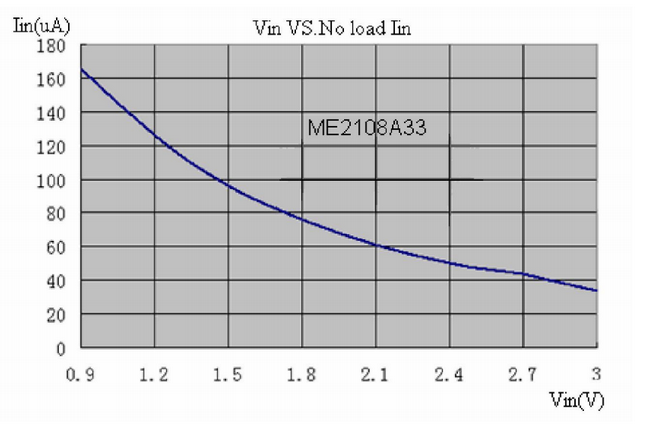
This diagram from the booster datasheet shows how much current it will consume with no load:
-
-
I hope I am measuring it correctly.
It shows 12.5 when in sleep and up to 90 when transmitting/measuring.
Any one can interpret that for me please? :)
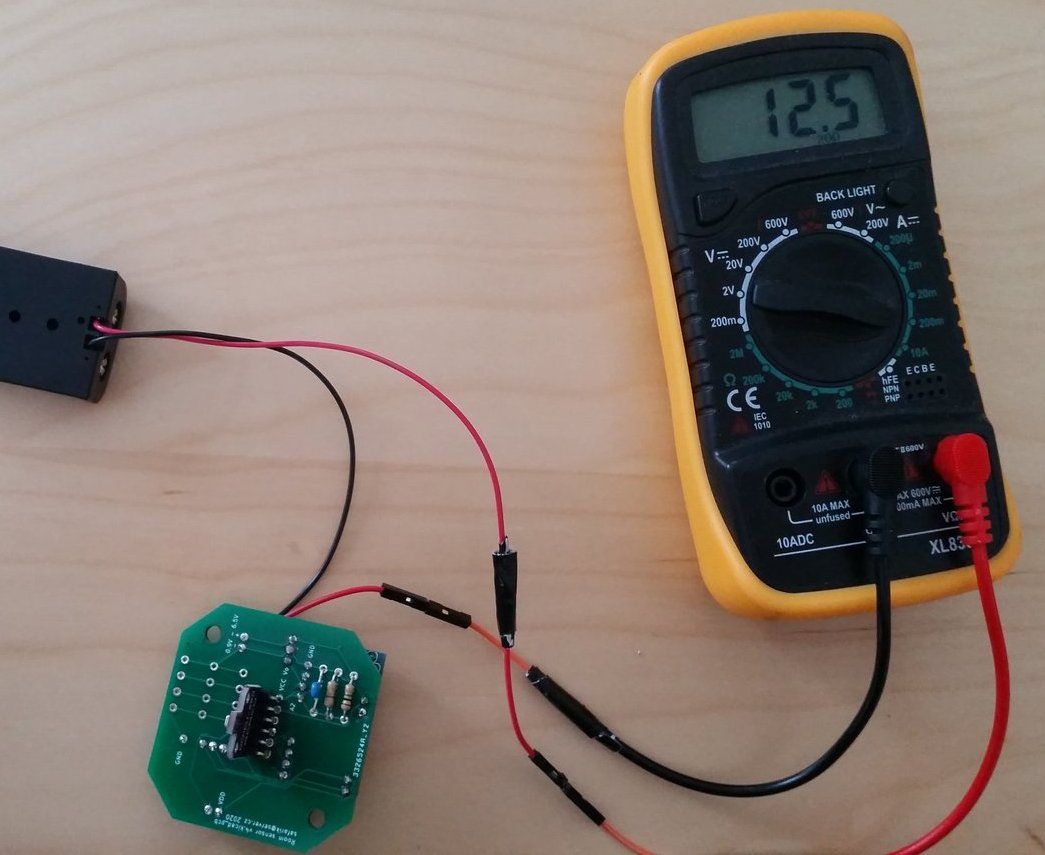
@tssk That is 12.5mA (12500uA) in sleep and up to 90mA (90000uA) in transmit mode. Compare that to my door/window sensor which is <5uA sleep and about 15uA transmit with nrf24l01+). Your current draw is too high for most 'normal' batteries to last very long as you have found out.
Minicore info and install instructions is here -- https://github.com/MCUdude/MiniCore.
Pull-up resistors are on the pcb and connect between data and Vcc as well as clock to Vcc. You won't gain a lot tampering with those with the figures you have posted so I would forget about those at the moment and concentrate on more productive things to get a lower current.
here is the bit of code to only send sensor variable when it has changed.....
if (int != oldint) {
    send(msgInt.set(int));
    oldint = int;
  }
This is used in my door sensor and can be used with any sensor variable name.
ALso of help would be to re-flash the node with MY_DEBUG to see how often your node is measuring and sending data. It shows if your prog is working as your expected it to (or not).
Anoother thought is that the sleep interval does not have to be fixed. You can vary it so that some times of day it is 20-30mins between read/send and at others you can reduce it if you think you need to.
-
@tssk That is 12.5mA (12500uA) in sleep and up to 90mA (90000uA) in transmit mode. Compare that to my door/window sensor which is <5uA sleep and about 15uA transmit with nrf24l01+). Your current draw is too high for most 'normal' batteries to last very long as you have found out.
Minicore info and install instructions is here -- https://github.com/MCUdude/MiniCore.
Pull-up resistors are on the pcb and connect between data and Vcc as well as clock to Vcc. You won't gain a lot tampering with those with the figures you have posted so I would forget about those at the moment and concentrate on more productive things to get a lower current.
here is the bit of code to only send sensor variable when it has changed.....
if (int != oldint) {
    send(msgInt.set(int));
    oldint = int;
  }
This is used in my door sensor and can be used with any sensor variable name.
ALso of help would be to re-flash the node with MY_DEBUG to see how often your node is measuring and sending data. It shows if your prog is working as your expected it to (or not).
Anoother thought is that the sleep interval does not have to be fixed. You can vary it so that some times of day it is 20-30mins between read/send and at others you can reduce it if you think you need to.
@skywatch said in 💬 Battery Powered Sensors:
@tssk That is 12.5mA (12500uA) in sleep and up to 90mA (90000uA) in transmit mode. Compare that to my door/window sensor which is <5uA sleep and about 15uA transmit with nrf24l01+
You mean 15mA transmit, right?
-
I removed the step up booster connected + directly to VCC but the node stopped working - only the arduino onboard led is constantly on.
I also tried to measure the step up booster alone and it is showing 0.05 at 20mA on multimeter settings.
I am now really confused and I am not sure what to conclude from that...
-
@skywatch said in 💬 Battery Powered Sensors:
@tssk That is 12.5mA (12500uA) in sleep and up to 90mA (90000uA) in transmit mode. Compare that to my door/window sensor which is <5uA sleep and about 15uA transmit with nrf24l01+
You mean 15mA transmit, right?
@mfalkvidd Yes - you got me ;)
I was confusing it with the battery pir which is 15-16uA in trigger mode. But yes, 15mA in Tx mode with a nrf24 module.
Maybe it is time for me to hibernate for a few months after all .....
-
I removed the step up booster connected + directly to VCC but the node stopped working - only the arduino onboard led is constantly on.
I also tried to measure the step up booster alone and it is showing 0.05 at 20mA on multimeter settings.
I am now really confused and I am not sure what to conclude from that...
@tssk said in 💬 Battery Powered Sensors:
I removed the step up booster connected + directly to VCC but the node stopped working - only the arduino onboard led is constantly on.
The problem was that the batteries I used were not completely fresh. I googled that Arduino pro mini need at least 2.7V to operate. Using fresh batteries the node is working. And it shows 6.0mA in sleep and 25.4mA when transmitting.
So using the stepup booster adds 6.5mA in sleep and 65mA when transmitting to consumption?
I also found LowPower library (https://github.com/rocketscream/Low-Power) but it seems to interfere with mysensors library (https://github.com/rocketscream/Low-Power/issues/80). Any experience?
-
@tssk said in 💬 Battery Powered Sensors:
I removed the step up booster connected + directly to VCC but the node stopped working - only the arduino onboard led is constantly on.
The problem was that the batteries I used were not completely fresh. I googled that Arduino pro mini need at least 2.7V to operate. Using fresh batteries the node is working. And it shows 6.0mA in sleep and 25.4mA when transmitting.
So using the stepup booster adds 6.5mA in sleep and 65mA when transmitting to consumption?
I also found LowPower library (https://github.com/rocketscream/Low-Power) but it seems to interfere with mysensors library (https://github.com/rocketscream/Low-Power/issues/80). Any experience?
The 2.7V is set in the fuses, you can go a lot lower if you disable Bod completely. I tested one with nrf24 and it worked down to 1.64V.
I think you will find that all the 'good stuff' from the low power library is included in mysensors sleep function anyway.
I suggest using minicore (it is easy to install and all works from within the arduino IDE you are used to) and set internal oscillator and disable BoD. You will need a programmer (a few dollars) or you can use another arduino as programmer. but that is more time consuming to set up and easier to mess up as well!
Good that you got rid of the booster!
-
The 2.7V is set in the fuses, you can go a lot lower if you disable Bod completely. I tested one with nrf24 and it worked down to 1.64V.
I think you will find that all the 'good stuff' from the low power library is included in mysensors sleep function anyway.
I suggest using minicore (it is easy to install and all works from within the arduino IDE you are used to) and set internal oscillator and disable BoD. You will need a programmer (a few dollars) or you can use another arduino as programmer. but that is more time consuming to set up and easier to mess up as well!
Good that you got rid of the booster!
@skywatch said in 💬 Battery Powered Sensors:
I think you will find that all the 'good stuff' from the low power library is included in mysensors sleep function anyway.
So when I use sleep() mysensors library overloads the generic arduino sleep?
I suggest using minicore (it is easy to install and all works from within the arduino IDE you are used to) and set internal oscillator and disable BoD. You will need a programmer (a few dollars) or you can use another arduino as programmer. but that is more time consuming to set up and easier to mess up as well!
I look at the git repo and I more confused now. I thought it is some kind of bootloader/firmware I flash. What is Arduino core? I never heard that term.
Good that you got rid of the booster!
I wonder why the booster is recommended here https://www.mysensors.org/build/battery ? Or did I misinterpreted?
-
@skywatch said in 💬 Battery Powered Sensors:
I think you will find that all the 'good stuff' from the low power library is included in mysensors sleep function anyway.
So when I use sleep() mysensors library overloads the generic arduino sleep?
I suggest using minicore (it is easy to install and all works from within the arduino IDE you are used to) and set internal oscillator and disable BoD. You will need a programmer (a few dollars) or you can use another arduino as programmer. but that is more time consuming to set up and easier to mess up as well!
I look at the git repo and I more confused now. I thought it is some kind of bootloader/firmware I flash. What is Arduino core? I never heard that term.
Good that you got rid of the booster!
I wonder why the booster is recommended here https://www.mysensors.org/build/battery ? Or did I misinterpreted?
@tssk said in 💬 Battery Powered Sensors:
I wonder why the booster is recommended here https://www.mysensors.org/build/battery ? Or did I misinterpreted?
If you interpreted
Note that a booster can be a bit noisy (and disturb the radio). The booster is also less than 100% efficient, so boosting can be less efficient than just powering the Arduino directly from the batteries and change batteries when they hit 2.8V.
as a recommendation, I would say that you did a slight misinterpretation. But it depends on what sensors you use and how much the device will be sleeping.
-
@skywatch said in 💬 Battery Powered Sensors:
I think you will find that all the 'good stuff' from the low power library is included in mysensors sleep function anyway.
So when I use sleep() mysensors library overloads the generic arduino sleep?
I suggest using minicore (it is easy to install and all works from within the arduino IDE you are used to) and set internal oscillator and disable BoD. You will need a programmer (a few dollars) or you can use another arduino as programmer. but that is more time consuming to set up and easier to mess up as well!
I look at the git repo and I more confused now. I thought it is some kind of bootloader/firmware I flash. What is Arduino core? I never heard that term.
Good that you got rid of the booster!
I wonder why the booster is recommended here https://www.mysensors.org/build/battery ? Or did I misinterpreted?
@tssk In following post I have described my adventures in building a battery powered door node : https://forum.mysensors.org/topic/11499/checking-mechanical-locked-doors-by-a-battery-based-windows-door-sensor-node?_=1614421889744
Search for the section : The battery-based windows/door sensor node : software
I explain there the use of the minicore package.
See also the section References at the end for more information about battery powered nodes -
-
I have a problem: when batteries go around 2.7V radio will stop transmitting. Board still take current, but no messages.
I'm using own board with barebone 328p (8mHz internal) and SMD/mini nrf24l01 (pretty shure china)
Did anyone had same issues?I've checked programmaticaly (yes, it is possible!) my fuse bits: Low=0xE2, High=0xD2, Extended=0xFE (0x06)
(BOD = 1.8V)
I've have three same boards (water leak) and used other not-yet-installed with specially made low-voltage regulated source (with 2200 uF capacitor and resistor load to eliminate voltage drop at transmission) to test - same result.
Sometimes i can go lower to 2.5V but not guaranteed, sometimes even corrupted messages (i.e. node id 168 instead 8).
Tests were without UART, only MYSController to monitor messages flooding each 5sec to approve life.Did anyone had same problems with nrf24l01 modules? All i see people say the can go to around 2.0 V.
According to article https://www.gammon.com.au/power (and datasheet)
at 8mHz i'm safe down to 2.4V (something like that i also measured)
nrf should go down to 1.9...Also it would be great to add into advanced section possible voltages and problems with NiMh, china modules & 2.7V(if not only me), [not]possible currents from coin cells and metioned article.
-
@nekitoss Not sure where you got your information but my Gas Node is on it's second year running on the same two Varta AA alkalines and been down to -20 on more than a few occasions last winter, typically 4 months below -10... Currently the temperature is -3 and headed to -8 overnight, voltage is 2.98, will probably need to replace them in autumn 2019...
@nekitoss said in 💬 Battery Powered Sensors:
It would be great to add to this arctle that if you want to be battery powered outdoors with temperature below zero - you have to use lithium batteries (FR6 for AA) (yes, batteries, not li-ion accumulators!) (for example ultimate lithium energizer, also could be found lithium batteries from other vendors), because Alkaline (LR6 for AA) will be frozen and loose their capacity heavily. If i remember it is >50% at -10 C and death at -20 C. Same problem for li-ion accumulators - when liquid is frozen - electrons are stucked...
Also would be great to add some link about battery/accumulator types, advanteges and disadvantages, but i have no links in english, easy-to-read and in one place...But i have very great link about battery-powering that really should be added here, but in advanced section:
http://www.gammon.com.au/power@zboblamont how your alkaline batteries experience after 2 years(temperatures, lasting time)? my freshly installed (yes, it was long develop and test...) Lithium AA - when few weeks ago it was -20 .. stopped transmitting! Fixed resetting power when it become little warmer. Possibly same problem with 2.7V or exactly there may be wrong BOD...
-
@nekitoss said in 💬 Battery Powered Sensors:
It would be great to add to this arctle that if you want to be battery powered outdoors with temperature below zero - you have to use lithium batteries (FR6 for AA) (yes, batteries, not li-ion accumulators!) (for example ultimate lithium energizer, also could be found lithium batteries from other vendors), because Alkaline (LR6 for AA) will be frozen and loose their capacity heavily. If i remember it is >50% at -10 C and death at -20 C. Same problem for li-ion accumulators - when liquid is frozen - electrons are stucked...
Also would be great to add some link about battery/accumulator types, advanteges and disadvantages, but i have no links in english, easy-to-read and in one place...But i have very great link about battery-powering that really should be added here, but in advanced section:
http://www.gammon.com.au/power@zboblamont how your alkaline batteries experience after 2 years(temperatures, lasting time)? my freshly installed (yes, it was long develop and test...) Lithium AA - when few weeks ago it was -20 .. stopped transmitting! Fixed resetting power when it become little warmer. Possibly same problem with 2.7V or exactly there may be wrong BOD...
@nekitoss If I were you I;d reflash the bootloader and chec again. I got my pro mini with ebyte nrf24 to work and register with the gateway all the way down to 1.63V, so somethingi is wrong if you are loosing it at 2.7V (which is also as it happens, a BoD setting for atmel 328p). For the test I used minicore bootloader iwth Bod disabled and 2MHz clock. Bench power supply for the voltage variation.
-
@nekitoss said in 💬 Battery Powered Sensors:
It would be great to add to this arctle that if you want to be battery powered outdoors with temperature below zero - you have to use lithium batteries (FR6 for AA) (yes, batteries, not li-ion accumulators!) (for example ultimate lithium energizer, also could be found lithium batteries from other vendors), because Alkaline (LR6 for AA) will be frozen and loose their capacity heavily. If i remember it is >50% at -10 C and death at -20 C. Same problem for li-ion accumulators - when liquid is frozen - electrons are stucked...
Also would be great to add some link about battery/accumulator types, advanteges and disadvantages, but i have no links in english, easy-to-read and in one place...But i have very great link about battery-powering that really should be added here, but in advanced section:
http://www.gammon.com.au/power@zboblamont how your alkaline batteries experience after 2 years(temperatures, lasting time)? my freshly installed (yes, it was long develop and test...) Lithium AA - when few weeks ago it was -20 .. stopped transmitting! Fixed resetting power when it become little warmer. Possibly same problem with 2.7V or exactly there may be wrong BOD...
@nekitoss No problems with alkaline power, 6 - 18 months now on 2xAA down to ca -15c, battery voltage reported ca 2 or 3 times per day.
I vaguely recall reading an article on lithium and alkaline battery behaviour in extreme cold weather, the alkalines were the better performers.Note that the pro-minis here use onboard booster and LDO which provide stable 3.3v all the way down to ca 1.8v battery death, so battery voltage is unrelated to system voltage unlike your setup. They also use rfm69s (433MHz) which are better able to penetrate structural obstacles.
Bear in mind that if you have comms problems this can substantially reduce battery life as it does not quickly waken, perform the task and go back to deep sleep




Hello! It looks like you're interested in this conversation, but you don't have an account yet.
Getting fed up of having to scroll through the same posts each visit? When you register for an account, you'll always come back to exactly where you were before, and choose to be notified of new replies (either via email, or push notification). You'll also be able to save bookmarks and upvote posts to show your appreciation to other community members.
With your input, this post could be even better 💗
Register Login