Skip to content
  • 0 Votes
    2 Posts
    45 Views
    OldSurferDudeO
    "Worth the effort"? probably not, but you could satisfy a curiosity. I do this all the time. In high humidity environments, contacts corrode, become brittle and break. I spray paint my devices like that with a clear electronic lacquer. I built a 1 channel energy monitor for less than $30 link Additional current transformers (CTs) with some electronics could make it multi channel. I use it to monitor the energy used by my heat pump. OpenEnergyMonitor.org has a highly accurate multichannel with data collection offering but expensive (not cloud based). Both can send data to Home Assistant, too.
  • 0 Votes
    2 Posts
    43 Views
    OldSurferDudeO
    Those cheap relay modules are 10A so they would work fine. I've never had the problems you describe. The drop out problem would happen only if you use the same power supply for the Arduino and the warmer. Note that a couple hundred watts at 5v is 40A! So not likely. Most wall-warts (5V wall plugs) could handle an Arduino and a relay just fine. You could have a mosfet drive the relay from the power supply if that is a problem. Does your bun warmer have it's own thermostat? I assume not because why would you have an Arduino controlling it? You can use a DHT sensor to give you the temperature (cheap ones are +/-4°C). Have a potentiometer set the temperature. Sorry for the stream-of-consciousness. Just some ideas
  • 💬 Rain Gauge

    Announcements
    62
    0 Votes
    62 Posts
    29k Views
    D
    Thanks for sharing the remix. For a long-term outdoor build, PETG or ASA is worth considering over PLA since heat and sun exposure can warp the funnel or tipping mechanism; also recheck the reed-switch gap after assembly because printed tolerances vary.
  • Pinging other MySensors fans

    General Discussion
    17
    1 Votes
    17 Posts
    684 Views
    Nick WillisN
    @eiten said: @nick-willis Thanks for the plots—I won't ask what kind of sensors you've got running in the bedroom and the toilet! :) Just temperature, motion (for lights) and co2 sensors in the bedroom. Nothing sinister :) As I mentioned in my last post: if I were starting a brand-new project from scratch today, I'd probably take a close look at the STM32WL55 instead. The modules are pretty inexpensive—and if you want to stick with the Arduino ecosystem, there is official STM32duino support (including Sub-GHz / LoRaWAN libraries), though I have to admit I've never actually tried it myself, especially not together with MySensors (I run mine under Zephyr). OK thanks will take a look at those -well once my existing RFM hardware runs out! Still spending time on OpenThread at the moment.. shame they didn't give different radio options and not just another 2.4Ghz solution. @nagelc said: @Nick-Willis Is your NACK code available on github somewhere? Sounds really useful. Not on github but this is the core of it. You need this block in your sketch then you just need to periodically send the ack and nack counts to the gateway. I do this every 5 mins then reset the counts. I also use NodeManager and wrapped it up with that but this is the main details: #define MY_INDICATION_HANDLER int ackCount = 0; int nackCount = 0 void indication(indication_t ind) { switch (ind) { case INDICATION_TX: ackCount++; break; case INDICATION_ERR_TX: nackCount++; break; } }
  • 0 Votes
    1 Posts
    19 Views
    No one has replied
  • 💬 Code Contribution Guidelines

    Announcements
    5
    0 Votes
    5 Posts
    2k Views
    hekH
    I thought I cleaned up the page from CLA-references in the code contribution guidelines. Where did you find a reference? P.S. We have no plan to change/offer MySensors on a different license in the future, so no need to sign any CLA any longer.
  • 💬 Temperature Sensor

    Announcements
    172
    0 Votes
    172 Posts
    109k Views
    D
    To narrow it down: after re-uploading, is the !MCO:SLP:REP line still appearing in the Arduino serial log, or does only the Domoticz log look unchanged? If it is still in serial, search the sketch for any remaining sleep() call and confirm the new sketch was actually uploaded. wait() should keep the radio listening, then you should see temperature set messages leaving node 48/12. If those sends never appear, check the Dallas read result rather than Domoticz.
  • 💬 Overview

    Announcements
    4
    1 Votes
    4 Posts
    3k Views
    N
    To clarify the terminology: RS485 is a serial bus, but it isn’t the same as a plain UART/TTL serial link between boards. The RS485 transport handles the multidrop wiring between MySensors nodes; a serial gateway is simply the connection method between the gateway and the controller.
  • 💬 Power Meter Pulse Sensor

    Announcements
    184
    0 Votes
    184 Posts
    95k Views
    D
    The ambiguity is likely because MyMessage::set has overloads for different integer types, and the volatile qualifier on pulseCount/watt leaves no exact match. Rather than replacing every unsigned long, try copying the ISR-shared value into a plain uint32_t under noInterrupts()/interrupts() and pass that to set(), or add an explicit (uint32_t) cast at the call site. Keep pulseCount volatile since it is modified in the ISR; only the value sent needs to be non-volatile.
  • 2 Votes
    3 Posts
    231 Views
    K
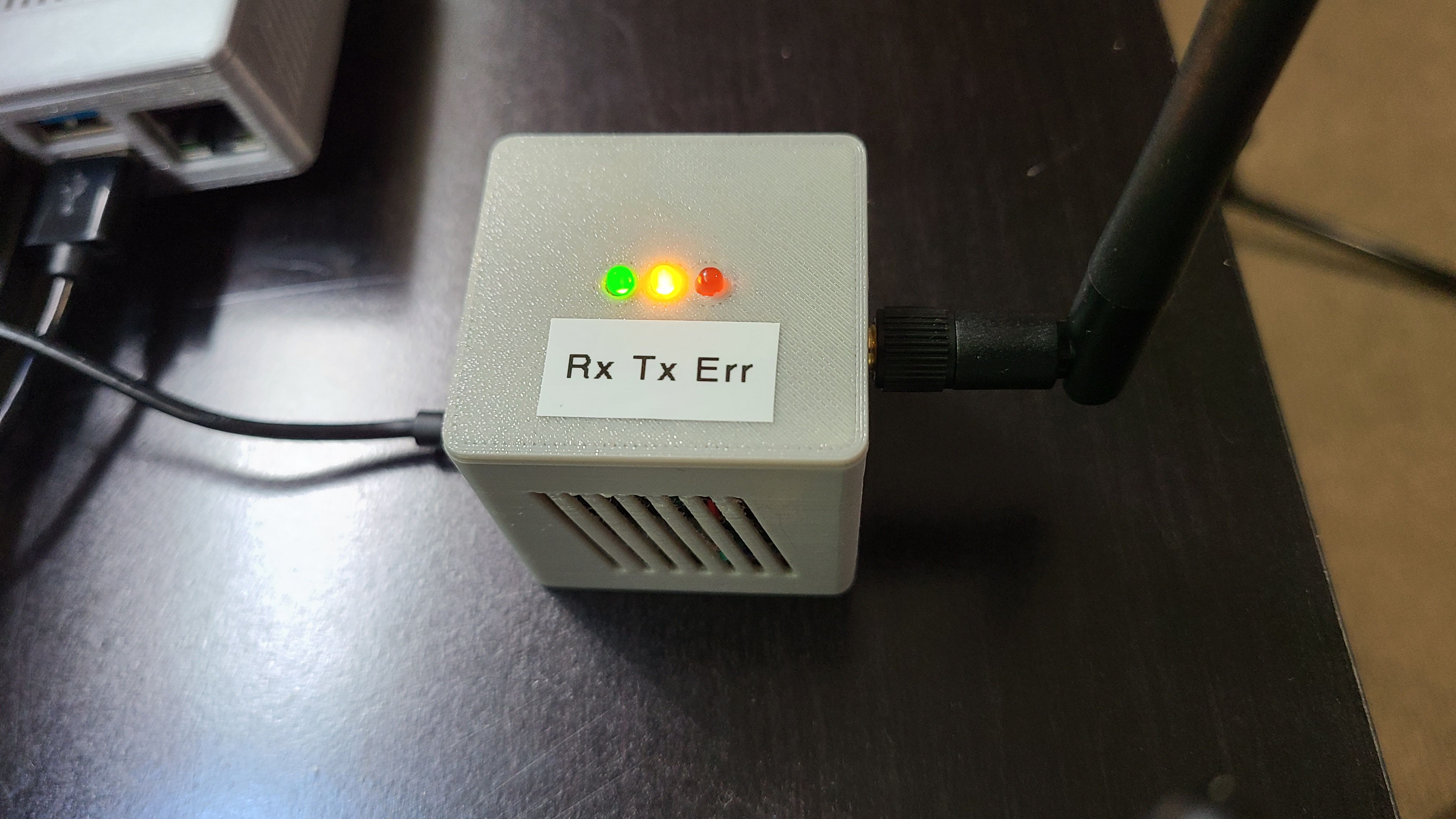
    @noahnelson, thanks. I used the E01-ML01DP5 Ebyte module, which has a power amplifier (PA) and low noise amplifier (LNA) built in. [image: image.jpeg] Here are the dimensions: [image: image.jpeg] The connector sticks out through a slot in the enclosure. [image: 1000008738.jpg] I haven't really looked around to see what similar modules are available. If you have something different and have dimensions, let me know and I'll make an enclosure to suit.
  • 💬 Components

    Announcements
    8
    0 Votes
    8 Posts
    5k Views
    N
    MySensors’ NRF24 transport sits on top of the RF24 library and, by default, uses 250 kbps. That rate is only supported by the nRF24L01+ (including most PA/LNA modules), so those are the variants to use. A plain nRF24L01 may work only if you change the data rate, and even then it is not the well-tested/recommended option.
  • KiCAT 3d shapes not working

    KiCad
    2
    1 Votes
    2 Posts
    2k Views
    N
    In KiCad 5, check the footprint’s 3D settings before changing the PCB footprint itself. If the MySensors models are uniformly too large, try a uniform Scale value (common fixes are 0.1 or 0.03937 when a model was exported with different units) on one part and see whether it matches a standard component. If only some models are wrong, compare their units and origin rather than resizing every footprint.
  • 💬 Easy-Peasy Amplified MySensors Serial Gateway

    OpenHardware.io
    19
    0 Votes
    19 Posts
    12k Views
    N
    For anyone building this in CI or PlatformIO, pin the ESP8266 platform version that bundles core 2.6.2 instead of relying on a globally installed core. That keeps builds reproducible while the MySensors PRs are pending. In Arduino IDE the selected core is global, so switching between projects can pick the newer version again. Might be worth adding a note to the build instructions.
  • CNC PCB milling

    General Discussion
    934
    1 Votes
    934 Posts
    864k Views
    Eric WorrallE
    Adding another workflow to this thread, in case it's useful to anyone. I designed a small LED flasher board in under 3 minutes, then made it on a desktop CNC (a Makera Z1): isolation milling, UV solder mask, drilling and cutout. The whole process is on video, with the design in unedited real time and the milling at real speed: https://www.youtube.com/watch?v=d36TwO_G_m4 Full disclosure: I wrote the design software. It's called TurboPCB, and I built it because I got fed up with dragging individual tracks around on PCB layout tools. An AI designs the circuit, then it places the parts and routes a single-sided board for you. It's aimed at simple hobby boards. Two things relevant to this thread: it exports G-code for GRBL mills as well as Gerbers, and it can export mirrored Gerbers for bottom layers, for CAM software that doesn't mirror on import. It's free right now for Mac and Windows (https://turbopcb.ai) because I want feedback, so tell me what you think, good or bad.

  • 0 Votes
    5 Posts
    4k Views
    M
    For the sketch change, keep the last tripped state and only send V_TRIPPED when motion changes; add a millis() timer to resend the current state once an hour as a heartbeat. That avoids 'no movement' spam while keeping HA from treating the sensor as stale. The battery 0 entity is likely just because no battery level is being sent; if the NANO is USB-powered, you can ignore it or set it explicitly only if your node really reports battery.
  • Suddenly after an HA update i get no sensor data anymore

    Home Assistant
    10
    0 Votes
    10 Posts
    1k Views
    M
    Before moving to MQTT, enable MY_DEBUG on the affected sensor node and on the gateway, then force that child value to report. If the node never prints the missing value, the issue is in the sketch, sensor read, or send interval, and MQTT will not help. If the node prints it but the gateway does not, focus on the radio/transport or serial path. The occasional garbage also makes me suspect baud, cable, or power noise; confirm both ends use the same baud and try a short, well-connected USB cable.
  • Easy-Peasy-LEDsy Serial Gateway

    My Project
    3
    1 Votes
    3 Posts
    127 Views
    K
    Thanks. Yes, It's 3d printed. I find the LEDs helpful. I've had a couple of times when they are flashing every few seconds and I traced it back to a node.
  • OpenHardware Category broken?

    General Discussion
    1
    0 Votes
    1 Posts
    61 Views
    No one has replied
  • Error compiling under Trixie for Raspberry PI 3B+

    Troubleshooting
    4
    0 Votes
    4 Posts
    250 Views
    OldSurferDudeO
    @ricorico94 said: Failed to request GPIO line Looks like the library for the GPIO isn't working. Try to get it working with Raspberry Pi OS
  • 0 Votes
    2 Posts
    117 Views
    OldSurferDudeO
    Removing light as a cause for poor sleep is just a first step. In taking that first step, I would take overnight measurements in 27 places in the room and compare the graphs. Yes, it would take about a month to collect the data. At the same time, though, you could take sound and temperature measurements. Each morning the sleeper would log how good the sleep was. Diet and exercise are important to sleep and the sleeper should log these, too. Screen time is another important factor, as well as stress during the day. Drugs (including alcohol) should be noted. Some supplements, such as B6 at night, will affect sleep. Yes, this is a lot of work that takes a lot of motivation, patience and diligence. The alternative is have a professional sleep study done. Either way, anticipate a lifestyle change. be well

10

Online

12.5k

Users

11.2k

Topics

113.5k

Posts