Skip to content
  • MySensors
  • OpenHardware.io
  • Categories
  • Recent
  • Tags
  • Popular
Skins
  • Light
  • Brite
  • Cerulean
  • Cosmo
  • Flatly
  • Journal
  • Litera
  • Lumen
  • Lux
  • Materia
  • Minty
  • Morph
  • Pulse
  • Sandstone
  • Simplex
  • Sketchy
  • Spacelab
  • United
  • Yeti
  • Zephyr
  • Dark
  • Cyborg
  • Darkly
  • Quartz
  • Slate
  • Solar
  • Superhero
  • Vapor

  • Default (No Skin)
  • No Skin
Collapse
Brand Logo
  1. Home
  2. OpenHardware.io
  3. πŸ’¬ Adjustable Boost Converter with Pass-Through

πŸ’¬ Adjustable Boost Converter with Pass-Through

Scheduled Pinned Locked Moved OpenHardware.io
boostboost convertermcp1640step-upvoltage
34 Posts 8 Posters 8.1k Views 7 Watching
  • Oldest to Newest
  • Newest to Oldest
  • Most Votes
Reply
  • Reply as topic
Log in to reply
This topic has been deleted. Only users with topic management privileges can see it.
  • NeverDieN Offline
    NeverDieN Offline
    NeverDie
    Hero Member
    wrote on last edited by NeverDie
    #13

    Interestingly, the datasheet for the LTC3105 boost converter with the built-in MPPC does not make any reference to a recommended trace or component layout: http://cds.linear.com/docs/en/datasheet/3105fb.pdf That's in contrast to most of the other boost converters, which do. Since it does not appear to be burdened by layout restrictions, I'll throw together a board for that and post it. Also, if I'm reading it right, it does not appear to require the use of a blocking diode to prevent the current from discharging back through the PV cell under low light conditions, which if true, is also nice.

    That said, I'll change the layout strategy to at least put the capacitors at a shorter distance to the chip. On the boards I had already posted, I had put them on the back so as to keep the board size as small as possible (and thereby fab costs low). So, the board may need to grow a little bigger to keep the caps on the same layer as the chip, but I guess that's probably par for the course.

    1 Reply Last reply
    0
    • NeverDieN NeverDie

      If you ask me, chip manufacturers should publish the PCB (gerber files, etc.) for their "typical" application circuit. It would save me from having to re-invent it just so I can take their chip for a test drive. As it stands, you have to buy their costly "evaluation boards"--or else go to the effort of creating your own--to help decide if you might want to possibly use their chip. It should be in their interest to make it as easy as possible for people to test drive their chips. What's the point in getting free sample chips if you have to create a PCB from scratch and wait two weeks for fabrication just to try it out? It makes no sense. Am I missing something?

      NeverDieN Offline
      NeverDieN Offline
      NeverDie
      Hero Member
      wrote on last edited by NeverDie
      #14

      @NeverDie said:

      If you ask me, chip manufacturers should publish the PCB (gerber files, etc.) for their "typical" application circuit. It would save me from having to re-invent it just so I can take their chip for a test drive. As it stands, you have to buy their costly "evaluation boards"--or else go to the effort of creating your own--to help decide if you might want to possibly use their chip. It should be in their interest to make it as easy as possible for people to test drive their chips. What's the point in getting free sample chips if you have to create a PCB from scratch and wait two weeks for fabrication just to try it out? It makes no sense. Am I missing something?

      After reflecting on this question, I'm guessing that most EE's probably use a spice simulator, or similar CAD tool, for designing and testing their circuits. So, for them, having the physical chip itself isn't so important. Maybe I should look into doing the same.

      1 Reply Last reply
      0
      • NeverDieN Offline
        NeverDieN Offline
        NeverDie
        Hero Member
        wrote on last edited by NeverDie
        #15

        To expedite things, I just now posted Version 2:

        1. I re-did the routing placement to make it conform with the recommendations, and
        2. I cleaned up the silkscreen to make the component labels more legible.
        1 Reply Last reply
        0
        • NeverDieN Offline
          NeverDieN Offline
          NeverDie
          Hero Member
          wrote on last edited by
          #16

          I just now posted Version 3.

          Changes from Version 2:

          1. Change to using the same type of shielded inductor that my other boost projects are using.
          2. Eliminated unnecessary header pins, and added a ground header pin.
          3. Changed the silkscreen on the MCP1640 land pattern to mitigate against potential for solder bridging.
          1 Reply Last reply
          0
          • NeverDieN Offline
            NeverDieN Offline
            NeverDie
            Hero Member
            wrote on last edited by
            #17

            I've tested the board, and it works.

            Please purchase your PCB's for this project from the following link: https://pcbs.io/share/zyLW7

            1 Reply Last reply
            0
            • NeverDieN Offline
              NeverDieN Offline
              NeverDie
              Hero Member
              wrote on last edited by
              #18

              Here is a photo of the assembled PCB, taken next to a quarter for scale:
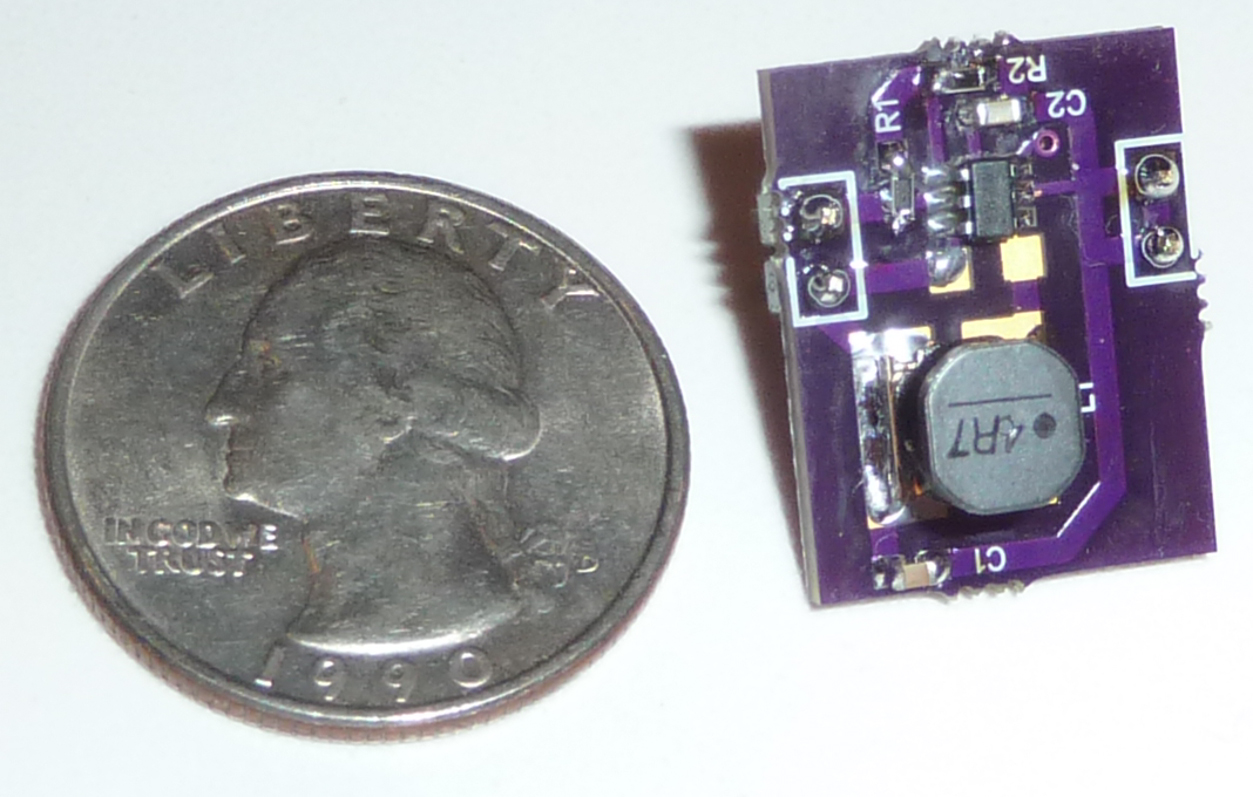
              0_1482460523384_mcp1640.jpg

              1 Reply Last reply
              0
              • NeverDieN Offline
                NeverDieN Offline
                NeverDie
                Hero Member
                wrote on last edited by
                #19

                This project is now finished. :smile:

                1 Reply Last reply
                0
                • NeverDieN Offline
                  NeverDieN Offline
                  NeverDie
                  Hero Member
                  wrote on last edited by
                  #20

                  Setting R1=680K gives a voltage output of 2.674v, which is great for charging 2.7v supercaps.

                  1 Reply Last reply
                  0
                  • NeverDieN Offline
                    NeverDieN Offline
                    NeverDie
                    Hero Member
                    wrote on last edited by NeverDie
                    #21

                    I just now revised the board to expose the Enable pin, so now you can do a pass-through if you wish. I also made it more compact and gave it a ground-plane on the back. Enjoy!

                    1 Reply Last reply
                    0
                    • NeverDieN Offline
                      NeverDieN Offline
                      NeverDie
                      Hero Member
                      wrote on last edited by NeverDie
                      #22

                      i received the upgraded PCB and assembled it. It tests out correctly. The project photo now shows the newest board. Project completed. :)
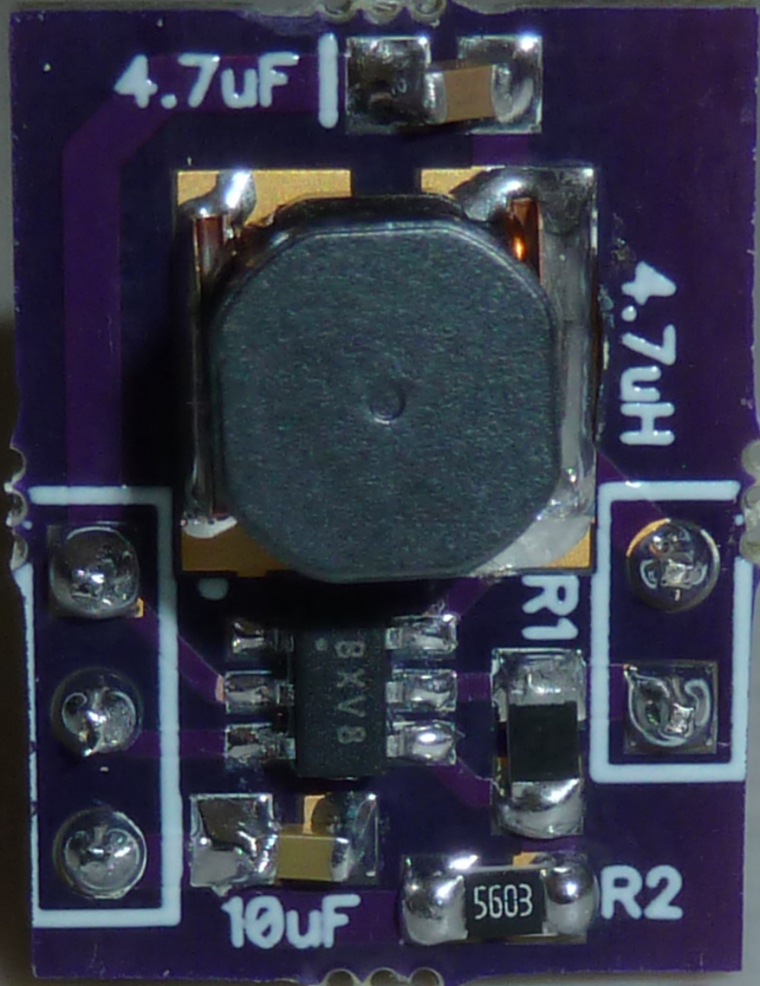
                      0_1495226068181_MCP1640C.jpg

                      For 3.3v output, use R1=976 ohms and R2=562 ohms, as per the datasheet.

                      NeverDieN 1 Reply Last reply
                      0
                      • NeverDieN NeverDie

                        i received the upgraded PCB and assembled it. It tests out correctly. The project photo now shows the newest board. Project completed. :)
                        0_1495226068181_MCP1640C.jpg

                        For 3.3v output, use R1=976 ohms and R2=562 ohms, as per the datasheet.

                        NeverDieN Offline
                        NeverDieN Offline
                        NeverDie
                        Hero Member
                        wrote on last edited by
                        #23

                        BTW, the same PCB and circuit can also be used with the MCP1640T instead of the MCP1640C if so desired. In that case, the ENABLE pin acts like an ON/OFF switch, instead of an ON/Pass-through switch.

                        1 Reply Last reply
                        0
                        • KoreshK Offline
                          KoreshK Offline
                          Koresh
                          Contest Winner
                          wrote on last edited by
                          #24

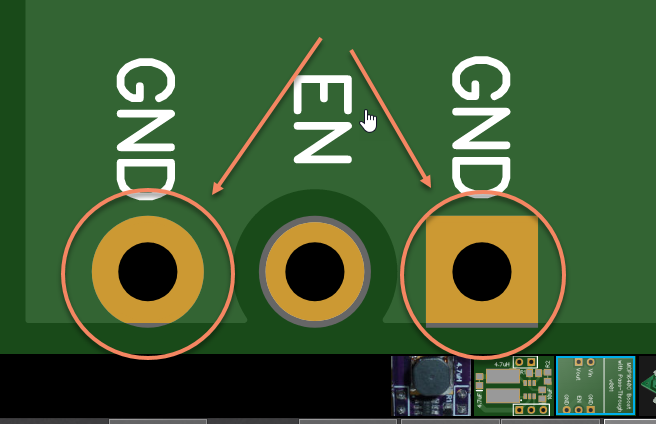
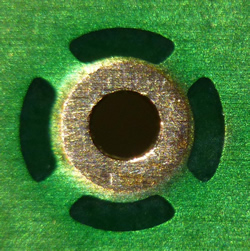
                          Just little tip from me :) Use thermal relief instead of direct polygon connection.
                          alt text
                          It is much more useful in such cases.

                          NeverDieN 1 Reply Last reply
                          0
                          • KoreshK Koresh

                            Just little tip from me :) Use thermal relief instead of direct polygon connection.
                            alt text
                            It is much more useful in such cases.

                            NeverDieN Offline
                            NeverDieN Offline
                            NeverDie
                            Hero Member
                            wrote on last edited by
                            #25

                            @Koresh said in πŸ’¬ Adjustable Boost Converter with Pass-Through:

                            Just little tip from me :) Use thermal relief instead of direct polygon connection.
                            alt text
                            It is much more useful in such cases.

                            Where do I put that exactly?

                            KoreshK 1 Reply Last reply
                            0
                            • NeverDieN NeverDie

                              @Koresh said in πŸ’¬ Adjustable Boost Converter with Pass-Through:

                              Just little tip from me :) Use thermal relief instead of direct polygon connection.
                              alt text
                              It is much more useful in such cases.

                              Where do I put that exactly?

                              KoreshK Offline
                              KoreshK Offline
                              Koresh
                              Contest Winner
                              wrote on last edited by
                              #26

                              @NeverDie
                              0_1495321746120_poly_connection.png

                              1 Reply Last reply
                              0
                              • NeverDieN Offline
                                NeverDieN Offline
                                NeverDie
                                Hero Member
                                wrote on last edited by
                                #27

                                Sorry if I'm being dense, but how are the thermal reliefs better? What's their advantage?

                                KoreshK 1 Reply Last reply
                                0
                                • NeverDieN NeverDie

                                  Sorry if I'm being dense, but how are the thermal reliefs better? What's their advantage?

                                  KoreshK Offline
                                  KoreshK Offline
                                  Koresh
                                  Contest Winner
                                  wrote on last edited by Koresh
                                  #28

                                  @NeverDie It is much easier to solder the wire to pads with relief connection than the wire to directly connected pads. Your soldering point even can be unreliable if your pad is directly connected to very huge polygon and your soldering iron don't have enough power.

                                  1 Reply Last reply
                                  1
                                  • B Offline
                                    B Offline
                                    bilbolodz
                                    wrote on last edited by
                                    #29

                                    Please upload it on PCBS.io and provide a direct link

                                    B 1 Reply Last reply
                                    0
                                    • B bilbolodz

                                      Please upload it on PCBS.io and provide a direct link

                                      B Offline
                                      B Offline
                                      bilbolodz
                                      wrote on last edited by
                                      #30

                                      I've uploaded it on PCBs.io:

                                      https://PCBs.io/share/zagYj

                                      ordered but no tested yet. Cost of for PCB: 1,35 USD

                                      1 Reply Last reply
                                      0
                                      • alexsh1A Offline
                                        alexsh1A Offline
                                        alexsh1
                                        wrote on last edited by alexsh1
                                        #31

                                        @NeverDie I have got MCP1640CT-I/CHY in SOT-23 (BX5V marking on the chip)
                                        Can these be used for this project please?

                                        I also have some 8 pins ones, but there are not suitable

                                        NeverDieN 1 Reply Last reply
                                        0
                                        • alexsh1A alexsh1

                                          @NeverDie I have got MCP1640CT-I/CHY in SOT-23 (BX5V marking on the chip)
                                          Can these be used for this project please?

                                          I also have some 8 pins ones, but there are not suitable

                                          NeverDieN Offline
                                          NeverDieN Offline
                                          NeverDie
                                          Hero Member
                                          wrote on last edited by
                                          #32

                                          @alexsh1
                                          If the pinout is the same, then the PCB should work.

                                          1 Reply Last reply
                                          0
                                          Reply
                                          • Reply as topic
                                          Log in to reply
                                          • Oldest to Newest
                                          • Newest to Oldest
                                          • Most Votes


                                          15

                                          Online

                                          11.7k

                                          Users

                                          11.2k

                                          Topics

                                          113.1k

                                          Posts


                                          Copyright 2025 TBD   |   Forum Guidelines   |   Privacy Policy   |   Terms of Service
                                          • Login

                                          • Don't have an account? Register

                                          • Login or register to search.
                                          • First post
                                            Last post
                                          0
                                          • MySensors
                                          • OpenHardware.io
                                          • Categories
                                          • Recent
                                          • Tags
                                          • Popular