
Domoticz 4 x relay
-
I wrote code to 4 relays:
#include <MySigningNone.h>
#include <MyTransportNRF24.h>
#include <MyTransportRFM69.h>
#include <MyHwATMega328.h>
#include <MySensor.h>
#include <SPI.h>

#define RELAY_1  3  // Pin D3
#define RELAY_2  4  // Pin D4
#define RELAY_3  5  // Pin D5
#define RELAY_4  6  // Pin D6
#define NUMBER_OF_RELAYS 4 // Liczba przekaznikow
#define RELAY_ON 1  // Stan wysoki przekaznik wlaczony
#define RELAY_OFF 0 // Stan niski przekaznik wylaczony

// NRFRF24L01 radio driver (set low transmit power by default)
MyTransportNRF24 radio(RF24_CE_PIN, RF24_CS_PIN, RF24_PA_LEVEL_GW);
//MyTransportRFM69 radio;
// Message signing driver (none default)
//MySigningNone signer;
// Select AtMega328 hardware profile
MyHwATMega328 hw;
// Construct MySensors library
MySensor gw(radio, hw);

void setup() {
  // Initialize library and add callback for incoming messages
  gw.begin(incomingMessage, AUTO, true);
  // Send the sketch version information to the gateway and Controller
  gw.sendSketchInfo("Relay", "1.0");

  // Fetch relay status
  for (int sensor=1, pin=RELAY_1; sensor<=NUMBER_OF_RELAYS;sensor++, pin++)
  for (int sensor=1, pin=RELAY_2; sensor<=NUMBER_OF_RELAYS;sensor++, pin++)
  for (int sensor=1, pin=RELAY_3; sensor<=NUMBER_OF_RELAYS;sensor++, pin++)
  for (int sensor=1, pin=RELAY_4; sensor<=NUMBER_OF_RELAYS;sensor++, pin++){
    // Register all sensors to gw (they will be created as child devices)
    gw.present(sensor, S_LIGHT);
    // Then set relay pins in output mode
    pinMode(pin, OUTPUT);
    // Set relay to last known state (using eeprom storage)
    digitalWrite(pin, gw.loadState(sensor)?RELAY_ON:RELAY_OFF);
  }
}


void loop()
{
  // Alway process incoming messages whenever possible
  gw.process();
}

void incomingMessage(const MyMessage &message) {
  // We only expect one type of message from controller. But we better check anyway.
  if (message.type==V_LIGHT) {
     // Change relay state
     digitalWrite(message.sensor-1+RELAY_1, message.getBool()?RELAY_ON:RELAY_OFF);
     // Store state in eeprom
     gw.saveState(message.sensor, message.getBool());
     // Write some debug info
     Serial.print("Incoming change for sensor:");
     Serial.print(message.sensor);
     Serial.print(", New status: ");
     Serial.println(message.getBool());
   }
}
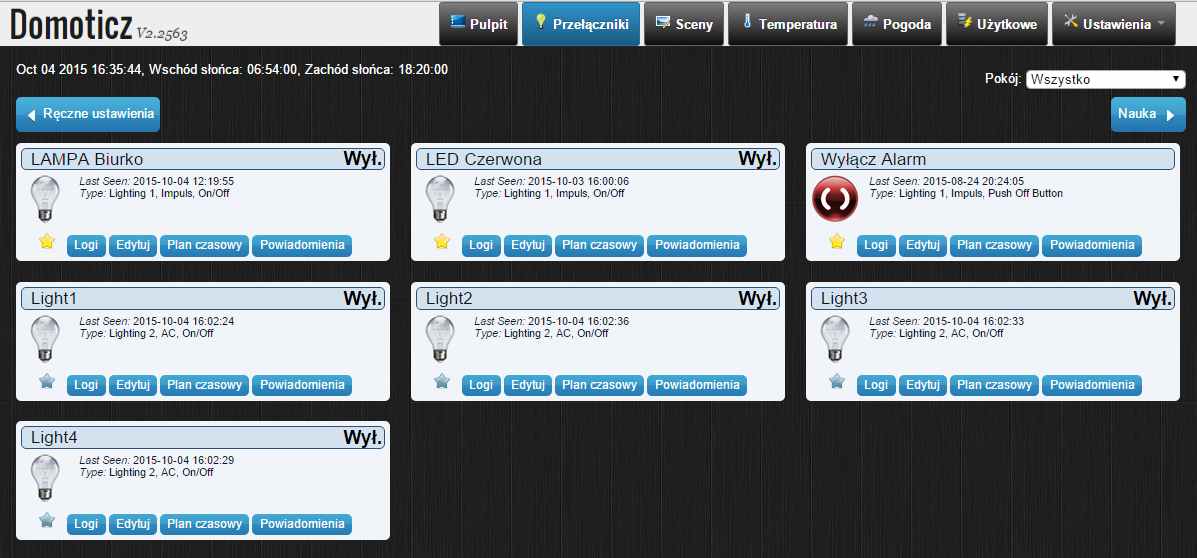
Domoticz detected 4 switches
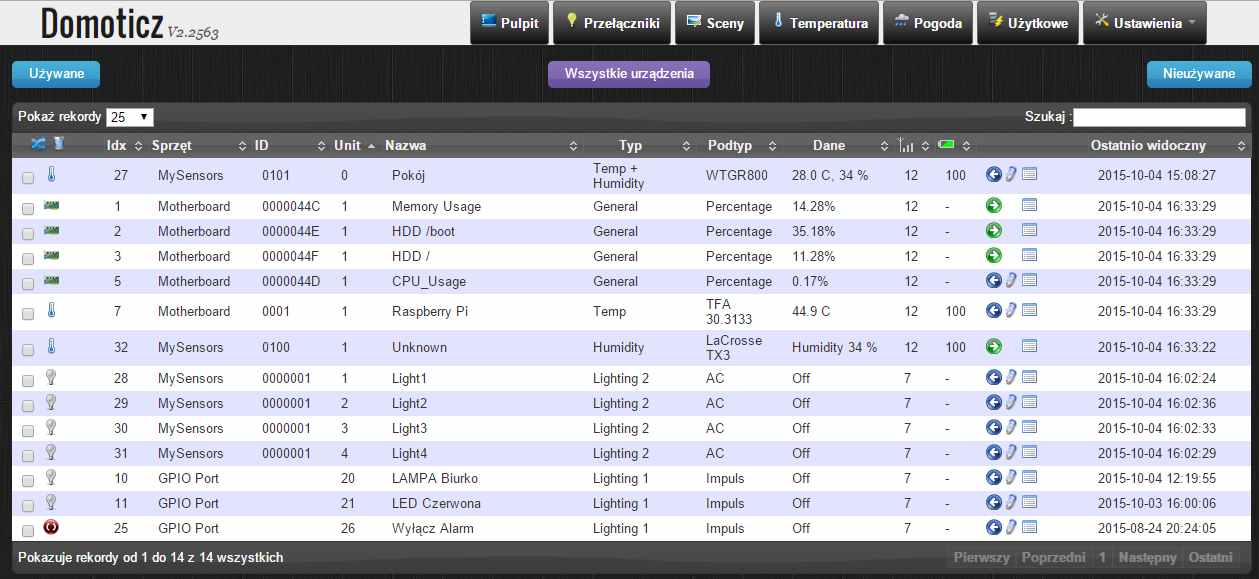
I added 4 switches in Domoticz
I connected the LED to pins 3,4,5,6 and when I turn on switch in Domoticz the LEDs do not want to turn on.
What is poorly written code?
-
I wrote code to 4 relays:
#include <MySigningNone.h>
#include <MyTransportNRF24.h>
#include <MyTransportRFM69.h>
#include <MyHwATMega328.h>
#include <MySensor.h>
#include <SPI.h>

#define RELAY_1  3  // Pin D3
#define RELAY_2  4  // Pin D4
#define RELAY_3  5  // Pin D5
#define RELAY_4  6  // Pin D6
#define NUMBER_OF_RELAYS 4 // Liczba przekaznikow
#define RELAY_ON 1  // Stan wysoki przekaznik wlaczony
#define RELAY_OFF 0 // Stan niski przekaznik wylaczony

// NRFRF24L01 radio driver (set low transmit power by default)
MyTransportNRF24 radio(RF24_CE_PIN, RF24_CS_PIN, RF24_PA_LEVEL_GW);
//MyTransportRFM69 radio;
// Message signing driver (none default)
//MySigningNone signer;
// Select AtMega328 hardware profile
MyHwATMega328 hw;
// Construct MySensors library
MySensor gw(radio, hw);

void setup() {
  // Initialize library and add callback for incoming messages
  gw.begin(incomingMessage, AUTO, true);
  // Send the sketch version information to the gateway and Controller
  gw.sendSketchInfo("Relay", "1.0");

  // Fetch relay status
  for (int sensor=1, pin=RELAY_1; sensor<=NUMBER_OF_RELAYS;sensor++, pin++)
  for (int sensor=1, pin=RELAY_2; sensor<=NUMBER_OF_RELAYS;sensor++, pin++)
  for (int sensor=1, pin=RELAY_3; sensor<=NUMBER_OF_RELAYS;sensor++, pin++)
  for (int sensor=1, pin=RELAY_4; sensor<=NUMBER_OF_RELAYS;sensor++, pin++){
    // Register all sensors to gw (they will be created as child devices)
    gw.present(sensor, S_LIGHT);
    // Then set relay pins in output mode
    pinMode(pin, OUTPUT);
    // Set relay to last known state (using eeprom storage)
    digitalWrite(pin, gw.loadState(sensor)?RELAY_ON:RELAY_OFF);
  }
}


void loop()
{
  // Alway process incoming messages whenever possible
  gw.process();
}

void incomingMessage(const MyMessage &message) {
  // We only expect one type of message from controller. But we better check anyway.
  if (message.type==V_LIGHT) {
     // Change relay state
     digitalWrite(message.sensor-1+RELAY_1, message.getBool()?RELAY_ON:RELAY_OFF);
     // Store state in eeprom
     gw.saveState(message.sensor, message.getBool());
     // Write some debug info
     Serial.print("Incoming change for sensor:");
     Serial.print(message.sensor);
     Serial.print(", New status: ");
     Serial.println(message.getBool());
   }
}
Domoticz detected 4 switches
I added 4 switches in Domoticz
I connected the LED to pins 3,4,5,6 and when I turn on switch in Domoticz the LEDs do not want to turn on.
What is poorly written code?
@romeok01 said:
for (int sensor=1, pin=RELAY_1; sensor<=NUMBER_OF_RELAYS;sensor++, pin++)
for (int sensor=1, pin=RELAY_2; sensor<=NUMBER_OF_RELAYS;sensor++, pin++)
for (int sensor=1, pin=RELAY_3; sensor<=NUMBER_OF_RELAYS;sensor++, pin++)
for (int sensor=1, pin=RELAY_4; sensor<=NUMBER_OF_RELAYS;sensor++, pin++){Is this really correct?
-
Where do you power the LED's from? In other words how did you connect them to the relays?
-
-
What I allways do during development is to uncomment the line #define DEBUG in MySensor.h that way MySensors is writing Debug info to your serial Monitor. It's getting late where I live and I need to go to bed. So I don't have time to dig into it.
But try this as your setup code
void setup() {
  // Initialize library and add callback for incoming messages
  gw.begin(incomingMessage, AUTO, true);
  // Send the sketch version information to the gateway and Controller
  gw.sendSketchInfo("Relay", "1.0");

  // Fetch relay status

  for (int sensor=1, pin=RELAY_1; sensor<=NUMBER_OF_RELAYS;sensor++, pin++){
    // Register all sensors to gw (they will be created as child devices)
    gw.present(sensor, S_LIGHT);
    // Then set relay pins in output mode
    pinMode(pin, OUTPUT);
    // Set relay to last known state (using eeprom storage)
    digitalWrite(pin, gw.loadState(sensor)?RELAY_ON:RELAY_OFF);
  }
}
Not sure if it helps but you can try it. I personally don't use gw.saveState a lot. The EPROM doesn't support unlimited write actions. So during development it's allways good to comment lines like that.
-
What I allways do during development is to uncomment the line #define DEBUG in MySensor.h that way MySensors is writing Debug info to your serial Monitor. It's getting late where I live and I need to go to bed. So I don't have time to dig into it.
But try this as your setup code
void setup() {
  // Initialize library and add callback for incoming messages
  gw.begin(incomingMessage, AUTO, true);
  // Send the sketch version information to the gateway and Controller
  gw.sendSketchInfo("Relay", "1.0");

  // Fetch relay status

  for (int sensor=1, pin=RELAY_1; sensor<=NUMBER_OF_RELAYS;sensor++, pin++){
    // Register all sensors to gw (they will be created as child devices)
    gw.present(sensor, S_LIGHT);
    // Then set relay pins in output mode
    pinMode(pin, OUTPUT);
    // Set relay to last known state (using eeprom storage)
    digitalWrite(pin, gw.loadState(sensor)?RELAY_ON:RELAY_OFF);
  }
}
Not sure if it helps but you can try it. I personally don't use gw.saveState a lot. The EPROM doesn't support unlimited write actions. So during development it's allways good to comment lines like that.


Hello! It looks like you're interested in this conversation, but you don't have an account yet.
Getting fed up of having to scroll through the same posts each visit? When you register for an account, you'll always come back to exactly where you were before, and choose to be notified of new replies (either via email, or push notification). You'll also be able to save bookmarks and upvote posts to show your appreciation to other community members.
With your input, this post could be even better 💗
Register Login