Skip to content
  • MySensors
  • OpenHardware.io
  • Categories
  • Recent
  • Tags
  • Popular
Skins
  • Light
  • Brite
  • Cerulean
  • Cosmo
  • Flatly
  • Journal
  • Litera
  • Lumen
  • Lux
  • Materia
  • Minty
  • Morph
  • Pulse
  • Sandstone
  • Simplex
  • Sketchy
  • Spacelab
  • United
  • Yeti
  • Zephyr
  • Dark
  • Cyborg
  • Darkly
  • Quartz
  • Slate
  • Solar
  • Superhero
  • Vapor

  • Default (No Skin)
  • No Skin
Collapse
Brand Logo
S

se-O-matic

@se-O-matic
About
Posts
8
Topics
3
Shares
0
Groups
0
Followers
0
Following
0

Posts

Recent Best Controversial

  • Gateway on my PI when i run HA
    S se-O-matic

    With Home Assistant as Operating System it might not work, if the radio is connected to the GPIO of the Pi. The HASS-Os has some restrictions to run software like the Pi gateway beside Homeassistant.

    I have currently a setup with a RFM69 connected to the GPIO for the RPI ethernet gateway. Homeassistant runs in a container and the mysensors plugin connects in Homeassistant to localhost or 127.0.0.1. But I have problems with the stability (I think so) with this combination, as seen in this forum.
    In my opinion is a Serial (USB-Serial-Converter) Gateway with Homeassistant the best choice. So I want to build another gateway and resinstall my Pi with HASS-Os.

    Home Assistant

  • Suddenly a Sensor is Missing, not the whole Node. (RPI Eth Gateway, HA)
    S se-O-matic

    No, it does not recover.

    The Problem is not easy to debug. I now want to build a serial gateway. With that, I am more flexible to test. Maybe to run MySensors on a second raspberry pi with a standard Home Assistant HASS-Os image. Or I check the MySensors network with MyController.
    At this moment i run the whole system on 64 Bit raspbian, with HA in docker, which is a little bit experimental and i had to fix some lines in the ethernet gateway to compile it for 64 bit. So this is experimental, too.

    Troubleshooting

  • Suddenly a Sensor is Missing, not the whole Node. (RPI Eth Gateway, HA)
    S se-O-matic

    Hi,
    thanks for the reply.
    Yes, a restart of the raspberry is enough.

    This is the code of the temperatur sensors:

    /*
     * My Sensors Node for temperature and humidity
     * 
     * Hardware: MSN R00
     * BME280 (temp, hum) at I2C
     * 
     * Runs at 2 x AA batterys
     * 
     */
    
    // RFM69CW at 433 MHz / Raspebrry Pi as ethernet gateway
    #define MY_RADIO_RFM69
    #define MY_RFM69_NEW_DRIVER
    #define MY_RFM69_FREQUENCY RFM69_433MHZ 
    #include <MySensors.h>
    
    // BME280 library from Adafruit, need the Adafruit "Unified Sensor library", too
    #include <Adafruit_BME280.h>
    
    // Define child IDs and messages
    #define CHILD_ID_TEMP  0
    #define CHILD_ID_HUM   1
    MyMessage msgTemp(CHILD_ID_TEMP, V_TEMP);
    MyMessage msgHum(CHILD_ID_HUM, V_HUM);
    
    // Define strings, which are send to the controller
    #define SKETCHSTR "Temp Humidity Sensor"
    #define SKETCHVER "1.0"
    
    // Sleep time for sensor 
    uint32_t SLEEP_TIME = 300000;    // sleep time between reads (seconds * 1000 milliseconds)
    
    // Constructor for sensor
    Adafruit_BME280 bme;
    #define BME280_TEMP_OFFSET -1.0    // calibration ofsset for the temperature
    
    // Battery stuff
    #define EMPTY 536         // Brown Out ATMega   //536 equal to 1.8 V
    #define SCALE 0.2415      // (100/950-EMPTY)    //950 equal to 3.2 V
    int BATTERY_SENSE_PIN = A0;   // select the input pin for the battery sense point
    int batteryPcnt = 0, oldBatteryPcnt = 0;
    
    // Global variables for sensor values
    float temp = 25.0, hum = 50.0;
    float temp_last = 0.0, hum_last = 0.0;
    
    // Helper for calculate battery percentage
    int calc_pcnt(int value){
      int batteryPcnt = ((value - EMPTY) * SCALE);
      batteryPcnt = (batteryPcnt > 100) ? 100 : batteryPcnt;
      batteryPcnt = (batteryPcnt < 0) ? 0 : batteryPcnt;
      return batteryPcnt;
    }
    
    void setup() {
      // use the 1.1 V internal reference
      analogReference(INTERNAL);
    
      //BME280 stuff
      bme.begin(0x77);
      bme.setSampling(Adafruit_BME280::MODE_FORCED,
                      Adafruit_BME280::SAMPLING_X1,   // temperature
                      Adafruit_BME280::SAMPLING_NONE, // pressure
                      Adafruit_BME280::SAMPLING_X1,   // humidity
                      Adafruit_BME280::FILTER_OFF );
    
      oldBatteryPcnt = calc_pcnt(analogRead(BATTERY_SENSE_PIN));
    }
    
    void presentation()
    {
      // Send the sketch version information to the gateway and Controller
      sendSketchInfo(SKETCHSTR, SKETCHVER);
     
      present(CHILD_ID_TEMP, S_TEMP, "Temperature");
      present(CHILD_ID_HUM, S_HUM, "Humidity");
    }
    
    void loop() {
      //read temp and hum and lux
      bme.takeForcedMeasurement();
      temp = bme.readTemperature();
      temp = temp + BME280_TEMP_OFFSET;
      hum = bme.readHumidity();
    
      if(temp != temp_last){
        send(msgTemp.set(temp, 2));
        temp_last = temp;
      }
      if(hum != hum_last){
        send(msgHum.set(hum, 2));
        hum_last = hum;
      }
    
      // send the battery level
      batteryPcnt = calc_pcnt(analogRead(BATTERY_SENSE_PIN));
      if (batteryPcnt < oldBatteryPcnt) {
          sendBatteryLevel(batteryPcnt);
          oldBatteryPcnt = batteryPcnt;
      }
     
      sleep(SLEEP_TIME);
    }
    

    It's also hosted on github: https://github.com/se-o-matic/msn/blob/master/Software/msn_BME280/msn_BME280.ino

    Thanks!

    Troubleshooting

  • Suddenly a Sensor is Missing, not the whole Node. (RPI Eth Gateway, HA)
    S se-O-matic

    Hi,
    i'm running a sensor network for a couple of years without problems. The setup is described below.
    Some days ago i build an other sensor node and now suddenly a random sensor is missing a view days after HomeAssistant restart.
    So, after a restart everything works perfect. But after a view days the temperature reading of one node, not always the same node, didnt work. The values for humidity and battery level still work from this node. After a restart of the Pi everything works again.
    One time I didnt restart for a couple of days, even more temperature sensors failed. And again the humidity readings still work. After a restart everything works again.

    My network:
    A Raspberry Pi 3 with 64 Bit Raspbian. Homeassistant running in Docker.
    A RFM69 rf module is connected to the GPIO of the RPI to run a ethernet gateway. I had to recompile it because of the 64 Bit structure.
    I have several sensors based of an arduino structure and the RFM69 modules:

    • 3 Temperature/Humidity PLUS ONE NEW Temp/Hum sensor
    • 1 Temp/Hum/Light sensor
    • 1 USB charger sensor (report two current values, if switched on)
    • 1 power meter sensor (actually offline to rewrite the code for an new power meter with different protocol)

    Additionally a couple of actuators and switches over zigbee (SonOff USB stick), like curtains and wall plugs.
    And one BTLE temp/hum sensor.


    Now I 'm a little helpless where to start the debugging. I think the problem occurs between the mysensors gateway and HomeAssistant.
    Is this a space problem for storing the data?
    Maybe I can switch to a more convenient setup, like an mysensors USB gateway and the HASS-OS from HomeAssistant instead of the "experimental" docker stuff?

    I hope someone has a good idea to help.

    Thanks!
    se-O-matic

    Troubleshooting

  • HassOS + Serial Gateway OR Docker + RPI Ethernet Gateway
    S se-O-matic

    Hello,

    finally, ... I had time to test the "Option 2".
    Because the stock of all shops are empty, I used my old RPI 3 B+. But after all, the CPU runs at 50%. Even the 1 GB ram is half free.

    The way wasn't as easy as I thought. But now the setup runs pretty good.
    This steps I had to make:

    1. A fresh install of Raspian Lite (I used 64-Bit, if this is needed? I dont know)
    2. Installed "Home Assistant Supervised", which runs in a docker. (I found a tutorial based on this informations: https://github.com/home-assistant/supervised-installer)
    3. Installed the MySensors Gateway with some changes! (https://www.mysensors.org/build/raspberry)
      3b. The manual works fine for 32 Bit raspbian. For 64 Bit you have to edit two files bevor the compile starts. (https://forum.mysensors.org/topic/11456/is-mysensors-rpi-gw-32bit-only/8)
      In my case i have to change the section for the BCM2837 (= RPI3) as described in the post.

    Now, I have a clean setup for my smarthome with MySensors Nodes and Zigbee Nodes.
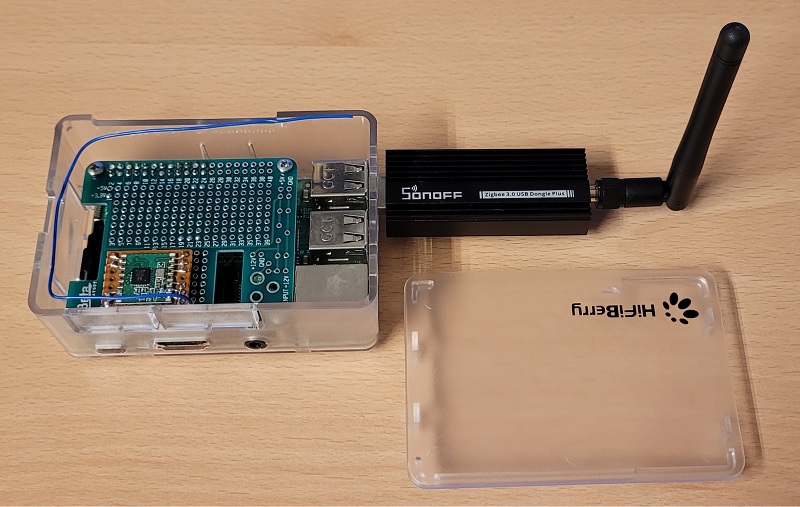
    alt text
    The RFM69 ist directly connected to the GPIO of the PI.

    The power consumption is araound 2 W. Somewhat lower when idle.

    Home Assistant

  • HassOS + Serial Gateway OR Docker + RPI Ethernet Gateway
    S se-O-matic

    Thanks for the answers. :-)

    I want to keep the raspberry pi as central. This should fit all my needs in my rental apartment.
    For HA, I have chosen a SD-card with application class A2.

    For a clean setup, i will try to run HA in docker. So can i use the same Raspberry as gateway and for the controller.
    So I dont have to use a "rare" mega328p for a serial gateway.

    I report my results, when I find some time to work on it.

    Home Assistant

  • HassOS + Serial Gateway OR Docker + RPI Ethernet Gateway
    S se-O-matic

    Hi,

    currently I'm using MySensors RPI-Gateway and MyController on the same RPI 2 .
    I connected a RFM69 Modul directly to the GPIO of the Pi.
    This system works fine for many Years.

    Now its time for an upgrade.
    I want to use HA and I want to add ZigBee devices. For that I purchased the SonOff Dongle-P and I grapped a RPI 3 for testing HA parallel to my running setup.

    Now I want to tidy up. Two RPI for a task, which one alone can do is not the best solution.
    The question of all questions is now, how to combine HA, MySensors and Zigbee in the best way?

    Option 1 (I have to build the serial GW, and ICs (328P) are rare at the moment):
    HassOS + MySensors Serial Gateway (RFM69 connected to an ATMEGA328 connected to the UART-pins from the RPI) + ZigBee USB Stick. (I dont want to use a UART<-> USB chip, when a RPI has native UART on the GPIO)

    Option 2 (Favorite, because I dont have to build hardware stuff):
    HA running in Docker + MySensors RPI Gatway (RFM69 connected directly to the GPIO) + ZigBee USB Stick. (I found a tutorial for installing HA in Docker with Supervisor)

    Are there any pitfalls in the Options above?
    Can I use the UART Port "/dev/ttyAMA0" in HassOS?
    Are there any limitations in Option2, when HA running in Docker?

    I hope someone can give some tips.

    Thanks!
    Sebastian

    Home Assistant

  • MySensorsNode (MSN) All-In-One-PCB for easy node building
    S se-O-matic

    Hi
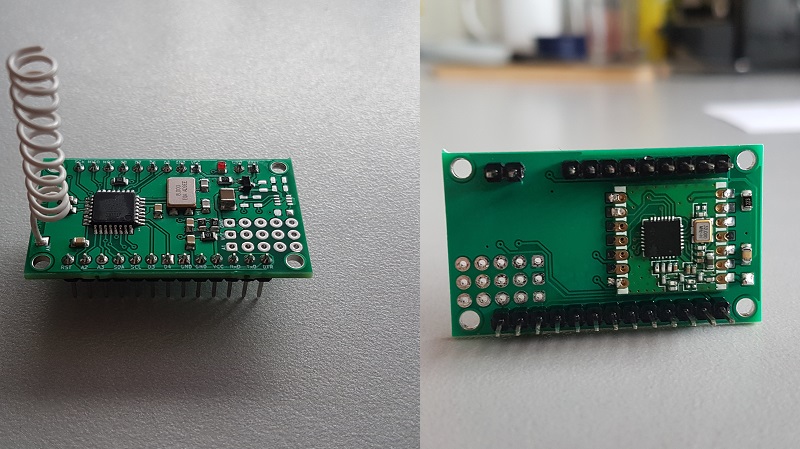
    I made a universal device for mysensors to building easy different nodes. The PCB fits in a small case (Strapubox 6090), so simple sensors can build with minimal effort.
    alt text
    The minimal assembly consists of a Mega328P microcontroller (as seen on many Arduinos), a RFM69CW rf module with 868 or 433 MHz and some little stuff for reverse protection and battery monitoring.
    alt text

    With different assembly options, this PCB can be used for:

    • Temperature, humidity and pressure measurements (With BME280 assembled)
    • Temp-Sensor above with additional light level (with extra BH1750 on the proto field)
    • Cheap temperature measurement (With DS18B20 assembled on the small proto field)
    • IR-reader for digital Power meter (with external IR Head connected to the UART)
    • Prototyping on Breadboards with soldered pin header

    The PCB features also

    • ISP pins are connected to the pin header for easy flashing the bootloader
    • Arduino pro mini compatible pin header for connecting a cheap USB-UART-board without wires
    • Optional LED (for example for active transmission)
    • Mounting holes for fitting in the “Strapubox 6090” case
    • A snap off proto board, which fit under or on top of the MSN PCB.

    Hardware and software can be found on my github repository. Github/se-O-matic/msn/

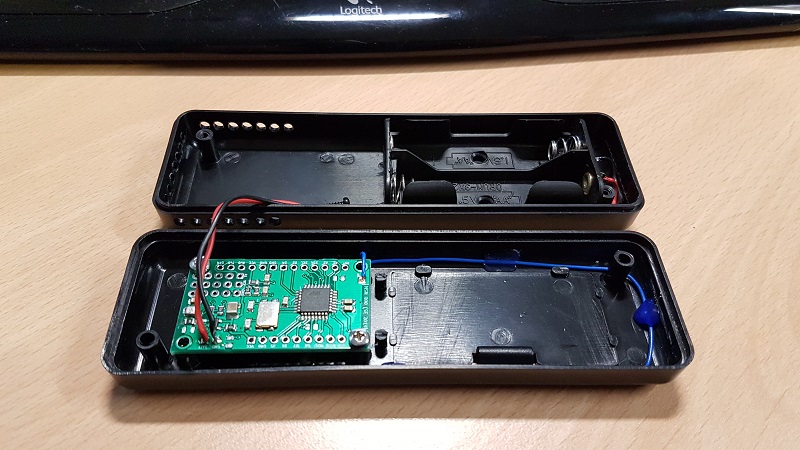
    MSN as temperature sensors (BME280), complete assembly (without batteries):
    alt text

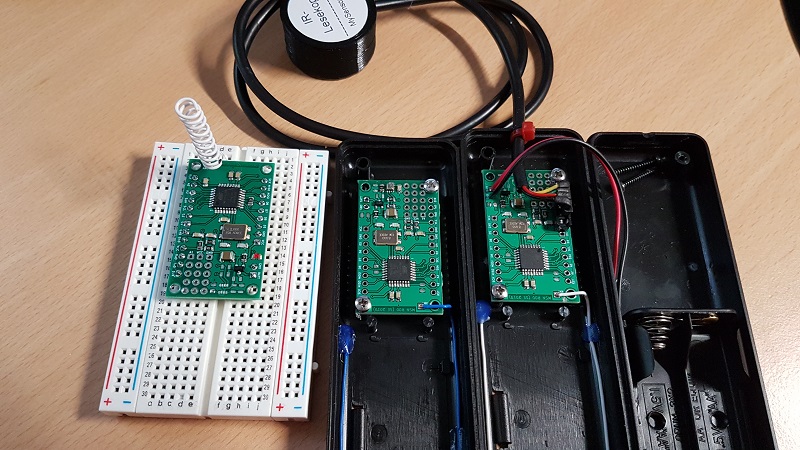
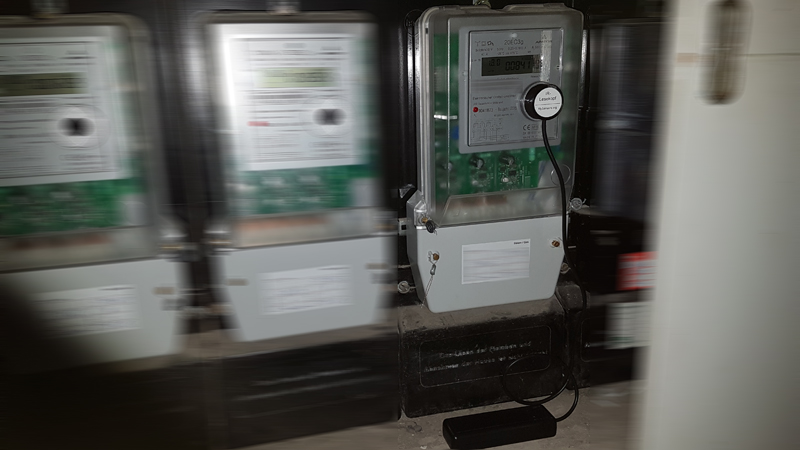
    MSN as power-meter reader with ir-head:
    alt text

    Greets!

    My Project
  • Login

  • Don't have an account? Register

  • Login or register to search.
  • First post
    Last post
0
  • MySensors
  • OpenHardware.io
  • Categories
  • Recent
  • Tags
  • Popular