Skip to content

Hardware

Talk about fun sensor hardware, MCUs, PCBs and how to power your sensors here.
1.8k Topics 18.3k Posts
  • Raspberry Pi Zero WH as gateway?

    Locked raspberry mqtt gateway
    2
    0 Votes
    2 Posts
    2k Views
    mfalkviddM
    @sentur since it was launched 6 days ago, I seriously doubt anyone has had the ability to try it. Anyway, please don't post the same question in multiple places. It wastes people's time. Most users don't have as much time as they would like to spend on projects, and wasting their time by splitting the discussion to multiple threads isn't very nice. In case anyone wants to follow the existing discussion, head over to https://forum.mysensors.org/post/84076
  • Rebuild NETATMO Wind Sensor

    16
    0 Votes
    16 Posts
    3k Views
    Martin TellblomM
    Here is a very good page explaining the two methods of ultrasonic anemometers. http://www.dl1glh.de/ultrasonic-anemometer.html
  • P2P long range communication - RFM95 with mysensors

    8
    0 Votes
    8 Posts
    2k Views
    NeverDieN
    @boylucky I don't foresee any difficulties doing that, except maybe efficiently powering a gateway from batteries. If you can do solar in the garden, then maybe that's your answer.
  • Atmega 328p memory

    38
    0 Votes
    38 Posts
    4k Views
    Nca78N
    @dbemowsk said in Atmega 328p memory: @neverdie Great idea. I would just need another FTDI adapter and set up another MySensors instance on my Vera. If I have to order the nRF52, I can order an extra FTDI at the same time. Then I can take my time porting over things to the new gateway and phase out the old one as time and resources permit. I wouldn't buy the "dev board" you link above in this thread, it's basically a breakout board with a voltage divider, 2 buttons and 2 leds, you'll still need a programmer to use it and it doesn't seem to have any documentation or schematic so you would lose more time figuring out how to connect it than to (for example) solder a 5$ module from aliexpress on one of @NeverDie 's boards.
  • NRF24: using both a capacitor AND a regulator?

    3
    0 Votes
    3 Posts
    795 Views
    gohanG
    Usually the cheap regulators only have the regulator on board, so the cap is still a good practice to have it
  • New Fluke 113

    1
    0 Votes
    1 Posts
    497 Views
    No one has replied
  • RF 433 MHz sensor to control RF sockets.

    22
    0 Votes
    22 Posts
    17k Views
    alowhumA
    Does anyone have a working version of this for 2.x?
  • Servo, dallas and Nano...

    7
    0 Votes
    7 Posts
    1k Views
    ben999B
    @rejoe2 said in Servo, dallas and Nano...: use at least a capacitor as recommended in "Build". Forgot to mention that. I do use that capacitor as a standard. Thanks again
  • Relay connection to NodeMCU V3

    6
    0 Votes
    6 Posts
    2k Views
    gohanG
    As you said before, you should be good to go
  • Newbie Gateway Hardware Confusion

    21
    0 Votes
    21 Posts
    2k Views
    JohnRobJ
    Thanks to all for your help. I think I have enough information to start my gateway (as soon as the hardware arrives). My first step will be to add a potentiometer to the gateway as a test input before tackling a sensor node. John
  • Wifi Gateway on Arduino

    15
    0 Votes
    15 Posts
    3k Views
    gbuicoG
    Just a quick additional information. While deeply testing the full functionality, I realized that if the NodeMCU goes out of main power AND the magnetic contact connected to D3 (GPIO 0) is closed, the loaded configuration is lost. I found out that usage of GPIO 0, 2, 15 is deprecated because these pin have a meaning during reboot. For this reason I moved my switch to D0 (GPIO 16) and modified accordingly the sketch of my previous post. Sorry
  • Controlling Turbovex TX 35A by Mysensors

    4
    0 Votes
    4 Posts
    767 Views
    Nca78N
    @knud-rishøj yes it's the same than led dimmer except you add a RC filter because the motor will be very noisy if you set on/off like it's done for the LEDs. Your circuit would be inserted between existing connection to motor and the motor. For the screw I don't know what it does, so you have to check the circuit to see how it influences the output voltage. Not such an easy project to start with IMHO ;)
  • Making PCBs available four purchase

    9
    1 Votes
    9 Posts
    2k Views
    dbemowskD
    @nca78 I created the revisions, but the status says waiting.
  • Sensebender Micro reports V_HUM > 100

    domoticz sensebender micro
    7
    2 Votes
    7 Posts
    2k Views
    sburlotS
    @gohan I live in Switzerland, but perhaps my place has more humidity than normal. It's not silly problems we're working on, we're learning all the time!
  • Sensebender Micro Mechanical design

    1
    2 Votes
    1 Posts
    567 Views
    No one has replied
  • Recommendation for Motion detection (no PIR)

    4
    0 Votes
    4 Posts
    2k Views
    YveauxY
    @rejoe2 said in Advice needed: Additional remark: your thread title is very general. Why not change it to "Recommendation for Motion detection (no PIR)?" Good suggestion! Done ;-)
  • what is this?

    7
    2
    0 Votes
    7 Posts
    1k Views
    D
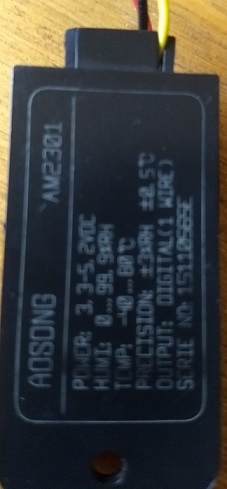
    The surface of the sensor appears to be a light-sensitive semiconductor. Maybe you can unscrew the little PCB from the case and see on the bottom. There could be some information there.
  • Very low power with alkaline battery

    2
    0 Votes
    2 Posts
    1k Views
    gohanG
    If you go around 6 or 7 uA you are still going for a long battery life (depending how often you are sending data)
  • LCD Modules

    8
    2
    1 Votes
    8 Posts
    3k Views
    Nca78N
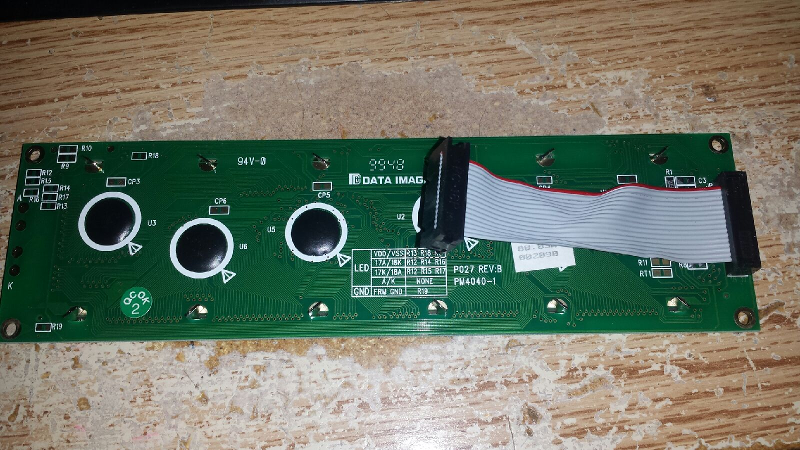
    Hello @dbemowsk, found my old mysensors alarm clock I was talking about, so here is a video of the display screens/menus on a 1602 LCD https://www.youtube.com/watch?v=9xFFBNHUylU PS: you can also enjoy the sound of the glorious karaoke singers downstairs in the street, really high (alcohol) level today :D
  • How connect si7021 and bh1750 to arduino mini pro

    3
    0 Votes
    3 Posts
    1k Views
    M
    @Tommas Hardware-wise, apart from the Vcc and GND pins, both I2C pins marked SDA and SCL should be connected to the I2C pins in the arduino (A4 and A5). Software-wise, each library should provide a "constructor" function which returns an object with which you can then read the measurements through the appropriate function. The I2C devices have an internal address which the libraries use to access the correct device through the bus. Most of the devices have their I2C adress hardcoded; some allow you to modify it e.g. to avoid conflicts with other devices or to allow connecting two equal devices to the same board. In this case, the constructor will need you to pass the adress as a parameter. I have no experience with those two sensors but I have a node with a light sensor similar to the bh1750 (tsl2591), and a temp/hum/baro sensor similar to the si7021 (bme280). Just to give you an idea, the constructor for the bme280 (using the Adafruit library) looks like: Adafruit_BME280 bme; and then the lines to read the measurements look like (in "forced measure" mode): bme.takeForcedMeasurement(); temp=float(long(bme.readTemperature()*10))/10.0; //round to 1 decimal place hum=(int) bme.readHumidity(); //Humidity in domoticz is an integer baro=round(bme.readPressure()/100); //Convert from Pa to hPa (mb) and round to 1 decimal place While for the TSL2591 the constructor and readings (in IR + visible mode) are like this: Adafruit_TSL2591 tsl = Adafruit_TSL2591(2591); // pass in a number for the sensor identifier (for your use later) << more code >> uint32_t lum = tsl.getFullLuminosity(); //getFullLuminosity in the library already enables and disables the device uint16_t ir, full; ir = lum >> 16; full = lum & 0xFFFF; visible=tsl.calculateLux(full, ir); In addition to this, you may need to initialize the sensor, set some configuration... each library is different and therefore should provide documentation explaining how it works.

13

Online

11.7k

Users

11.2k

Topics

113.1k

Posts