Skip to content

General Discussion

A place to talk about whateeeever you want
1.5k Topics 14.2k Posts
  • BLE Ebyte E104-BT5005A chip

    1
    0 Votes
    1 Posts
    39 Views
    No one has replied
  • Quinetic 'micro energy' generators - anyone know what they are?

    3
    0 Votes
    3 Posts
    59 Views
    zboblamontZ
    Thought I remembered a teardown and examination, and finally found it... Enjoy... https://youtu.be/9Pw7U0XFgUM At least I hope it's the correct one...
  • AM612 PIR can

    5
    1 Votes
    5 Posts
    60 Views
    C
    @waspie I like it when people come back and share their experience. It's helps newbies like myself get direction in our own projects. So thank you :)
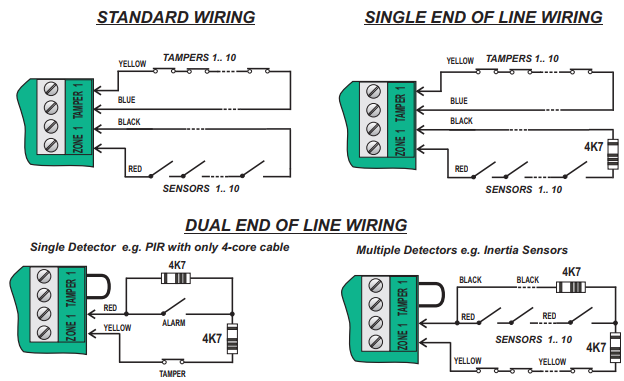
  • Connecting smoke detectors to house alarm

    43
    1
    0 Votes
    43 Posts
    655 Views
    V
    @NeverDie Thank you for sharing the device you use. I am based in eu and 240 V ac and I think i will just pick one with lcd that can show the highest range even without sounding alarm. Just to check if it is of any concern to me. My wife got candy canes, 7 sets 2xAA battery operated modules containing 40 leds each and i am trying to find a way to power them and wire them to one power source. Reading online it looks to be over complicated with so many things to calculate. This is just a side not not relevant to this post and the reason i didn't reply to your posts.
  • Report in Imperial Units

    6
    0 Votes
    6 Posts
    94 Views
    B
    Thanks for solving this problem.
  • 0 Votes
    5 Posts
    87 Views
    N
    @Yveaux Should have dove deeper when you fist said radio, looks like everything was taken care off except the radio power. Jumped a wire over there and bang worked. Thanks again for the help.
  • This topic is deleted!

    1
    0 Votes
    1 Posts
    2 Views
    No one has replied
  • 0 Votes
    10 Posts
    144 Views
    N
    @TheoL Are you willing / is it in a state where you can share your code? regards Nigel
  • SCT-013-000 Calibration Value

    mysensors
    1
    1
    0 Votes
    1 Posts
    74 Views
    No one has replied
  • 2021 EU customs regulatory changes — where should I buy now?

    10
    0 Votes
    10 Posts
    185 Views
    pihomeP
    my experience is different, aliexpress is collected vat on purchase and item was shipped from Netherlands Price: 11.29€ VAT (collected by Aliexpress): 2.59€ my post office sent me email asking for pay 6.09€ (2.59vat and 3.50 fee) and there is no way of contacting them or sending pre-paid vat just a reference number to pay vat online.
  • Is this the end of nrf24l01?

    nrf24 nrf24l01+ radio
    4
    0 Votes
    4 Posts
    173 Views
    B
    @BearWithBeard Wow, thanks for this detailed answer! Today, I received an answer from Ebyte: Yes, because of the shortage of chips, E01-ML01D is temporarily out of stock. It will be available in next mouth, if you have a purchase plan, please book as soon as possible. @skywatch So, there is hope :-)
  • Interesting info on random number generation flaws in IoT devices

    1
    1 Votes
    1 Posts
    35 Views
    No one has replied
  • FOTA/MYSBootloader for RFM69?

    rfm69
    1
    0 Votes
    1 Posts
    40 Views
    No one has replied
  • 0 Votes
    4 Posts
    86 Views
    OldSurferDudeO
    One little project and you're hooked! You know you're going to want another sensor in the yard, so consider a gateway running MQTT (called a broker). Once you have that, it's really easy to add more sensors. But if you're really strong willed an will only be using two devices ever, you might look at https://nrf24.github.io/RF24/index.html. You can get an Arduino Nano and an nRF24 radio for about $3.50 from Aliexpress (downside: delivery takes ~2 months, so get 10 each.) MySensors Library can do this, too, but I find it a little bloated. Personal note: I'm 70, retired engineer, and have only four projects going right now.
  • Multiple mqtt gateways via nrlf24l01 secure/unsecure

    5
    0 Votes
    5 Posts
    68 Views
    YoshuY
    @mfalkvidd Cheers! This project will keep me occupied for my 2 week hotel isolation stay.
  • Are the atmega series programming principle the same

    arduino
    2
    1
    0 Votes
    2 Posts
    47 Views
    L
    They are programmed with the platform that you are using, assuming it support them.
  • What's the "best" UPS for a Raspberry Pi 3B?

    51
    0 Votes
    51 Posts
    43k Views
    bjacobseB
    I'm quite lazy, and use this approach and use a USB powerbank, and check if DHCP server is alive or dead (Dead= no 230V) https://raspi-ups.appspot.com/en/index.jsp
  • Error uploading to NodeMCU (ESP-8266)

    5
    0 Votes
    5 Posts
    102 Views
    J
    struggling with similar issue.... nodemcu 1.0 (esp8266EX) - connected on com6, but back of board says connect at 9600. serial monitor at 9600 can display correct messages at boot.. no AT command response, but then when i upload some simple code i get the following: .... Features: WiFi Crystal is 26MHz MAC: ec:fa:bc:27:cc:12 Uploading stub... Running stub... Stub running... Configuring flash size... Traceback (most recent call last): File "C:\Users\jph1l\AppData\Local\Arduino15\packages\esp8266\hardware\esp8266\3.0.1/tools/upload.py", line 66, in <module> esptool.main(cmdline) File "C:/Users/jph1l/AppData/Local/Arduino15/packages/esp8266/hardware/esp8266/3.0.1/tools/esptool\esptool.py", line 3599, in main detect_flash_size(esp, args) File "C:/Users/jph1l/AppData/Local/Arduino15/packages/esp8266/hardware/esp8266/3.0.1/tools/esptool\esptool.py", line 2848, in detect_flash_size flash_id = esp.flash_id() File "C:/Users/jph1l/AppData/Local/Arduino15/packages/esp8266/hardware/esp8266/3.0.1/tools/esptool\esptool.py", line 688, in flash_id return self.run_spiflash_command(SPIFLASH_RDID, b"", 24) File "C:/Users/jph1l/AppData/Local/Arduino15/packages/esp8266/hardware/esp8266/3.0.1/tools/esptool\esptool.py", line 948, in run_spiflash_command old_spi_usr = self.read_reg(SPI_USR_REG) File "C:/Users/jph1l/AppData/Local/Arduino15/packages/esp8266/hardware/esp8266/3.0.1/tools/esptool\esptool.py", line 562, in read_reg val, data = self.command(self.ESP_READ_REG, struct.pack('<I', addr)) File "C:/Users/jph1l/AppData/Local/Arduino15/packages/esp8266/hardware/esp8266/3.0.1/tools/esptool\esptool.py", line 386, in command p = self.read() File "C:/Users/jph1l/AppData/Local/Arduino15/packages/esp8266/hardware/esp8266/3.0.1/tools/esptool\esptool.py", line 331, in read return next(self._slip_reader) File "C:/Users/jph1l/AppData/Local/Arduino15/packages/esp8266/hardware/esp8266/3.0.1/tools/esptool\esptool.py", line 2636, in slip_reader raise FatalError("Timed out waiting for packet %s" % waiting_for) esptool.FatalError: Timed out waiting for packet header esptool.FatalError: Timed out waiting for packet header any ideas - change usb cable, ports, confirmed the com not used elsewhere... any ideas? FYI - the blue LED on the NodeMCU does flash once you start the upload.. flash a couple of times then stops. Pressing the FLASH and holding down before the upload command or once it tries to connect etc there is no difference.
  • Looks as though ESP-NOW is finally working...

    6
    0 Votes
    6 Posts
    167 Views
    C
    @NeverDie said in Looks as though ESP-NOW is finally working...: Anyhow, sleep current for ESP8266 and ESP32, the last time I checked anyway, was still kinda high, but I do wonder what the startup time would be if an ESP module were kept in a totally turned-off state until it was needed. Perhaps the higher transmit speed that is possible with a wifi PHY would allow high power to be used only briefly (~250ms in the example in the video), and so maybe total power consumed from the start of wake-up through the transmission may yet turn out to be a win? Power consumption in deep sleep is really low if using a barebone ESP32-WROOM or WROVER. I did a project in 2020 before the lockdown using a custom ESP32-WROOM in a Soil Moisture capactive sensor and took some measurements to check the power consumptions in each state. The results were: Power Consumption With delay (idle): 39,29 mA in the 3V3 input from FTDI adapter. In deep sleep: 5,4 uA in the 3V3 input from FTDI adapter. While transmiting (ESP-NOW protocol) the power spike was huge, an average of 200mA, and I think the peak demand was even higher (400 mA?) With 600mAh LiFePo4 Batteries, the expected duration is aprox. 5 months. No Regulator needed when using LiFePo4. If using regular LiPo or Li-Ion batteries, careful selection of the regulator is crucial because of the spike while transmiting if the regulator is not capable enough or close to the 3V3 pin of the module, a Brownout is quite probable. This duration (5 months) is calculated assuming that the processor wakes every 15 min to take a sample of the soil for 2 seconds. If the difference between the measured content and last reported value is less than 5% (aprox. Error of the probe), the value is not sent to the controller (no wifi used). It is estimated that 4 measurements per day are sent. If there is no different in moisture content in a days cycle (every 96 wakeups) the sensor reports the measured value along with voltage. Voltage is sent in every moisture report. It is not considered important to send more frequent updates of voltages, LiFePo4 have a flat discharge curve. The most impacting measure in extending the battery life in this design was the On-Time of the sensor necessary to stabilize the output (feeding the capacitive soil moisture sensor). It is observed that reducing the On-Time has an impact in the measured output. In the sensor, whenever I woke the sensor from deep-sleep I activate a mosfet to drive the feed to the capacitive soil moisture sensor and wait for 2,4 seconds.. that is the part of the cycle that is more critical to battery life. The time to transmit the data was on average 80 miliseconds (from ESPNOW initialization to data sent). Here is a dump from the serial monitor to check this duration: 16:21:19.694 > rst:0x5 (DEEPSLEEP_RESET),boot:0x13 (SPI_FAST_FLASH_BOOT) 16:21:19.694 > configsip: 0, SPIWP:0xee 16:21:19.694 > clk_drv:0x00,q_drv:0x00,d_drv:0x00,cs0_drv:0x00,hd_drv:0x00,wp_drv:0x00 16:21:19.694 > mode:DIO, clock div:2 16:21:19.694 > load:0x3fff0018,len:4 16:21:19.694 > load:0x3fff001c,len:1044 16:21:19.694 > load:0x40078000,len:8896 16:21:19.694 > load:0x40080400,len:5828 16:21:19.694 > entry 0x400806ac 16:21:19.694 > Boot count: 8 16:21:19.982 > Moisture level (pre): 722.62 16:21:20.853 > Moisture level %: 0.00 16:21:20.853 > Voltage level: 2389.50 16:21:20.853 > Voltage Battery: 3.34 16:21:20.853 > Startig Wifi Now... 16:21:20.853 > Wifi Setup complete. 16:21:20.934 > Send success There is a possibility to further reduce power consumption. Yo can manipulate pint status and read the ADC while maintaing the main cores in deep sleep by using the low power co-procesor. This coprocesor would check if the value has changed since the last transmission and wake the main processor if it is necessary. And in relation to ESPNOW and MySensors, I used a TTGO-Lora board with ESP32 and LORA transceiver as the MySensors and ESPNOW gateway. The gateway processed the value from the sensors received by the ESP-NOW "custom" protocol to MySensors... the controller (Openhab) was only aware of sensors atached to the ESP-NOW Sensor --> TTGO-Lora (Translates from ESP-NOW to MySensor Message) --> Openhab I did also a proof of concept with a Repeter-translator from ESP-NOW to Mysensors: ESP-NOW Sensor --> TTGO-Lora (Translates from ESP-NOW to MySensor Message) --> TTGO-Lora (receives MySensor Messages) --> Openhab The ESP-Now MySensors gateway sketch was not very elegant but worked. The next step would be using ESPNOW as a new MySensor Protocol... to do it myself I should spent quite some time learning how MySensor Code works.. I have tryed in the past but never have the change to work enough time to understand it fully. If this transport is supported, I see quite an advante of ESP32 vs NRF5284, both would use the 2,4 GHz band, but ESP32 transmission power is +20dbm (vs +8 dbm for the NRF5284 if I am not mistaken), also, a barebone ESP32-WROOM price is 2 € and is not hard to hand-solder... to that you have to add the components to design a custom board but overall quite competitive. Pre-production test: [image: 1624899685783-20200501_114856-resized.jpg] [image: 1624899705979-20200501_114912-resized.jpg] Custom board (first try.. a cable to fix some design errors . :upside_down_face: ) [image: 1624899814991-20200613_102550-resized.jpg] [image: 1624899848632-20200613_102608-resized.jpg]
  • Use sensors with serial output

    3
    0 Votes
    3 Posts
    77 Views
    electrikE
    This is possible yes. In fact I used this setup before, but in the end I stopped using it and separated the gateway from the P1 handling. I noticed very high rates of CRC failures, since the mysensors stuff takes time to handle also, and during this time characters from the P1 port got lost. I should say though that after I separated these, I did some improvements on the P1 decoding which may give better results when it is being used together with the gateway. I didn't send it to mysensors but directly to mqtt. Tasmota is also able to handle the P1 stream by the way, with a template. https://tasmota.github.io/docs/Smart-Meter-Interface/

20

Online

11.7k

Users

11.2k

Topics

113.1k

Posts