Skip to content
  • 1 Votes
    7 Posts
    1k Views
    E
    Well, it could be that the issue is the voltage regulator on the Arduino board. The higher the input voltage, the more power/heat that needs to be burnt at the voltage regulator. Maybe it's self-limiting because it's getting too hot? The Arduino website lists this part as the voltage regulator: https://www.mouser.com/datasheet/2/146/SPX1117-1889129.pdf On page 6 it claims a thermal resistance to ambient of 46 degrees/W. If you're using 1A and have 12V input then you're dropping 7W across the regulator. This is a temp rise at the junction of 322 degrees over ambient, which it obviously won't do. The datasheet also says that it's internally regulated and will current limit at 155C. Assuming 25C ambient, this only leaves a margin of ~2.8W that can be dropped over the regulator. So you'd have problems with any more than around 400mA. To have a safety margin, I wouldn't plan on more than 300mA or so, or maybe even down more towards 200. This voltage regulator is a nice, low dropout one, so if you could power it from a supply that gave it 6 or 7V instead of the 12 that would give you a ton more thermal margin and the regulator could then allow a lot more current through.
  • Questions about FS1000A and MX-RM-5V RF transmitter/receiver

    Hardware
    5
    0 Votes
    5 Posts
    191 Views
    HisDudenessH
    @virtualmkr Oh, man. Here in Italy too, AFAIK. So, it would be a good idea to add it? Is it really just a coiled copper wire that I can do myself? Also, is the knob to calibrate the frequency?
  • Seeeduino Xiao

    Hardware
    13
    0 Votes
    13 Posts
    130 Views
    V
    @workshopninja Yes, this is basically what I did with an Arduino MKR1000 WIFI some years ago. There are some #defines for the EEPROM in the code. But for me it worked out of the box with a 24LC32P. See also in the MyS lib code: hal/architecture/SAMD/MyHwSAMD.h#L47 But in the end I switched to the ESP8266 because it also has WiFi and is much cheaper. The support for external libraries is also much better than with the SAMD.
  • Read the Digoo DG-R8H temp/humidity sensor

    Hardware
    6
    1
    0 Votes
    6 Posts
    84 Views
    B
    @DenisJ yes I will take them , please send me your email so we can arrange this
  • 1 Votes
    2 Posts
    170 Views
    TheoLT
    While we're at this topic. Does any one know what the NRF24L01+ does with it's interrupt pin? I'd like to hook it up to the other pin - d4 in this case. Does it pull high when there's a new message or is it pulled up by default? Which I hope
  • My 32bits ATSAM node project

    Hardware
    26
    13 Votes
    26 Posts
    10k Views
    N
    @scalz Hi, i know its been long time but stil l!!! Can u please explain how it got resolved?
  • RFM69 and ATMega 32U4

    Hardware
    2
    0 Votes
    2 Posts
    41 Views
    L
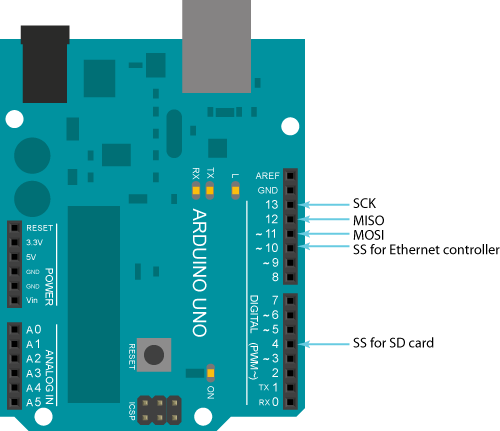
    Sck = 15 Miso = 14 Mosi = 16 You choose SS and IRQ from available gpio
  • AM312 with no delay

    Hardware
    5
    0 Votes
    5 Posts
    125 Views
    V
    @halipte Yes, you are right. The AM312 is different from the AS312 which I use. see: AM312 Datasheet and AS312 Datasheet But both are looking similar. No additional parts are required. For the HC-SR501 PIR there are a lot of additional parts on the module PCB. So at the end I prefer the AS312 to keep my PIR sensor device small and simple.
  • ESP8266 as (MQTT) Gateway with I2C Sensors

    Hardware mysensors
    2
    1 Votes
    2 Posts
    70 Views
    BearWithBeardB
    @Sunseeker According to the Connecting the Radio page, D2 is the default pin for the CE signal for the NRF24. If you'd like to use this pin for I2C, you can free it up by assigning a different pin for the CE signal by adding this line to your sketch: #define MY_RF24_CE_PIN pin IIRC, all available pins should work for this purpose (D0, D3, D4). Just pick one and if it doesn't work, use one of the other pins. Please make sure to add that line before #include <MySensors.h>.
  • Misol rain gauge tipping bucket rain amount

    Hardware
    8
    1
    0 Votes
    8 Posts
    3k Views
    P
    Old topic, but my test shows .304mm per tip. I calculated the surface area as 54.7854cm^2, which is 5cm x 11cm minus the small rounded corners. I slowly poured 60cc water and counted 36 tips. Thus, spread out over the whole surface, I poured 1.09518cm of water, divided by 36 tips equals .3042173mm per tip.
  • STM32L0 support

    Hardware
    6
    0 Votes
    6 Posts
    171 Views
    rozpruwaczR
    @tekka Is there something I could help to spped up merging STM32duinoUpdate branch into master ? At the moment I have couple of blue pill boards (STM32F103C8) and want to test RS485 network with MySensors. And that I have one question, Is it possible to use two hardware serial ports - one for rs485 and another for debug prints ? What I tried is: using AltSoftSerial for rs485 but STM32 platform is not supported there using #define MY_RS485_HWSERIAL Serial1 and #define MY_DEBUGDEVICE Serial2 but Serial2 does not exist using SoftwareSerial but it seems that the code hangs somwhere and does not even get into setup() function (SoftwareSerial uses some timers so maybe they interferre with MySensors)
  • 0 Votes
    1 Posts
    17 Views
    No one has replied
  • 12V distribution box - mysensorized!

    Hardware
    22
    1 Votes
    22 Posts
    5k Views
    C
    Just a quick thought, but would it be preferable to attach something like this to the PCB using connections for current measurement rather than the ACS chip? Modules have the benefit of being optional, so you can skip them if you don't want them on a certain channel. In other words, it is conceivable to have 4 out of 5 channels that report and 1 that doesn't, for example. Because the cost of the module and chip are same, I don't believe there is any difference from a financial standpoint. -AM
  • New esp32 board with more io pins, compatible with d1 mini

    Hardware
    1
    7 Votes
    1 Posts
    57 Views
    No one has replied
  • LED Strip: Heat vs. Waterproofing

    Hardware
    8
    0 Votes
    8 Posts
    2k Views
    K
    Even if there are quite a few differences between these two types, plus they have not only different shape, but also the raw material is different
  • 0 Votes
    3 Posts
    81 Views
    Giovanni ChivaG
    @mfalkvidd thank you very much for your quick answer! I'll look into that.
  • Raspberry as a node (bis)

    Hardware
    7
    0 Votes
    7 Posts
    77 Views
    YveauxY
    @ben999 said in Raspberry as a node (bis): Does it stay local within the LAN (and gets directly to my gateway) or does it have to travel through internet up to openhab and down again to my gateway (remember, my bell has to ring) ? You run an MQTT broker ('server') somewhere in your local network (or even on your pi) that takes care of distributing the data. Not saying you need MQTT, only that it works marvellous for me. So last question just to be sure : it is not common practice to use RPi as a node ? And there is no "sketch" ready made that can be tweaked ? Not to my knowledge, but as all platforms supported by mysensors can be turned into nodes, this should also work for a pi.
  • Orange Pi Stability

    Hardware
    1
    0 Votes
    1 Posts
    35 Views
    No one has replied
  • 0 Votes
    2 Posts
    60 Views
    E
    @mutantx Is there something lacking from the circuit diagram on the openhardware page? I'm not the original creator, but it seems like everything is on there. https://www.openhardware.io/uploads/58f4f976bacb0bcc79a15e93/394/DFPlayer_NRF_ProMini2_4.5V_Steckplatine.png
  • TGS8100 code?

    Hardware
    1
    0 Votes
    1 Posts
    24 Views
    No one has replied

23

Online

11.7k

Users

11.2k

Topics

113.1k

Posts