Skip to content

General Discussion

A place to talk about whateeeever you want
1.5k Topics 14.2k Posts
  • Two gateways and nodes

    3
    0 Votes
    3 Posts
    175 Views
    pw44P
    @mfalkvidd Thx for the reply. It makes sense.
  • Suggestions for my setup? Very new here.

    16
    0 Votes
    16 Posts
    554 Views
    TRS-80T
    @projectMarvin said in Suggestions for my setup? Very new here.: I would advise against messing with the FW unless you need to I agree with general gist of your whole post, except this one point. If we are talking about stuff like {Tasmota, ESPurna, ESPEasy, etc.} this "messing with firmware" is how you achieve freedom / independence from "clouds" / etc. and by now has become quite mundane and easy, even being able to do so over the air, with no need of soldering. Other sorts of devices may lead to other conclusions where firmware tinkering may be much more difficult. Of course, technically you are correct by saying "unless you need to." However in my view (apparently yours as well ;) ), independence from "clouds" is a "need." Cheers!
  • Multiple sensors over wifi?

    10
    0 Votes
    10 Posts
    512 Views
    TRS-80T
    @jo34l5, Maybe check out Dr. Zs on YouTube. His channel seems geared more to non-techies. He is big into Sonoff / Tasmota stuff, etc. which nowadays are pretty easy (you can flash them OTA, no more need of soldering). Having said that, the more you learn, the more options open up to you. Also you will pick up more and more of the stuff over time, no need to rush. Take your time and treat it as a hobby. It took me literally years to get where I am now, I finally got some certain things working that I had wanted to for a long time. But my skills (and parts inventory, etc.) was not up to par yet. Well, now it is. Another thing to consider, architecturally, is there are couple ways to tie together even otherwise disparate systems. In other words. no need to "commit" to any particular system. Here at Casa de TRS-80 we are using 433mhz, MySensors, as well as some Wi-Fi outlets, etc... There are a couple different ways to do that. Either in your controller, and/or with some intermediate messaging protocol like MQTT. MQTT is rapidly becoming something like the middle "glue" layer between disparate systems. Lots of things talk MQTT nowadays. Anyway that way you can mix and match. I bought some Wi-Fi plugs and 433mhz stuff to "get started" and get a few things working, but now I am getting better with MySensors and more "advanced" stuff... Just a thought!
  • Collective purchase order of RFM69W radios (Paris area)

    2
    0 Votes
    2 Posts
    130 Views
    TRS-80T
    I have not had any trouble just buying my radios the normal way on AliExpress. To me normal means buying about 10 or 20 at a time from the cheapest seller I can find with a high number of sales under their belt and a good reputation. I am getting nRF24 though, not sure if situation is different with RFM59W. I think most of the stuff you read in forums about fakes was from years ago. Or maybe I am just lucky.
  • 0 Votes
    3 Posts
    217 Views
    Smart Projects ABCS
    You might want to check https://ifttt.com/instagram
  • Repeaters everywhere

    2
    0 Votes
    2 Posts
    158 Views
    BearWithBeardB
    Hello @craigzyc, you can assign a prefered parent with #define MY_PARENT_NODE_ID n. If this should be the GW, set n to 0. If the node can't reach the parent, it will start looking for a new one and assign the closest repeater as the new parent. I think what you are trying to do could potentially lead to some complex routes with many hops over time, if the connection to the GW isn't perfectly reliable and literally any node could be a repeater. In consequence, it might complicate debugging network issues, if there are so many routing options. So I'm not sure if this is a desireable setup. Let's assume your location is a flat, plane space (so I can illustrate it better): GW --- R1 --- R2 --- N1 --- R3 --- R4 --- R5 --- N2 AFAIK, messages to the GW are always routed through the parent of each node on the way. So if N2 (node without repeater feature) wants to reach the GW, but hasn't the GW set as its parent, it will route through the R (repeater) which answered its find parent request the fastest (propably the physically closest). So this might be R5 in this case. R5 went through the same find parent process if it had trouble reaching the GW directly at some point, so it's possible that it relays all messages from N2 to R4. R4 to R3, R3 to R2, and so on. There are up to six hops in this setup until the message from N2 reaches the GW. And on each hop something could go wrong. With each extension of the route, you are increasing complexity and reducing reliability. IMHO, the better approach would be to make sure that each node itself is as reliable as possible instead of relying on a dense network. Use a good, stable power source, add capacitors to the transceivers to smooth the voltage level / reduce noise (e.g. 10 - 100 µF bulk electrolytic capacitor and 0.1 µF ceramic), etc. Test how reliable the signal in specific areas is (build a nRF24Doctor, run some tests with various capacitors or, monitor your network). I'd suggest using only as many repeaters as you need and activate that feature on (always powered) nodes in one or a few central locations only. Also, if range is a limiting factor at your place, consider using a different transceiver, like the RFM69. Due to the lower frequencies they use, you shouldn't need to use repeats at all, not even on large properties.

  • Time Series Database?

    6
    0 Votes
    6 Posts
    351 Views
    W
    @TRS-80 I looked at Grafana and InfluxDB a few years ago and found them supremely limited. It may be that I am a MS SQL Server user but the act if trying to do an update/delete of a value in InfluxDB is painful. Running everything through a JSON call to modify data annoys me. So, all that aside I prefer sending data for long term storage to an instance of SQL Server 2012 - even with 4 sensor nodes + weather queries and some other data that send info every 30 seconds, 5 minutes, 10 minutes, and 30 minutes for a few years. I am not even above 100 MB of storage used. The data types are Date, INT, CHAR(xxxx), and in one crazy case VARCHAR(1000). I use Domoticz's built in sqlLite and hassio's DB to handle the data view from my controllers (yes, I have 2). The split of data occurs in Node-Red where it gets the data from my MQTT broker and sends to controllers (different subscription topics due to C/F fubaring in hassio) and send to SQL Server for long term storage. Efficient storage types is the key so a timestamp as an INT/BIGINT would be nice. As long as all your values are INT as well that is even better. Timeseries DBs do have their use, I have just not found one I like. If there is a timeseries DB that can be accessed via ANSI SQL that would be awesome. Other thought - you could use Elasticsearch to send in values as "documents" and then run analysis on them. For dataviz, I use the built in ones in my two controllers and I have written my own to handle long term data analysis. I prefer Highcharts for doing the viz as that is what I use at work. It is clean, efficient, and fully customizable.
  • FOTA possibilities for remote sensor network

    mysensors
    2
    0 Votes
    2 Posts
    151 Views
    TRS-80T
    In general, yes, the MySensors framework (library?) should support FOTA a couple different ways (read more at link). Were you aware of this, or is there some problem with your particular hardware? @NielBierman said in FOTA possibilities for remote sensor network: Raspberry pi I don't know yet whether you even need to change your gateway from microcontroller (uC) to Single Board Computer (SBC) or not. However if you do (or are looking for a controller, or whatever), by all means, please do yourself (and all of us) a favor and do a little more research as there are lots of better options out there for SBC nowadays, than RPi! For me, uC have been fine for gateway although I do use some SBC for controllers, MQTT broker, and various other GNU/Linux based servers/services and they are wonderful for that. But perhaps your needs are different from mine.
  • V_VOLTGEM EXAMPLE

    7
    0 Votes
    7 Posts
    270 Views
    TRS-80T
    I am sorry but your reply is still not very helpful. In general I feel like this is an interrogation session in order to discover relevant information, making the whole process much more difficult than necessary. Please keep in mind that we know absolutely nothing about your system other than what you tell us, and if we instead substitute assumptions, that can lead us to wrong conclusions. In other words, please be more forthcoming with relevant information so we don't have to keep playing this cat and mouse game. :) @amkochaki said in V_VOLTGEM EXAMPLE: My motion sensores are the same of my alarm system. I don't think that you mentioned anything about what is your alarm system, how it works, etc. therefore this statement is meaningless (at least to me). Perhaps I missed something? @amkochaki said in V_VOLTGEM EXAMPLE: Are connected on analogic pins. Perhaps you are unaware, but the analog pins on the arduino can also be used as Genral Purpose Input Output (GPIO) pins, aka digital. So again, this statement still does not clarify whether your sensors are analog or digital... @amkochaki said in V_VOLTGEM EXAMPLE: So I need that Arduíno read voltage of the sensores. Yes, of course. But (at least to me) we still have not determined whether they are analog or digital... Both are measuring voltages, the question is how... Perhaps you are unfamiliar with difference between analog and digital? I don't like to assume anyone's knowledge level, which can lead to wrong conclusions. On the other hand, I don't want to insult anyone, either... ;)
  • MySensors Budget / Finances? Healthy?

    8
    0 Votes
    8 Posts
    328 Views
    TRS-80T
    Wow, I would have never thought that many either! Well done, guys. :clap: I was satisfied when hek said we were above water, and should remain so foreseeable future. :) But thank you for the additional disclosure @tbowmo, I am sure anyone searching for such information will appreciate your forthrightness.
  • My Sensors with Heltec V2

    6
    0 Votes
    6 Posts
    591 Views
    FarmerEdF
    @mrussi Not sure if you still need this info, but I'll leave it here in case anyone else needs it. I couldn't find this either so i had to look at the heltec pinout diagram and compared to the ESP32 Library /* * The MySensors Arduino library handles the wireless radio link and protocol * between your home built sensors/actuators and HA controller of choice. * The sensors forms a self healing radio network with optional repeaters. Each * repeater and gateway builds a routing tables in EEPROM which keeps track of the * network topology allowing messages to be routed to nodes. * * Created by Henrik Ekblad <henrik.ekblad@mysensors.org> * Copyright (C) 2013-2018 Sensnology AB * Full contributor list: https://github.com/mysensors/MySensors/graphs/contributors * * Documentation: http://www.mysensors.org * Support Forum: http://forum.mysensors.org * * This program is free software; you can redistribute it and/or * modify it under the terms of the GNU General Public License * version 2 as published by the Free Software Foundation. * ******************************* * * REVISION HISTORY * Version 1.0 - tekka * * DESCRIPTION * The ESP32 gateway sends data received from sensors to the WiFi link. * The gateway also accepts input on ethernet interface, which is then sent out to the radio network. * * Make sure to fill in your ssid and WiFi password below. */ // Enable debug prints to serial monitor #define MY_DEBUG // Enables and select radio type (if attached) //#define MY_RADIO_RF24 //#define MY_RADIO_RFM69 #define MY_RADIO_RFM95 #define MY_DEBUG_VERBOSE_RFM95 #define MY_RFM95_RST_PIN 14 #define MY_RFM95_CS_PIN 18 #define MY_RFM95_IRQ_PIN 26 #define MY_RFM95_IRQ_NUM MY_RFM95_IRQ_PIN #define MY_SOFT_SPI_MOSI_PIN 27 #define MY_SOFT_SPI_SCK_PIN 5 #define MY_RFM95_FREQUENCY (RFM95_868MHZ) #define MY_RFM95_MODEM_CONFIGRUATION RFM95_BW125CR45SF128 #define MY_GATEWAY_ESP32 #define MY_WIFI_SSID "WiFi_SSID" #define MY_WIFI_PASSWORD "password" // Set the hostname for the WiFi Client. This is the hostname // it will pass to the DHCP server if not static. #define MY_HOSTNAME "ESP32_GW_LoRa" // Enable MY_IP_ADDRESS here if you want a static ip address (no DHCP) //#define MY_IP_ADDRESS 192,168,1,100 // If using static ip you can define Gateway and Subnet address as well //#define MY_IP_GATEWAY_ADDRESS 192,168,1,1 //#define MY_IP_SUBNET_ADDRESS 255,255,255,0 // The port to keep open on node server mode #define MY_PORT 5003 // How many clients should be able to connect to this gateway (default 1) #define MY_GATEWAY_MAX_CLIENTS 2 #include <MySensors.h> void setup() { // Setup locally attached sensors } void presentation() { // Present locally attached sensors here } void loop() { // Send locally attached sensors data here }
  • Can you isolate LV from ELV with stacked boards

    3
    0 Votes
    3 Posts
    669 Views
    P
    Have the same doubt. Did you found the solution yet? If yes, can you please help me out as well? Regards.
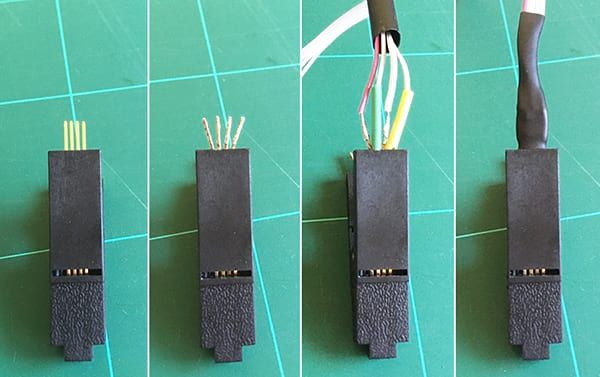
  • Quick SOICbite review: A small programming connector

    1
    4
    4 Votes
    1 Posts
    426 Views
    No one has replied
  • Started with MySensors and about to give up (some feedback)

    46
    6 Votes
    46 Posts
    2k Views
    TRS-80T
    @alex28, Feedback from new people is valuable! New people have a different perspective than those who have been here a long time, and have grown with the platform (or watched it grow up around them). We should never forget that, all of us. Personally, when I am learning some new software or something for the first time, I always try to give my fresh perspective as a new user (assuming it is F/LOSS; I absolutely refuse to commit a single ounce of my time/energy/money otherwise), help to update docs, or whatever (as much as possible). Having said that, this is a tinkering platform. On the bell curve of HA stuff, we are at the far right; the smallest number of people and most difficult, requiring the most knowledge (short of making things from absolute scratch). This is not off the shelf, ready to go stuff. This is building your own custom sensors from modules and components, nearly from scratch. If there is one thing I think we (as a community) can do better, it would be to make this more clear up front. I just looked at my profile page, it says I joined "23 Mar 2016." I'm pretty sure I started reading / studying even before that. But right from the beginning, I fell in deeply in love with what I saw, even if the vast majority of it was all way beyond me at that point. Actually now that I think about it, I have had interest in HA stuff since our first X-10 modules I remember playing with as a child to turn on the outside Christmas lights, and the electric "candle" in the garage... I thought that was just the coolest thing ever! :smiley: Every so many years during my 20s and 30s, I would check back in on the HA situation again but it was always the same story: very over priced devices that could not talk to one another. Until I came across MySensors! We are actually living in wonderful times right now if you are a fledgling hacker; boatloads of information available on the Internet, inexpensive parts, and an explosion in Free / Libre Open Source Software (and increasingly, Hardware!). Eventually I bought some parts, made a couple attempts, got some stuff working, but it was unreliable. I was in over my head. No time to spend on the stuff for months, years at a clip. But I kept reading, and reading... I finally had my first real success with nRF24L01+ just a few days ago (I like to think I give some good tips in that post about initial radio setup and testing, which IMHO should be linked from the Troubleshooting post / page; I would also be happy to adapt to a wiki / doc page or whatever). It has been a very long road for me, but I kept coming back... and the success was very sweet when it finally came! And now I know how to build and maintain my very own custom sensors, and the sky is the limit! By the way, I disagree with those who say nRF24L01+ are not worth it. But maybe I have just had good luck (now that I know how to test, position, etc.). Great, inexpensive little radios. I bought mine right off AliExpress, 2 x 10 pack of them IIRC... One thing that kept me going in the meantime was having some successes along the way. At one point I must confess to giving up and I ordered a bunch of cheap 433mhz stuff. It works great! I still use it. If I hadn't done that though, I may have given up completely. But it was enough to keep the flame of HA alive. The Tasmota / ESPxxxx stuff is similarly much "easier" to get started with, tradeoff being it uses Wi-Fi of course. But MySensors is for when you outgrow those sort of "off the shelf" solutions. And then you use something like OpenHAB (or whatever you prefer) to tie it all together seamlessly. Speaking of OpenHAB, that is another complicated and famously high learning curve thing. Difference is, over there, they are very up front (in forums anyway) about that. They will tell you outright that you are creating a bespoke HA system. It is going to be a lot of work, learning, trial and error, etc. Back to the case of MySensors here, we are talking about tying together many disciplines from radio propagation, to electronics, to programming, etc... One other difference between OpenHAB and MySensors that I personally perceive is that they have a bigger and more active community perhaps. At least on the forums, which are very active and you almost immediately get questions answered (I have come across a number of unanswered questions here while searching around). They are relentless about updating docs (they also make it easier for everyone to do so, more on that below). The MySensors devs are great and have shared this wonderful platform they have made with the world. But by now I think the community, docs, whatever maybe have not kept pace with the growth of the platform and new users? Maybe that is where we should concentrate our collective effort? @Yveaux said in Started with MySensors and about to give up (some feedback): we are currently discussing behind the scenes if/how we can let users edit the documentation pages I'm actually surprised this isn't the norm. Let's remove friction here; many hands make light work! As I alluded to above, they make this super easy at OpenHAB. Every page has a link to "Edit this page on GitHub" where you don't even need to submit a PR or anything. They make it very easy. It would be great if we could move more towards something like this. I bet anyone who cared enough to reply to this thread (and has the time to do so) would probably even pitch in a bit to help out in that department, so the small handful of you devs don't get burnt out trying to keep up with everything yourselves...
  • Gate openers

    3
    0 Votes
    3 Posts
    197 Views
    zboblamontZ
    It's kind of a hassle wasting 5 minutes, 2 - 3 times per day waiting on the gate to open, and the LONG wait for it to close just to make sure nobody sneaked in... :blush: Looking at fitting a cantilevered sliding gate here so it traverses the -20 ice and snow (no bottom rail), but will be opening and closing it manually as it's way faster.. Plenty of manufacturers of gates depending on your locale, most of the kit here seems to be rebranded turkish, italian or chinese origin, but as sliding gates are usually driven by a fixed motor on a castellated rail they are slower than the hinged manual gates I already have. ;) And no remotes to fumble for...
  • Pre-assembled sensor modules

    31
    0 Votes
    31 Posts
    1k Views
    scalzS
    @alex28 yes exactly, it may look exagerated but this is how it works. Same if you would replace the original wifi antenna on a commercial product. Like I said many times above, development boards (like OP design) can maybe fit in the "subassemblies" group, so mostly for development purposes only. CE is less strict regarding the process. That's a while I looked at this, way before debating..Personally, I completely don't mind what people do, that's not my business. I just mentioned regulations as infos for those who are interested to know more. that's all. more links here: https://www.sparkfun.com/tutorials/398 https://forums.adafruit.com/viewtopic.php?t=113747
  • Parallel Gateways

    gateway raspberry pi arduino
    10
    0 Votes
    10 Posts
    408 Views
    skywatchS
    @jocke4u I run 2 RF gateways and it's not a problem. When you 'migrate' a node to a new gateway make sure to run the mysensors clear eeprom sketch first to get rid of the old routing table or you might have issues.
  • MySensors over Bluetooth ?

    4
    0 Votes
    4 Posts
    218 Views
    scalzS
    no. bluetooth is not secured by default. you need to handle this in your ble fw
  • 0 Votes
    13 Posts
    516 Views
    zboblamontZ
    @GLAB No worries, was in a similar situation.. My perspective was on what the Node could be made to provide, not what could be done within Domoticz to address the requirement - eg Had heard of Dummy counters but had no experience nor understood their purpose, nor had ever used scripts. I had been sending a logical ON/OFF as well as a cumulative total from the Node and hit the same hair-pulling scenario as yourself. Now only the ON/OFF is sent and the short script makes the transposition within Domoticz to a dummy meter (I think kWhr) using the internal clock in Domoticz. Have fun ;)
  • 2 Votes
    3 Posts
    301 Views
    MatiasVM
    @NeverDie I can give my thoughts here, and we can move it later to another thread if necessary. The bigger selling points, at least for me: Every project is a self contained directory, even the boards configuration, bootloaders, libraries, code and build procedure I have a project template for mysensors (mainly a platform.ini) that I copy for each node that I create. I can manage everything with my known tools (vim, make, git, etc) I like to play with arduino and electronics, but have other interests (Family, friends and 3 small kids...) so I usually have little time to spent in my hobbies. Platformio allows me to just have all the configuration in code and know 6 months ahead that I can do a "make clean && make upload" for a particular node without issues, even if I lost my PC, as everything is in my gitlab account. Also the FW of my 3dprinter must be complied and uploaded with platformio (marlin 2.0) so I can have only one tool for both hobbies.

18

Online

11.8k

Users

11.2k

Topics

113.2k

Posts