
implementing multiple sensors
-
How did you get 3 options for the sleep interrupt? Whenever I would try and add the sleep_time option it would give me compile errors.
-
Here is a version I'm currently using that makes use of interrupts so might be more suitable for a battery driven DHT/Motion multi sensor. It also includes the battery monitoring. Any feedback or improvements would be appreciated.
#include <SPI.h> #include <MySensor.h> #include <DHT.h> #define CHILD_ID_HUM 0 #define CHILD_ID_TEMP 1 #define CHILD_ID_MOTION 2 // Id of the sensor child #define HUMIDITY_SENSOR_DIGITAL_PIN 4 #define DIGITAL_INPUT_SENSOR 3 // The digital input you attached your motion sensor. (Only 2 and 3 generates interrupt!) #define INTERRUPT DIGITAL_INPUT_SENSOR-2 // Usually the interrupt = pin -2 (on uno/nano anyway) unsigned long SLEEP_TIME = F; // Sleep time between reports (in milliseconds) int BATTERY_SENSE_PIN = A0; // select the input pin for the battery sense point int oldValue=-1; MySensor gw; DHT dht; float lastTemp; float lastHum; boolean metric = false; int oldBatteryPcnt = 0; int battLoop =0; MyMessage msgHum(CHILD_ID_HUM, V_HUM); MyMessage msgTemp(CHILD_ID_TEMP, V_TEMP); // Initialize motion message MyMessage msg(CHILD_ID_MOTION, V_TRIPPED); boolean pinTriggered=0;//waitTime is number of seconds to hol in while loop long lastDebounceTime = 0; // the last time the output pin was toggled long debounceDelay = 50; // the debounce time; increase if the output flickers void setup() { // use the 1.1 V internal reference analogReference(INTERNAL); gw.begin(); dht.setup(HUMIDITY_SENSOR_DIGITAL_PIN); // Send the Sketch Version Information to the Gateway gw.sendSketchInfo("Motion Humidity w/ Batt", "1.0"); // Register all sensors to gw (they will be created as child devices) gw.present(CHILD_ID_HUM, S_HUM); gw.present(CHILD_ID_TEMP, S_TEMP); gw.present(CHILD_ID_MOTION, S_MOTION); pinMode(DIGITAL_INPUT_SENSOR,INPUT); // sets the motion sensor digital pin as input digitalWrite(DIGITAL_INPUT_SENSOR,HIGH); // Activate internal pull-up metric = gw.getConfig().isMetric; check_batt(); } void loop() { if (pinTriggered) { Serial.println(millis()-lastDebounceTime); // Read digital motion value boolean value = digitalRead(DIGITAL_INPUT_SENSOR); // If the switch changed, due to noise or pressing if (value != oldValue) { { lastDebounceTime = millis(); // Send in the new value gw.send(msg.set(value==HIGH ? 1 : 0)); battLoop++; oldValue = value; Serial.print("Mot: "); Serial.println(value); } } pinTriggered=0; // } } else { delay(dht.getMinimumSamplingPeriod()); float temperature = dht.getTemperature(); if (isnan(temperature)) { Serial.println("Failed reading temperature from DHT"); } else if (temperature != lastTemp) { lastTemp = temperature; if (!metric) { temperature = dht.toFahrenheit(temperature); } gw.send(msgTemp.set(temperature, 1)); battLoop++; Serial.print("T: "); Serial.println(temperature); } float humidity = dht.getHumidity(); if (isnan(humidity)) { Serial.println("Failed reading humidity from DHT"); } else if (humidity != lastHum) { lastHum = humidity; gw.send(msgHum.set(humidity, 1)); battLoop++; Serial.print("H: "); Serial.println(humidity); } if (battLoop > 10) { check_batt(); battLoop=0; } } // Sleep until interrupt comes in on motion sensor. Send update every two minute. pinTriggered = gw.sleep(INTERRUPT, CHANGE, SLEEP_TIME); } void check_batt() { // get the battery Voltage int sensorValue = analogRead(BATTERY_SENSE_PIN); Serial.println(sensorValue); // 1M, 470K divider across battery and using internal ADC ref of 1.1V // Sense point is bypassed with 0.1 uF cap to reduce noise at that point // ((1e6+470e3)/470e3)*1.1 = Vmax = 3.44 Volts // 3.44/1023 = Volts per bit = 0.003363075 float batteryV = sensorValue * 0.003363075; int batteryPcnt = sensorValue / 10; Serial.print("Battery Voltage: "); Serial.print(batteryV); Serial.println(" V"); Serial.print("Battery percent: "); Serial.print(batteryPcnt); Serial.println(" %"); if (oldBatteryPcnt != batteryPcnt) { // Power up radio after sleep gw.sendBatteryLevel(batteryPcnt); oldBatteryPcnt = batteryPcnt; } }@mountainman
Thank you verry much, exactly what i need!For child's id, if you have two sensor you have to change the ID in the second?
Sensor 1 :
#define CHILD_ID_HUM 0
#define CHILD_ID_TEMP 1
#define CHILD_ID_MOTION 2Sensor 2:
#define CHILD_ID_HUM 3
#define CHILD_ID_TEMP 4
#define CHILD_ID_MOTION 5 -
@waynehead99 Are you using the new 1.4 Lib?
-
-
@waynehead99 you most likely need 1.4 Lib for the new sleep constructor. I have not used sleep on 1.3 so I do not remember what arguments you had available there.
I have also extended sleep with an additional constructor which @hek has pulled into the release branch of 1.4 that permits you to use two external interrupts with independent triggers for sleep in addition to a timeout. Great for nodes with multiple sensors that still run on battery. -
Im trying your code and its almost what im looking for.
I have two questions about it:
1 : Is it possible that the battery info has is own child id?
2 : Why dont you implement a light sensor like an LDR?I think that including LDR/light then you have the ideal multisensor ; light + temp/hum + motion + batt monitoring !
But for now im playing with your code and try to implement light. -
Here is a version I'm currently using that makes use of interrupts so might be more suitable for a battery driven DHT/Motion multi sensor. It also includes the battery monitoring. Any feedback or improvements would be appreciated.
#include <SPI.h> #include <MySensor.h> #include <DHT.h> #define CHILD_ID_HUM 0 #define CHILD_ID_TEMP 1 #define CHILD_ID_MOTION 2 // Id of the sensor child #define HUMIDITY_SENSOR_DIGITAL_PIN 4 #define DIGITAL_INPUT_SENSOR 3 // The digital input you attached your motion sensor. (Only 2 and 3 generates interrupt!) #define INTERRUPT DIGITAL_INPUT_SENSOR-2 // Usually the interrupt = pin -2 (on uno/nano anyway) unsigned long SLEEP_TIME = F; // Sleep time between reports (in milliseconds) int BATTERY_SENSE_PIN = A0; // select the input pin for the battery sense point int oldValue=-1; MySensor gw; DHT dht; float lastTemp; float lastHum; boolean metric = false; int oldBatteryPcnt = 0; int battLoop =0; MyMessage msgHum(CHILD_ID_HUM, V_HUM); MyMessage msgTemp(CHILD_ID_TEMP, V_TEMP); // Initialize motion message MyMessage msg(CHILD_ID_MOTION, V_TRIPPED); boolean pinTriggered=0;//waitTime is number of seconds to hol in while loop long lastDebounceTime = 0; // the last time the output pin was toggled long debounceDelay = 50; // the debounce time; increase if the output flickers void setup() { // use the 1.1 V internal reference analogReference(INTERNAL); gw.begin(); dht.setup(HUMIDITY_SENSOR_DIGITAL_PIN); // Send the Sketch Version Information to the Gateway gw.sendSketchInfo("Motion Humidity w/ Batt", "1.0"); // Register all sensors to gw (they will be created as child devices) gw.present(CHILD_ID_HUM, S_HUM); gw.present(CHILD_ID_TEMP, S_TEMP); gw.present(CHILD_ID_MOTION, S_MOTION); pinMode(DIGITAL_INPUT_SENSOR,INPUT); // sets the motion sensor digital pin as input digitalWrite(DIGITAL_INPUT_SENSOR,HIGH); // Activate internal pull-up metric = gw.getConfig().isMetric; check_batt(); } void loop() { if (pinTriggered) { Serial.println(millis()-lastDebounceTime); // Read digital motion value boolean value = digitalRead(DIGITAL_INPUT_SENSOR); // If the switch changed, due to noise or pressing if (value != oldValue) { { lastDebounceTime = millis(); // Send in the new value gw.send(msg.set(value==HIGH ? 1 : 0)); battLoop++; oldValue = value; Serial.print("Mot: "); Serial.println(value); } } pinTriggered=0; // } } else { delay(dht.getMinimumSamplingPeriod()); float temperature = dht.getTemperature(); if (isnan(temperature)) { Serial.println("Failed reading temperature from DHT"); } else if (temperature != lastTemp) { lastTemp = temperature; if (!metric) { temperature = dht.toFahrenheit(temperature); } gw.send(msgTemp.set(temperature, 1)); battLoop++; Serial.print("T: "); Serial.println(temperature); } float humidity = dht.getHumidity(); if (isnan(humidity)) { Serial.println("Failed reading humidity from DHT"); } else if (humidity != lastHum) { lastHum = humidity; gw.send(msgHum.set(humidity, 1)); battLoop++; Serial.print("H: "); Serial.println(humidity); } if (battLoop > 10) { check_batt(); battLoop=0; } } // Sleep until interrupt comes in on motion sensor. Send update every two minute. pinTriggered = gw.sleep(INTERRUPT, CHANGE, SLEEP_TIME); } void check_batt() { // get the battery Voltage int sensorValue = analogRead(BATTERY_SENSE_PIN); Serial.println(sensorValue); // 1M, 470K divider across battery and using internal ADC ref of 1.1V // Sense point is bypassed with 0.1 uF cap to reduce noise at that point // ((1e6+470e3)/470e3)*1.1 = Vmax = 3.44 Volts // 3.44/1023 = Volts per bit = 0.003363075 float batteryV = sensorValue * 0.003363075; int batteryPcnt = sensorValue / 10; Serial.print("Battery Voltage: "); Serial.print(batteryV); Serial.println(" V"); Serial.print("Battery percent: "); Serial.print(batteryPcnt); Serial.println(" %"); if (oldBatteryPcnt != batteryPcnt) { // Power up radio after sleep gw.sendBatteryLevel(batteryPcnt); oldBatteryPcnt = batteryPcnt; } }@mountainman Is there any instructions on how to wire/setup the hardware to work with your code?
-
The battery percentage is associated with the parent Arduino Node in the vera UI.
I have some LDRs ordered from Ebay so that is the next step. I had previously used the BH1750 I2C sensor in a multi sensor with the 1.3 lib but I want to debug on its own as it seemed to be giving unexpected readings.@codenea The instructions are pretty much from the main page although if I get a chance I try to draw it up and post some pics. My setup not very pretty yet with perf board and jumper wires. A dedicated PCB would be nice.
-
Hello,
Here is my combo to make a Home Monitoring solution:
https://github.com/empierre/arduino/blob/master/MQv01dgi_1_4.inoIt includes (currently on a Mega):
- Barometer : BMP085
- Temperature + Humidity DHT11
- Particle sensor
- Gas sensors MQ2 MQ6 MQ131 MQ135 TGS2600 2SH12
To be added when stabilized:
- Sound level in DB
Could be added:
- Light sensor
- Vibration sensor
- PIR
-
Hi guys,
this is a one node with publishing DS temperatures and listening for relay commands I finished and tested yesterday>
https://github.com/pgo-sk/mysensors/blob/master/arduino/DS_and_Relay.ino
feel free to comment/use/publish...I combined the Dalas and Relay examples together - you have to deactivate the sleep for the relays to listen 100% of time.
MQTT identification on openHAB:
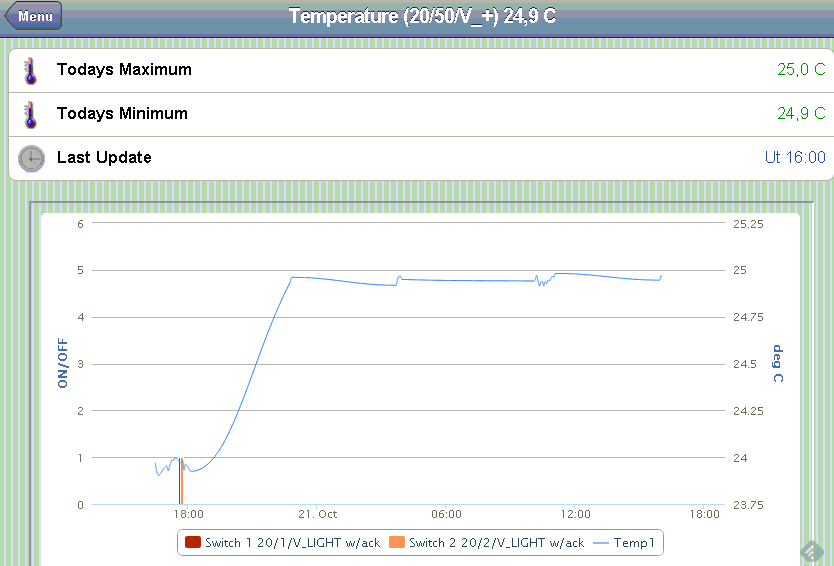
MyMQTT/20/0/V_TEMP - DS sensor(s)
MyMQTT/20/1/V_LIGHT - relay 1
MyMQTT/20/2/V_LIGHT - relay 2If somebody is interested I can post the maps/items files for openHAB
Regards,
Pego
PS I am working on an home automation system with solar hot air panels control/solar hot water panels and all the common stuff like lights/temperatures/weather etc.. More here: https://github.com/pgo-sk/mysensors/wiki/Home-automation-using-mysensors-and-openHAB -
I'm also following along interested in the Temp, Humidity, and motion sensor.
-
I'm also following along interested in the Temp, Humidity, and motion sensor.
-
https://github.com/pgo-sk/mysensors/blob/master/arduino/DS_Light_Relay
- DS18B20 (up to 16 like in original temp sketch)
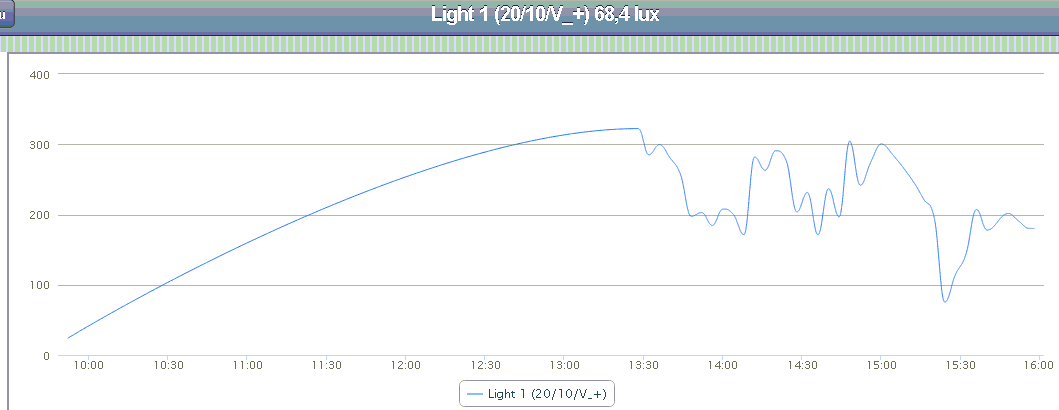
- TEMT6000 reporting LUX light values
- 2x Relays
running and tested
Sensor <-> MQTT gateway <-> openHAB/PC
When interested can post the openHAB items/sitemap(s) settings
Screenshots - over teamviewer, sorry for the quality.
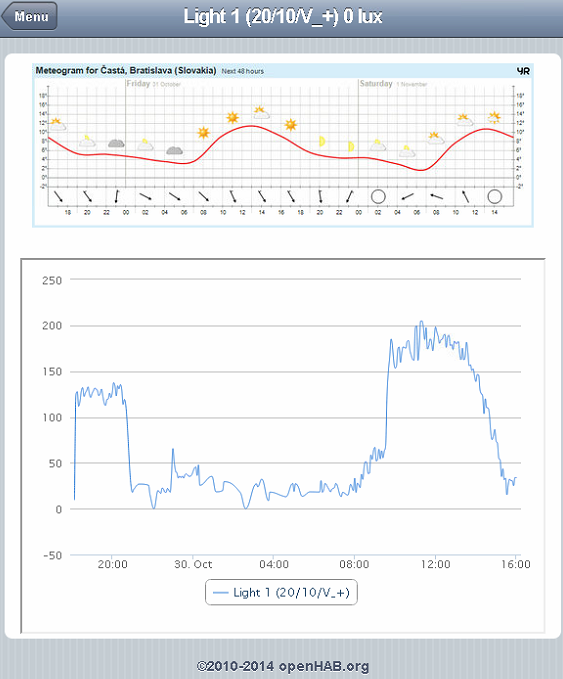
Here the TEMT6000 output - in a quite dark room and changing weather today>
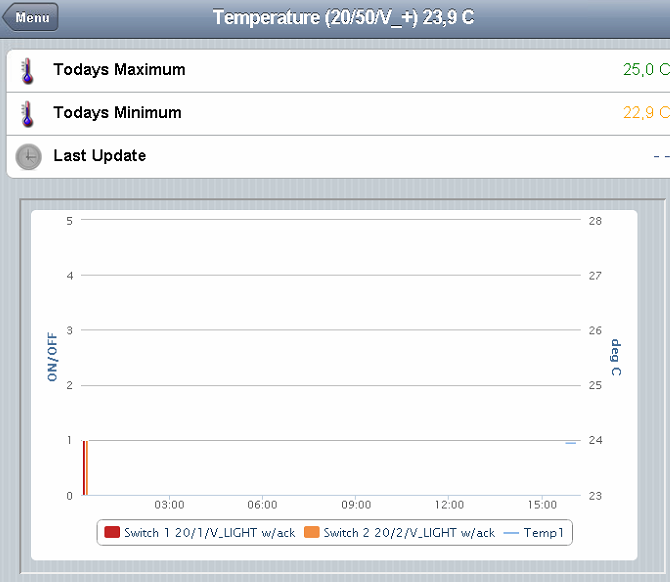
Here the temperature and relays:
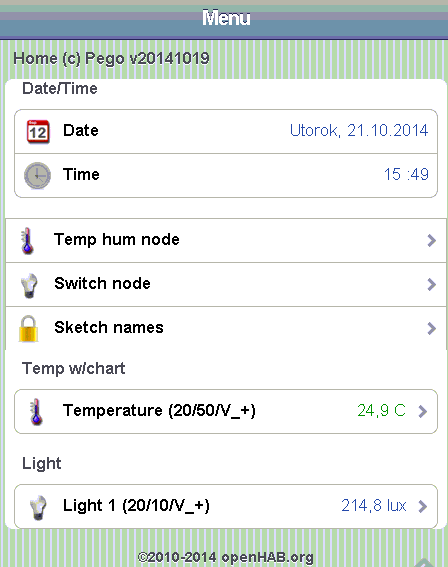
Menu:
-
-
-
Or here is an example I'm using:
-
https://github.com/pgo-sk/mysensors/blob/master/arduino/DS_Light_Relay
- DS18B20 (up to 16 like in original temp sketch)
- TEMT6000 reporting LUX light values
- 2x Relays
running and tested
Sensor <-> MQTT gateway <-> openHAB/PC
When interested can post the openHAB items/sitemap(s) settings
Screenshots - over teamviewer, sorry for the quality.
Here the TEMT6000 output - in a quite dark room and changing weather today>
Here the temperature and relays:
Menu:
-
-
-
test1.items
test1.sitemap
test1.rules

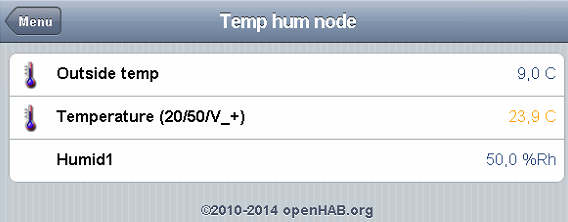
webcam.png -icon for webcam - put in openhab/webapps/imagesMy Current openHAB items/sitemap. 1 multisensor with Temp/Lux/Humidity sensor, 1 ethernet/MQTT gateway.
Also weather forcast from yr.no and Samsung TV remote controls (Mute working, rest not so much)
- openHAB v 1.5.1
- Addons :
\openhab\addons>
org.openhab.binding.http-1.5.1.jar
org.openhab.binding.mqtt-1.6.0-SNAPSHOT.jar
org.openhab.binding.ntp-1.5.1.jar
org.openhab.binding.samsungtv-1.6.0-SNAPSHOT.jar
org.openhab.binding.zwave-1.6.0-SNAPSHOT.jar
org.openhab.io.habmin-1.6.0-SNAPSHOT.jar
org.openhab.persistence.exec-1.5.1.jar
org.openhab.persistence.logging-1.5.1.jar
org.openhab.persistence.mqtt-1.6.0-SNAPSHOT.jar
org.openhab.persistence.rrd4j-1.5.1.jar
HABmin conf with graphs:
charts.xml -put in openhab/etc/habminIn habmin.cfg specify the IP of your MQTT arduino and port>
'#'mqtt:<broker>.clientId=<clientId>
mqtt:mysensor.url=tcp://192.168.1.234:1883
mqtt:mysensor.clientId=MQTT
mqtt:mysensor.qos=0
mqtt:mysensor.retain=true
mqtt:mysensor.async=trueHere some screenshots:
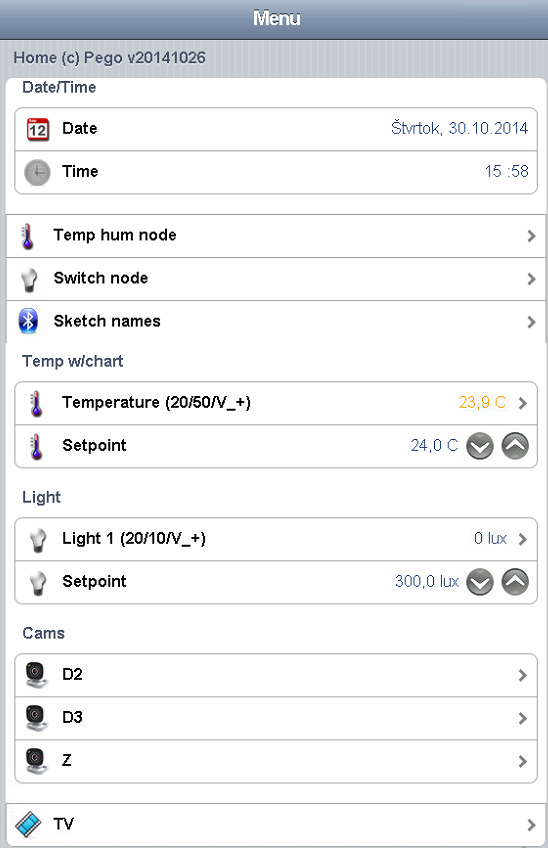
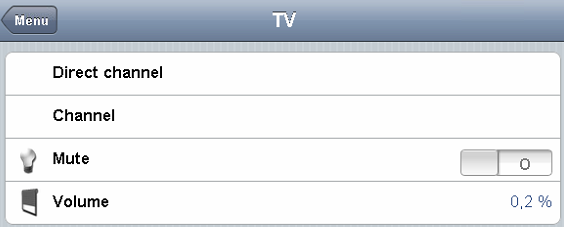
These (Direct channel/Channel/Volume) does not work yet... Mute is OK and Volume displays only the current TV volume.








Hello! It looks like you're interested in this conversation, but you don't have an account yet.
Getting fed up of having to scroll through the same posts each visit? When you register for an account, you'll always come back to exactly where you were before, and choose to be notified of new replies (either via email, or push notification). You'll also be able to save bookmarks and upvote posts to show your appreciation to other community members.
With your input, this post could be even better 💗
Register Login