Skip to content

Hardware

Talk about fun sensor hardware, MCUs, PCBs and how to power your sensors here.
1.8k Topics 18.4k Posts
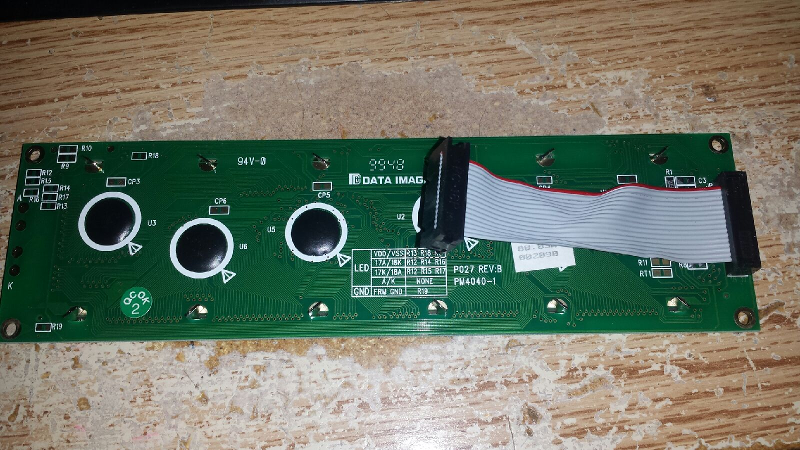
  • LCD Modules

    8
    2
    1 Votes
    8 Posts
    3k Views
    Nca78N
    Hello @dbemowsk, found my old mysensors alarm clock I was talking about, so here is a video of the display screens/menus on a 1602 LCD https://www.youtube.com/watch?v=9xFFBNHUylU PS: you can also enjoy the sound of the glorious karaoke singers downstairs in the street, really high (alcohol) level today :D
  • How connect si7021 and bh1750 to arduino mini pro

    3
    0 Votes
    3 Posts
    2k Views
    M
    @Tommas Hardware-wise, apart from the Vcc and GND pins, both I2C pins marked SDA and SCL should be connected to the I2C pins in the arduino (A4 and A5). Software-wise, each library should provide a "constructor" function which returns an object with which you can then read the measurements through the appropriate function. The I2C devices have an internal address which the libraries use to access the correct device through the bus. Most of the devices have their I2C adress hardcoded; some allow you to modify it e.g. to avoid conflicts with other devices or to allow connecting two equal devices to the same board. In this case, the constructor will need you to pass the adress as a parameter. I have no experience with those two sensors but I have a node with a light sensor similar to the bh1750 (tsl2591), and a temp/hum/baro sensor similar to the si7021 (bme280). Just to give you an idea, the constructor for the bme280 (using the Adafruit library) looks like: Adafruit_BME280 bme; and then the lines to read the measurements look like (in "forced measure" mode): bme.takeForcedMeasurement(); temp=float(long(bme.readTemperature()*10))/10.0; //round to 1 decimal place hum=(int) bme.readHumidity(); //Humidity in domoticz is an integer baro=round(bme.readPressure()/100); //Convert from Pa to hPa (mb) and round to 1 decimal place While for the TSL2591 the constructor and readings (in IR + visible mode) are like this: Adafruit_TSL2591 tsl = Adafruit_TSL2591(2591); // pass in a number for the sensor identifier (for your use later) << more code >> uint32_t lum = tsl.getFullLuminosity(); //getFullLuminosity in the library already enables and disables the device uint16_t ir, full; ir = lum >> 16; full = lum & 0xFFFF; visible=tsl.calculateLux(full, ir); In addition to this, you may need to initialize the sensor, set some configuration... each library is different and therefore should provide documentation explaining how it works.
  • best approach to add MySensors Node to an existing smoke detector?

    8
    0 Votes
    8 Posts
    4k Views
    U
    Hi, @rvendrame after a while the board stopped reporting to the gateway, not sure why, while the smoke detector is up and running. It is still in my todo list to do some troubleshooting, if I'll discover more and I'll let for sure know. Thanks
  • More reliable relative humidity measurements?

    18
    0 Votes
    18 Posts
    3k Views
    M
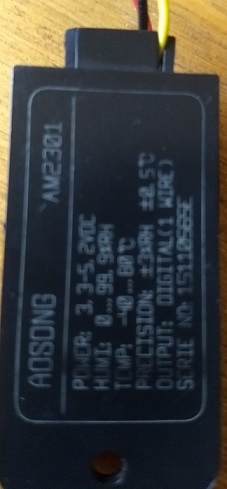
    I'm not sure about the last statement, since the CPU needs to wake-up to make the measurement and send the result even though you use the sensor's own sleep mode. However I've never made that kind of measurement so can't really support this with numbers. That said, in my opnion the solution of feeding the sensor from a pin on the arduino makes sense when the sensor doesn't include its own sleep mode... in that case, it may be fed from a pin, or from an external transistor or mosfet device... if it has its own sleep mode, it seems more reasonable using it.
  • 0 Votes
    14 Posts
    5k Views
    D
    At these prices, I ordered a couple of them, just because all the cool kids have them :) I was thinking, that (on top of all already ambitious functionality) it would be nice to have a Firmware over the air functionality wouldn't it, as I am certainly going to need to debug and fix the code... So in the end I might split the functionality in two/three pro minis, or if I manage to make Mega do FOTA (didn't find much info about someone doing it already). But then there is maybe issue with proximity of the radios in the box which is an old round lamp, radius 10ish cm. I guess I will have to wait for the boards to see how will it all fit together...
  • 0 Votes
    5 Posts
    3k Views
    S
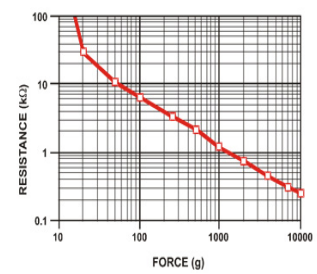
    @wallyllama Thankyou for your reply. Actually only voltage conversion formula is given in the data sheet , here is the following link for the data sheet : https://www.interlinkelectronics.com/datasheets/Datasheet_FSR.pdf But i again thankyou for your time that you clarified my confusion . :)
  • MLX90614 contactless temperature sensor

    6
    2 Votes
    6 Posts
    3k Views
    wallyllamaW
    Positioning would be critical, but these sensors always make me think of a sort of automated health diagnostic system. It checks your temperature and reports if you have a fever.
  • Very special touch sensor (loxone)

    6
    0 Votes
    6 Posts
    2k Views
    Nca78N
    Nice, I'm working on something similar but of course with MySensors, no success at the moment but I'm not giving up :)
  • Problem with compilling for board with ATmega128

    1
    0 Votes
    1 Posts
    966 Views
    No one has replied
  • [SOLVED] Itead Rboard 2.1.1

    2
    0 Votes
    2 Posts
    1k Views
    T
    This page helped me solve the problem. Regards, Tim https://www.mysensors.org/download/sensor_api_20 /** * The MySensors Arduino library handles the wireless radio link and protocol * between your home built sensors/actuators and HA controller of choice. * The sensors forms a self healing radio network with optional repeaters. Each * repeater and gateway builds a routing tables in EEPROM which keeps track of the * network topology allowing messages to be routed to nodes. * * Created by Henrik Ekblad <henrik.ekblad@mysensors.org> * Copyright (C) 2013-2015 Sensnology AB * Full contributor list: https://github.com/mysensors/Arduino/graphs/contributors * * Documentation: http://www.mysensors.org * Support Forum: http://forum.mysensors.org * * This program is free software; you can redistribute it and/or * modify it under the terms of the GNU General Public License * version 2 as published by the Free Software Foundation. * ******************************* * * REVISION HISTORY * Version 1.0 - Henrik Ekblad * * DESCRIPTION * Example sketch showing how to control physical relays. * This example will remember relay state after power failure. * http://www.mysensors.org/build/relay */ // Enable debug prints to serial monitor #define MY_DEBUG // Enable and select radio type attached #define MY_RADIO_NRF24 //#define MY_RADIO_RFM69 //CE/CS Pins #define MY_RF24_CE_PIN 8 #define MY_RF24_CS_PIN 9 // Enable repeater functionality for this node #define MY_REPEATER_FEATURE #include <MySensors.h> #define RELAY_1 4 // Arduino Digital I/O pin number for first relay (second on pin+1 etc) #define NUMBER_OF_RELAYS 4 // Total number of attached relays #define RELAY_ON 1 // GPIO value to write to turn on attached relay #define RELAY_OFF 0 // GPIO value to write to turn off attached relay void before() { for (int sensor=1, pin=RELAY_1; sensor<=NUMBER_OF_RELAYS; sensor++, pin++) { // Then set relay pins in output mode pinMode(pin, OUTPUT); // Set relay to last known state (using eeprom storage) digitalWrite(pin, loadState(sensor)?RELAY_ON:RELAY_OFF); } } void setup() { } void presentation() { // Send the sketch version information to the gateway and Controller sendSketchInfo("Relay", "1.0"); for (int sensor=1, pin=RELAY_1; sensor<=NUMBER_OF_RELAYS; sensor++, pin++) { // Register all sensors to gw (they will be created as child devices) present(sensor, S_BINARY); } } void loop() { } void receive(const MyMessage &message) { // We only expect one type of message from controller. But we better check anyway. if (message.type==V_STATUS) { // Change relay state digitalWrite(message.sensor-1+RELAY_1, message.getBool()?RELAY_ON:RELAY_OFF); // Store state in eeprom saveState(message.sensor, message.getBool()); // Write some debug info Serial.print("Incoming change for sensor:"); Serial.print(message.sensor); Serial.print(", New status: "); Serial.println(message.getBool()); } }
  • Headless power meter (possibly multi-channel)

    7
    0 Votes
    7 Posts
    2k Views
    wallyllamaW
    Open energy monitor is both a commercial product and open source hardware/software, they have pages on using ct clamps. https://learn.openenergymonitor.org/electricity-monitoring/ct-sensors/introduction There is also a commercial product that uses 2 ct clamps and technology derived from speech recognition to analyze the powrer signal to detect what devices are running and even when appliances are gettimg ready to fail. I'd probably own one of these, but I am allergic to clouds.
  • RGB Controller Addressable led strip

    8
    0 Votes
    8 Posts
    5k Views
    D
    @matthewdllh hi, did you have any luck with the strips? I am considering those as well. Can you share the link from where you purchased them? Maybe some more info about the project if you got any success with it? Thanks!
  • Temperature sensor on ESP8266

    14
    4 Votes
    14 Posts
    14k Views
    B
    @flopp thanks you.
  • Solid State Relay ?

    5
    0 Votes
    5 Posts
    2k Views
    szempoS
    @Boots33 This is it! Thank you very much Lazlo
  • 230V AC to digital interface

    2
    0 Votes
    2 Posts
    973 Views
    archiijsA
    Hi, I am interested in this as well, I got the old wood boiler and all its smarts is by 220v and thermostats and relays. I would like to interface those signals with Arduino for displaying some of the boilers states and then maybe automate some things afterward. Til now I thought about a lot of 5v chargers, but this module seems to be more compact.
  • Use oscillator on nRF24 additionally for ATmega328?

    3
    0 Votes
    3 Posts
    1k Views
    P
    @rozpruwacz Thanks! Will consider using the internal one...
  • Issues between Wifi (router) and NRF24L01

    10
    0 Votes
    10 Posts
    5k Views
    S
    It seems that moving to last channel all nodes and gateways solved my trouble. In this moment wifi is under heavy load (upload several video from several phones and tablet) and traffic leds never light the infamous red... neither nodes lost their gateway :) :)
  • RFM69HW + MCP1700-33 + FOTA = potential overload

    3
    1 Votes
    3 Posts
    1k Views
    mfalkviddM
    @manutremo interesting results, thanks for sharing. This would probably apply to signed messages as well as FOTA, sine both use the full packet length.
  • Dallas temperature and button sensor and repeater function

    1
    0 Votes
    1 Posts
    818 Views
    No one has replied
  • Soft Signing vs. the hardware ATSHA

    16
    0 Votes
    16 Posts
    3k Views
    AnticimexA
    @NeverDie like I said above, it will be a software based solution, without dependencies to external chips. It may still leverage chipset specific features such as RNGs and crypto accelerators.

22

Online

11.7k

Users

11.2k

Topics

113.2k

Posts