
Very narrow and minimal switch node - low power consumption experiment
-
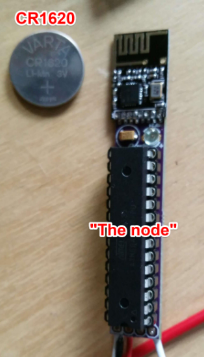
The minimalistic Very narrow and minimal switch node lends itself for some battery experiments. A how low can you go study with a standard MySensors node.
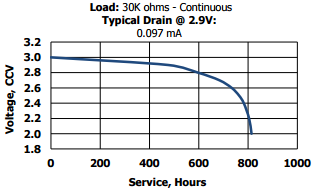
The objective was to explore how long it can operate with a small i.e. CR1620 (3V, 75mAh, until 2V) battery.
The node is attached to a 'reed contact' magnetic sensor.
This one is connected between arduino pin D2 (connector) and GND.
The node is programmed with the bootloader as described by @m26872 for the My slim battery node.
The findings:
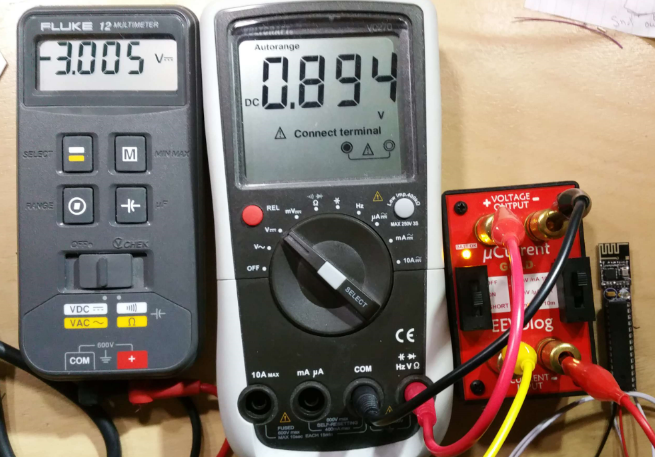
:exclamation: Summary: minimum of 4 years operation :star:Basic setup.. a uCurrent current to voltage converter. This one is set to 1mV per nA ! (0.001uA) The photo below shows the sleep current at ~3.00V supply voltage (nominal battery voltage (ignore the minus sign on the voltmeter. ;-))). Supply current during sleep ~0.9 uA!
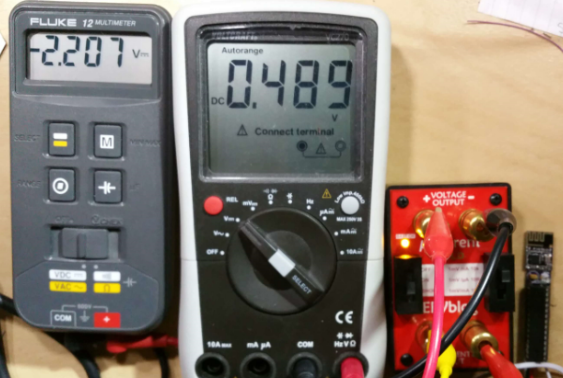
Dropping to ~0.5uA for a supply voltage of ~2.2V
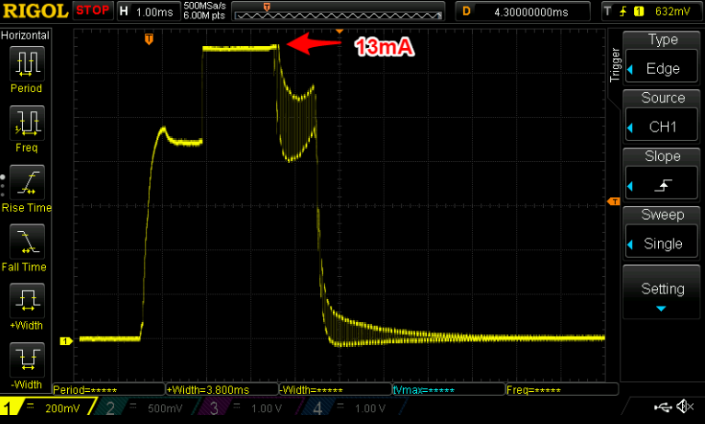
The current during wake is ~13mA during ~4ms. This is for reading two magnetic door contacts and the battery voltage.
A simple and conservative calculation (using the Android Electrodroid battery calculator):
Sleep: < 1uA
Wake: 13mA during 4ms and awake once every hour
Average consumption: 1.014uA,
Battery: 75mAh
---> expected lifetime: ~74000 hours = ~8.4 years !
For a wake-up around every minute this would still be over 4.5 years.A CR1620 (dimension 16mm x 2.0mm) with a (75 mAh) capacity would fit perfectly with the Very narrow node in a 16x16mm housing. I am off to build some MySensors keyfobs (remote controls) ;-)
-
-
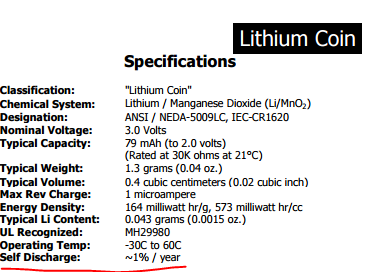
@hek for an A quality Energizer type: 1%/ year
these will probable be different but at Euro 0.16 a piece ....
-
@AWI : nice report ;)
imho I am not sure it could last so long time (4.5years with a 75mah !). Unfortunately, because of the rated capacity vs effective capacity, coincell brand/vendor, ...
or maybe for a very basic keyfob..I know it's an estimation lol :)
for a keyfob (depends on application type), we would need signing which would take more than 4ms for the process (and coincell don't like pulse drain > 5mA). But for simple application/sleep mode, I have reported same as you for coincell. And I had not the same sleep current for coincell vs aa/aaa
If you are interested in coincell resources, maybe you already know it ;), always good to know :
https://www.dmcinfo.com/Portals/0/Blog Files/High pulse drain impact on CR2032 coin cell battery capacity.pdf
http://www.ti.com/lit/wp/swra349/swra349.pdf
http://www.embedded.com/electronics-blogs/break-points/4429960/How-much-energy-can-you-really-get-from-a-coin-cell-
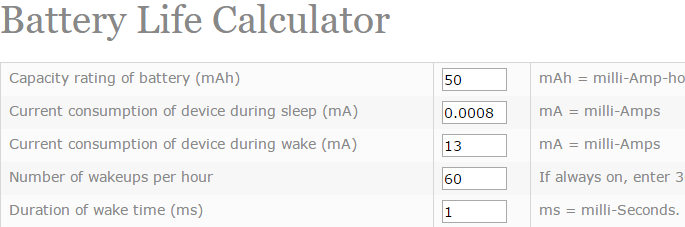
I use this link for battery calc : http://oregonembedded.com/batterycalc.htm -
-- revisited ---
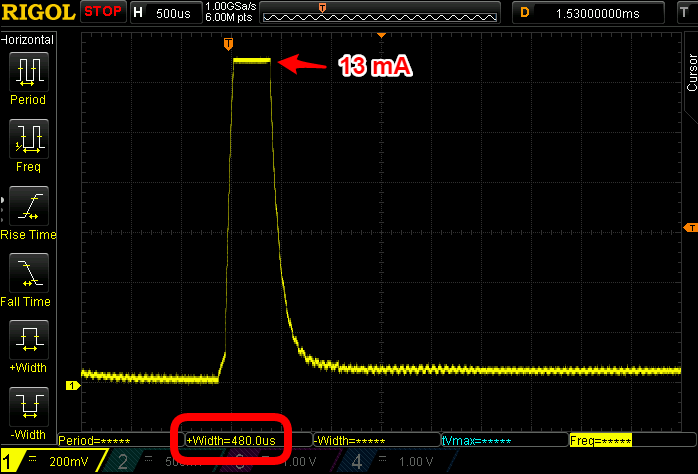
I changed the bootloader to a 8mHz version. As the processor runs 8 times as fast the active period pulse width is now < 0.5 ms (earlier 3.8 ms) The sleep and active consumption have not changed. This would reduce the 'pulse' burden on the coin cell as attentively mentioned by @scalz.
Something comparable to 'internal resistance' increases as the charge reduces. This will impact the available voltage for the node. I used a conservative figure for battery capacity (50mAh) and a load current of 0.8uA which will be less if battery voltage goes down.
Have three nodes ready for real life test with constant battery measurement. I hope to report just within five years from now :zzz:




Hello! It looks like you're interested in this conversation, but you don't have an account yet.
Getting fed up of having to scroll through the same posts each visit? When you register for an account, you'll always come back to exactly where you were before, and choose to be notified of new replies (either via email, or push notification). You'll also be able to save bookmarks and upvote posts to show your appreciation to other community members.
With your input, this post could be even better 💗
Register Login