Skip to content

Hardware

Talk about fun sensor hardware, MCUs, PCBs and how to power your sensors here.
1.8k Topics 18.4k Posts
  • Private BLE Beacons with nRF52840

    7
    1 Votes
    7 Posts
    439 Views
    P
    Update Meanwhile I made progress with my project. Together with some colleagues I want to install a real-time measurement system with more than 30 channels (i.e. 30 Nano BLE 33 measuring accel. and gyro.) and one evaluation unit (another Nano BLE 33 combined with other computers). The 6 values (2*x,y,z) of 16 Bit each shall be transmitted with 10 measurements per second. Instead of spontaneous sending beacons with new measurement values from the 30 devices (to many collisions, real-time simply not possible) I use a master-slave polling, done by the evaluation unit. And I continue using non-connectable/non-scannable BLE-Beacons, for the request messages and for the response messages. Meanwhile, my beacons can be detected by typical BLE scanner APPs on my smartphone (Android 10). I do not know, why that did not work at the beginning. May be I corrected some mistakes incidentally in the last months. I am working also on a channel hopping (in case of disturbances by other devices with BT and WLAN) and using more channels for higher measurement speed. But the implementation of that will start later. 8 hours later Now I found a reason for the behavior of the Scan-APPs: My request beacons (without data, only user address of 6 bytes) are detected, but not the response beacons with data. I do not need the smartphones now (the speed of about 500 beacons per second is to fast for them), so I am happy with my solution.
  • RC-SPC1K capacitive rain sensor

    6
    1
    1 Votes
    6 Posts
    316 Views
    TheoLT
    @Jodaille Thanx for the link to the project. I think I'll order one of those sensors this weekend. As I hope it can also send the amount of rain that is falling. I do have to check the optical sensor. But I really like the heating in the controlli sensor
  • Mysensors and BSFrance Lora32u4 ii

    10
    1
    0 Votes
    10 Posts
    855 Views
    C
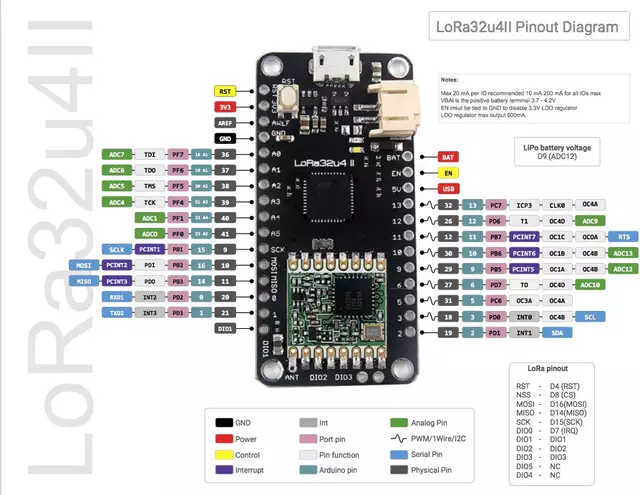
    I can confirm the solution posted by FarmerEd works for me. I was able to transmit from a Lora32u4 ii (node) to a TTGO Lora32 gateway. As pointed in his post, the right line was: #define MY_RFM95_IRQ_NUM digitalPinToInterrupt(7) instead of #define MY_RFM95_IRQ_NUM MY_RFM95_IRQ_PIN or #define MY_RFM95_IRQ_NUM 7 Thanks very much again for taking the time to post the solution.
  • Glowing/pulsing yellow LED?

    2
    0 Votes
    2 Posts
    134 Views
    TheoLT
    @raptorjr said in Glowing/pulsing yellow LED?: MKRNB 1500 It helps if you post a wiring diagram and a sketch.
  • Where to buy senserbender from spain

    1
    0 Votes
    1 Posts
    106 Views
    No one has replied
  • advise to buy a noob PCB

    1
    0 Votes
    1 Posts
    77 Views
    No one has replied
  • 1 Votes
    7 Posts
    1k Views
    E
    Well, it could be that the issue is the voltage regulator on the Arduino board. The higher the input voltage, the more power/heat that needs to be burnt at the voltage regulator. Maybe it's self-limiting because it's getting too hot? The Arduino website lists this part as the voltage regulator: https://www.mouser.com/datasheet/2/146/SPX1117-1889129.pdf On page 6 it claims a thermal resistance to ambient of 46 degrees/W. If you're using 1A and have 12V input then you're dropping 7W across the regulator. This is a temp rise at the junction of 322 degrees over ambient, which it obviously won't do. The datasheet also says that it's internally regulated and will current limit at 155C. Assuming 25C ambient, this only leaves a margin of ~2.8W that can be dropped over the regulator. So you'd have problems with any more than around 400mA. To have a safety margin, I wouldn't plan on more than 300mA or so, or maybe even down more towards 200. This voltage regulator is a nice, low dropout one, so if you could power it from a supply that gave it 6 or 7V instead of the 12 that would give you a ton more thermal margin and the regulator could then allow a lot more current through.
  • Questions about FS1000A and MX-RM-5V RF transmitter/receiver

    5
    0 Votes
    5 Posts
    713 Views
    HisDudenessH
    @virtualmkr Oh, man. Here in Italy too, AFAIK. So, it would be a good idea to add it? Is it really just a coiled copper wire that I can do myself? Also, is the knob to calibrate the frequency?
  • Seeeduino Xiao

    13
    0 Votes
    13 Posts
    424 Views
    V
    @workshopninja Yes, this is basically what I did with an Arduino MKR1000 WIFI some years ago. There are some #defines for the EEPROM in the code. But for me it worked out of the box with a 24LC32P. See also in the MyS lib code: hal/architecture/SAMD/MyHwSAMD.h#L47 But in the end I switched to the ESP8266 because it also has WiFi and is much cheaper. The support for external libraries is also much better than with the SAMD.
  • Read the Digoo DG-R8H temp/humidity sensor

    6
    1
    0 Votes
    6 Posts
    290 Views
    B
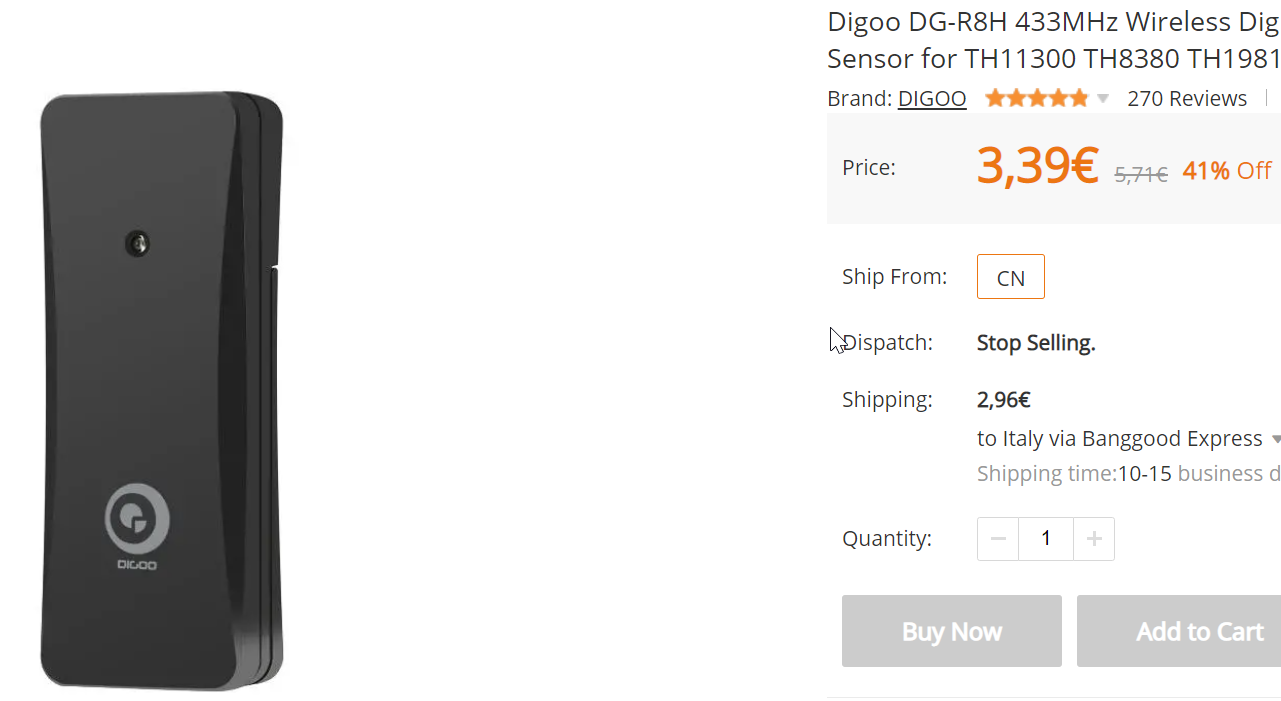
    @DenisJ yes I will take them , please send me your email so we can arrange this
  • My Wemos D1 mini adventures - Interrupts on pins D3 and D4

    2
    1
    1 Votes
    2 Posts
    801 Views
    TheoLT
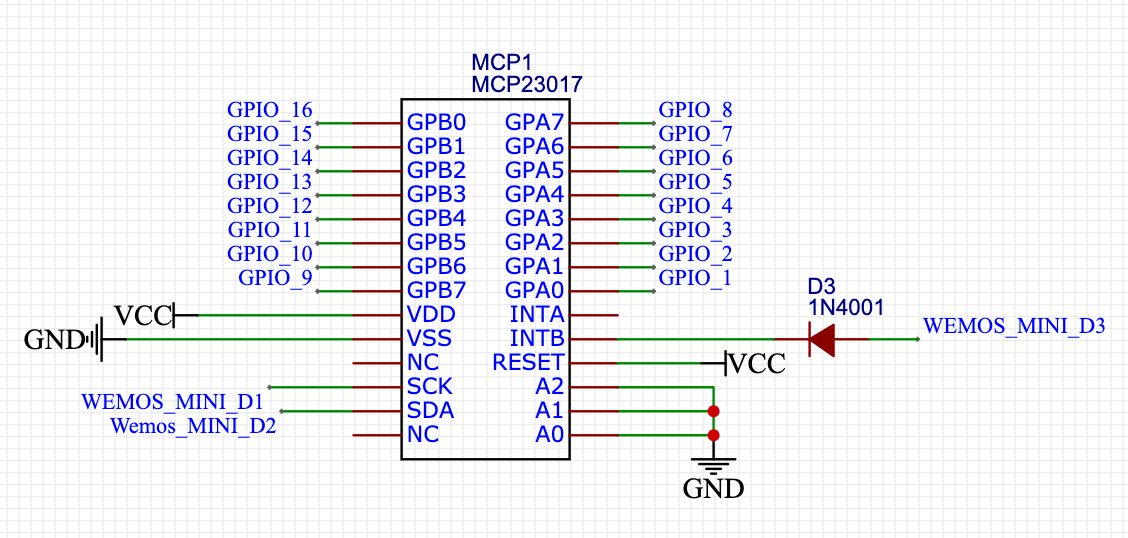
    While we're at this topic. Does any one know what the NRF24L01+ does with it's interrupt pin? I'd like to hook it up to the other pin - d4 in this case. Does it pull high when there's a new message or is it pulled up by default? Which I hope
  • My 32bits ATSAM node project

    26
    13 Votes
    26 Posts
    11k Views
    N
    @scalz Hi, i know its been long time but stil l!!! Can u please explain how it got resolved?
  • RFM69 and ATMega 32U4

    2
    0 Votes
    2 Posts
    126 Views
    L
    Sck = 15 Miso = 14 Mosi = 16 You choose SS and IRQ from available gpio
  • AM312 with no delay

    5
    0 Votes
    5 Posts
    309 Views
    V
    @halipte Yes, you are right. The AM312 is different from the AS312 which I use. see: AM312 Datasheet and AS312 Datasheet But both are looking similar. No additional parts are required. For the HC-SR501 PIR there are a lot of additional parts on the module PCB. So at the end I prefer the AS312 to keep my PIR sensor device small and simple.
  • ESP8266 as (MQTT) Gateway with I2C Sensors

    mysensors
    2
    1 Votes
    2 Posts
    175 Views
    BearWithBeardB
    @Sunseeker According to the Connecting the Radio page, D2 is the default pin for the CE signal for the NRF24. If you'd like to use this pin for I2C, you can free it up by assigning a different pin for the CE signal by adding this line to your sketch: #define MY_RF24_CE_PIN pin IIRC, all available pins should work for this purpose (D0, D3, D4). Just pick one and if it doesn't work, use one of the other pins. Please make sure to add that line before #include <MySensors.h>.
  • Misol rain gauge tipping bucket rain amount

    8
    1
    0 Votes
    8 Posts
    4k Views
    P
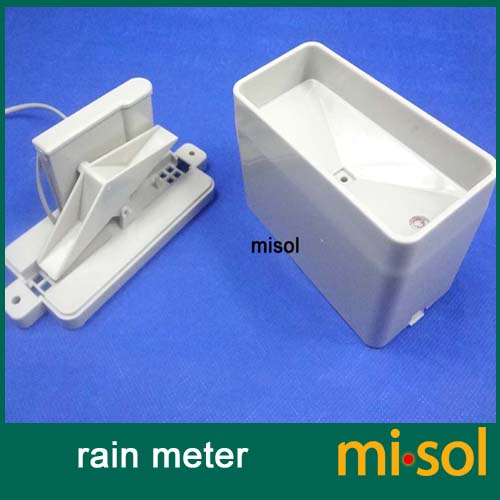
    Old topic, but my test shows .304mm per tip. I calculated the surface area as 54.7854cm^2, which is 5cm x 11cm minus the small rounded corners. I slowly poured 60cc water and counted 36 tips. Thus, spread out over the whole surface, I poured 1.09518cm of water, divided by 36 tips equals .3042173mm per tip.
  • STM32L0 support

    6
    0 Votes
    6 Posts
    301 Views
    rozpruwaczR
    @tekka Is there something I could help to spped up merging STM32duinoUpdate branch into master ? At the moment I have couple of blue pill boards (STM32F103C8) and want to test RS485 network with MySensors. And that I have one question, Is it possible to use two hardware serial ports - one for rs485 and another for debug prints ? What I tried is: using AltSoftSerial for rs485 but STM32 platform is not supported there using #define MY_RS485_HWSERIAL Serial1 and #define MY_DEBUGDEVICE Serial2 but Serial2 does not exist using SoftwareSerial but it seems that the code hangs somwhere and does not even get into setup() function (SoftwareSerial uses some timers so maybe they interferre with MySensors)
  • 0 Votes
    1 Posts
    108 Views
    No one has replied
  • 12V distribution box - mysensorized!

    22
    1 Votes
    22 Posts
    5k Views
    C
    Just a quick thought, but would it be preferable to attach something like this to the PCB using connections for current measurement rather than the ACS chip? Modules have the benefit of being optional, so you can skip them if you don't want them on a certain channel. In other words, it is conceivable to have 4 out of 5 channels that report and 1 that doesn't, for example. Because the cost of the module and chip are same, I don't believe there is any difference from a financial standpoint. -AM
  • New esp32 board with more io pins, compatible with d1 mini

    1
    7 Votes
    1 Posts
    141 Views
    No one has replied

17

Online

11.7k

Users

11.2k

Topics

113.2k

Posts