Skip to content
  • 💬 MySensors Library - v2.x

    Announcements
    38
    0 Votes
    38 Posts
    14k Views
    nagelcN
    : ) That looks right. I have not written a receiveTime function for years and have just been copying the one in MockMySensors over and over.
  • Interface-board-for-remote-control

    My Project
    2
    1 Votes
    2 Posts
    2k Views
    T
    That is a well documented project. Much appreciated
  • Status of my rv(camper) home automation system 2020-2025

    My Project
    11
    2 Votes
    11 Posts
    5k Views
    T
    @fsgraz Did some testing Today and my RFM range is over 80 meters node to node, with no long range antenna. That will be my next test, just waiting for a shipment from China to arrive. I did how ever notice an extreme improvement when I connected the gateway through a USB hub and then started to dig through the forum. @AWI once wrote about using an external PSU to power the long range NRF PA/LAN. I'll try that this weekend as connecting it to they USB port of my PI extended the range to 20 meters Node to Node.
  • 💬 MyGateway

    OpenHardware.io mysensors rfm69 gateway ethernet poe
    10
    0 Votes
    10 Posts
    2k Views
    E
    Oh, I never even thought of that as a possibility. I really like KiCad, and it's my preference. For a while I had Eagle for work, but even then I still preferred KiCad whenever I was given a choice. :)
  • 0 Votes
    1 Posts
    671 Views
    No one has replied
  • IKEA UTRUSTA remote control

    Controllers
    2
    2
    0 Votes
    2 Posts
    2k Views
    mfalkviddM
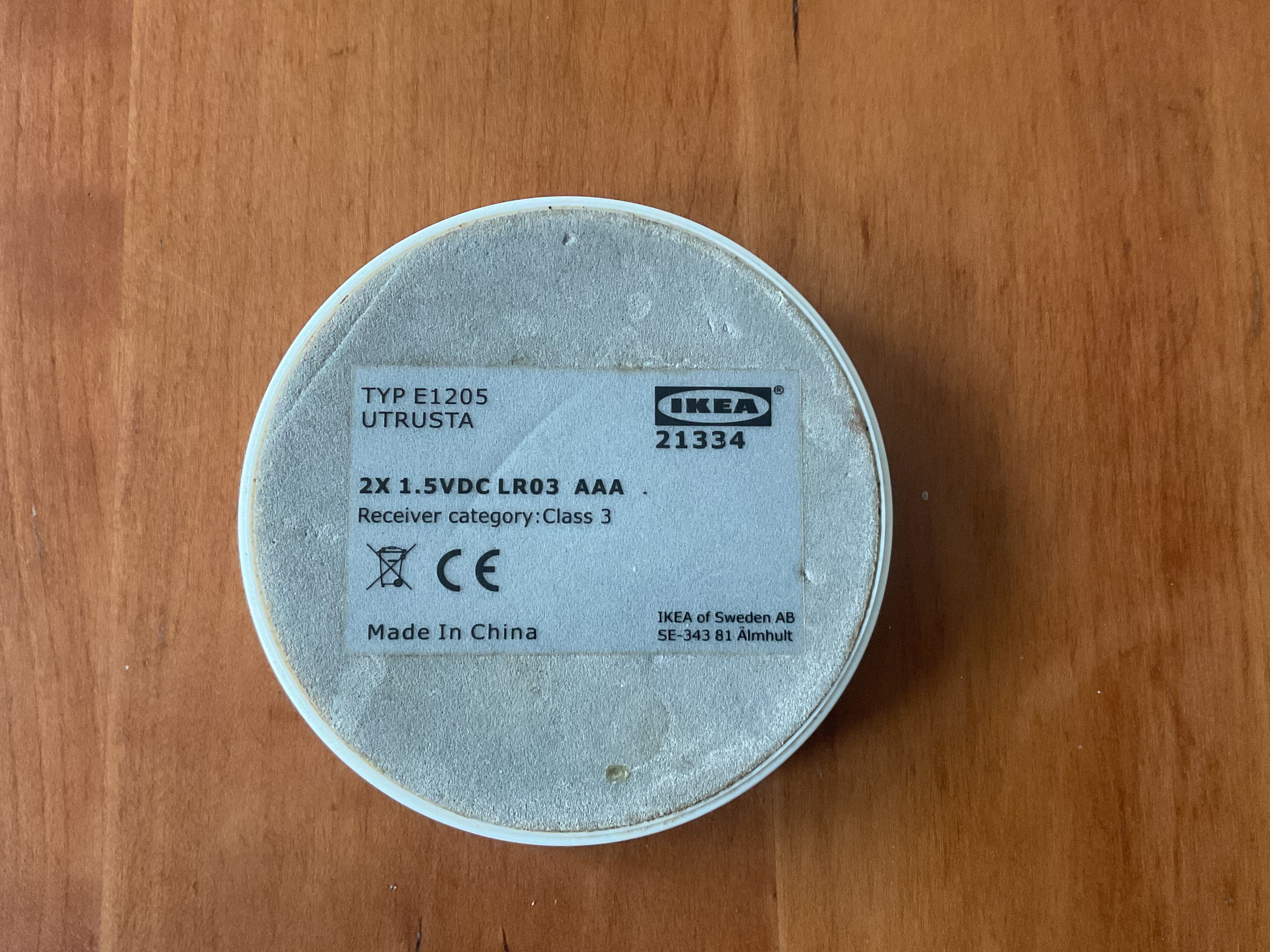
    @JanJaap-Jagtenberg according to https://www.reddit.com/r/tradfri/s/gvFcOmHe8h the ”best” solution is to replace the led driver (but keep the lights). An alternative might be to buy a used remote on ebay or a local equivalent. Do you know what is wrong with your current remote? Maybe it can be fixed?
  • DHT22 wrong sensor type in Home Assistant

    Troubleshooting
    7
    0 Votes
    7 Posts
    2k Views
    OldSurferDudeO
    I'm glad that worked!
  • Radar motion sensor

    My Project
    1
    1 Votes
    1 Posts
    820 Views
    No one has replied
  • ESP32 with LoRa

    General Discussion
    5
    0 Votes
    5 Posts
    1k Views
    ZenBlizzardZ
    Hey! If you're using ESP32 with LoRa (RFM95) and a Raspberry Pi gateway, here are some quick tips: Hardware: Heltec ESP32 + LoRa boards work great with MySensors. Power: ESP32 (~600mA) + LoRa (~120mA) can drain batteries fast—Arduino might be better. Software: Use Arduino IDE for ESP32 (try EnergyMeterPulseSensor), and set up an MQTT gateway on the RPi. Home Assistant works well for data visualization. Real-World Tips: MySensors + LoRa is great for farm/weather monitoring—checking similar projects can help.
  • 0 Votes
    4 Posts
    1k Views
    ZenBlizzardZ
    It seems you can access the child ID from the sent message by looking at the destination property. If you have the message object, you can extract the ID directly from there.
  • 0 Votes
    4 Posts
    1k Views
    F
    @ZenBlizzard in case you are measuring the output with a multimeter, you will get an averaged level, since AC current waveform should be sinusoidal and overlapped with the Vcc/2->2.56V in your case. To measure the current you need a decently high sampling and some math. #define SENSITIVITY 66 // mV/A const float readings = 5; const float alpha = 2.0 / (2 * readings + 1); for (ifor = 0; ifor < 250; ifor++) { // Voltage voltageSampleRead = analogRead(V) * vccRead / 1023 - vccRead / 2; /* read the sample value including offset value*/ voltageSampleSum = voltageSampleSum + sq(voltageSampleRead); /* accumulate total analog values for each sample readings*/ voltageSampleOffsetSum = voltageSampleOffsetSum + voltageSampleRead; // Current currentSampleRead = analogRead(I) * vccRead / 1023 - vccRead / 2; /* read the sample value including offset value*/ currentSampleSum = currentSampleSum + currentSampleRead * currentSampleRead; /* accumulate total analog values for each sample readings*/ currentSampleOffsetSum = currentSampleOffsetSum + currentSampleRead; wait(1); } voltageMean = voltageSampleSum / ifor; /* calculate average value of all sample readings taken*/ voltageOffset = voltageSampleOffsetSum / ifor; reading = (sqrt(voltageMean) - voltageOffset) * 230.0 / 1.0; // read voltage / reported voltage. voltage = round_to_dp(alpha * reading + (1 - alpha) * voltage,1); Serial.println(voltage); if (voltage < 25) voltage = 0; currentMean = currentSampleSum / ifor; /* calculate average value of all sample readings taken*/ currentOffset = currentSampleOffsetSum / ifor; reading = (sqrt(currentMean) - currentOffset) / SENSITIVITY * 1000 - currentZeroOffset; // subtract no load current. if (reading < 0) reading = 0; current = round_to_dp( alpha * reading + (1 - alpha) * current,2);
  • 1 Votes
    34 Posts
    8k Views
    N
    I'm having the same / a simular issue of temperature related readings, but at a different temperature level (for me it must be > 14 degree). I massure the dew point as well (temperature = orange, dew point = yellow). It looks to be more related to water in the air than only to temperature. @zboblamont have you been finally been able to find a solution? [image: 1743164554174-6760565c-914c-4608-be1a-6d10d0640e08-ac609c25-78e7-49de-8302-0166a041bff2-resized.png]
  • Email notifications received twice

    General Discussion
    3
    1
    1 Votes
    3 Posts
    1k Views
    ZenBlizzardZ
    It looks like duplicate email notifications may be linked to system settings or preferences. Have you noticed if the issue happens after specific actions or changes? Investigating your notification settings might shed some light
  • 0 Votes
    10 Posts
    2k Views
    B
    Well, my network with two handfulls of nodes in three different locations is still live and kicking! I agree that there does not seem to be a lot happening in the community. I'm running 2.4.0- alpha since this gives support for MQTT over TLS. Just managed today to create one more MQTT GW after reading a lot about support for ESP8266. You know, these things you do once per year and have to learn new each time. MySensors is the cheapest way I have found to create small sensor nodes etc. But now slowly running out of my supply of hardware. Well, time will tell...
  • PJON and Minicore not working

    Development
    1
    0 Votes
    1 Posts
    545 Views
    No one has replied
  • JSN-SR04T-V3.0 Coax cable extended

    Troubleshooting
    2
    0 Votes
    2 Posts
    1k Views
    B
    Update and problem fixed! For everybody that will encouter this, the problem was at the sensor side because of the folder of the sensor! We created some metal brackets for it and they where exactly the same diameter. The fact that the mount squeezed the sensor made it return the lowest value. Just needed to adjust the hole and everything was ok!
  • ESPnow as transport layer

    Feature Requests
    3
    1 Votes
    3 Posts
    1k Views
    MasMatM
    I never noticed the 20 device cap. That won't do. What I am thinking of now, is to use EspHome and just dedicate a router to handle just that network - so kinda creating an IoT network without internet access and as standalone as possible. Using static IPs should make the response better too. Thanks for looking into this.
  • Ghost Child

    Troubleshooting
    12
    1
    0 Votes
    12 Posts
    2k Views
    OldSurferDudeO
    I want to thank @FcNanoLed. I had long thought about a serial gateway. This would be a way to add I/O to a linux computer. In the process of trying to help, I built up a linux machine running virtual box. In the virtual machine I ran Home Assistant The not well documented part of that was to connect the USB port of the computer to the virtual machine (settings-->USB-->USB Device Filters) (note that one can buy a refurbished PC for about the same price as an equivalently configured RPi) So thanks for the inspiration!
  • Home Assistant/MySensors quirks

    Development
    1
    0 Votes
    1 Posts
    534 Views
    No one has replied
  • 1 Votes
    5 Posts
    1k Views
    ZenBlizzardZ
    When connecting an accelerometer to your PC, consider its communication protocol (I2C or SPI) and the appropriate interface device, like a microcontroller (e.g., Arduino). You may also need additional hardware for voltage adjustment or signal conditioning, depending on the sensor’s specifications.

19

Online

12.1k

Users

11.2k

Topics

113.4k

Posts